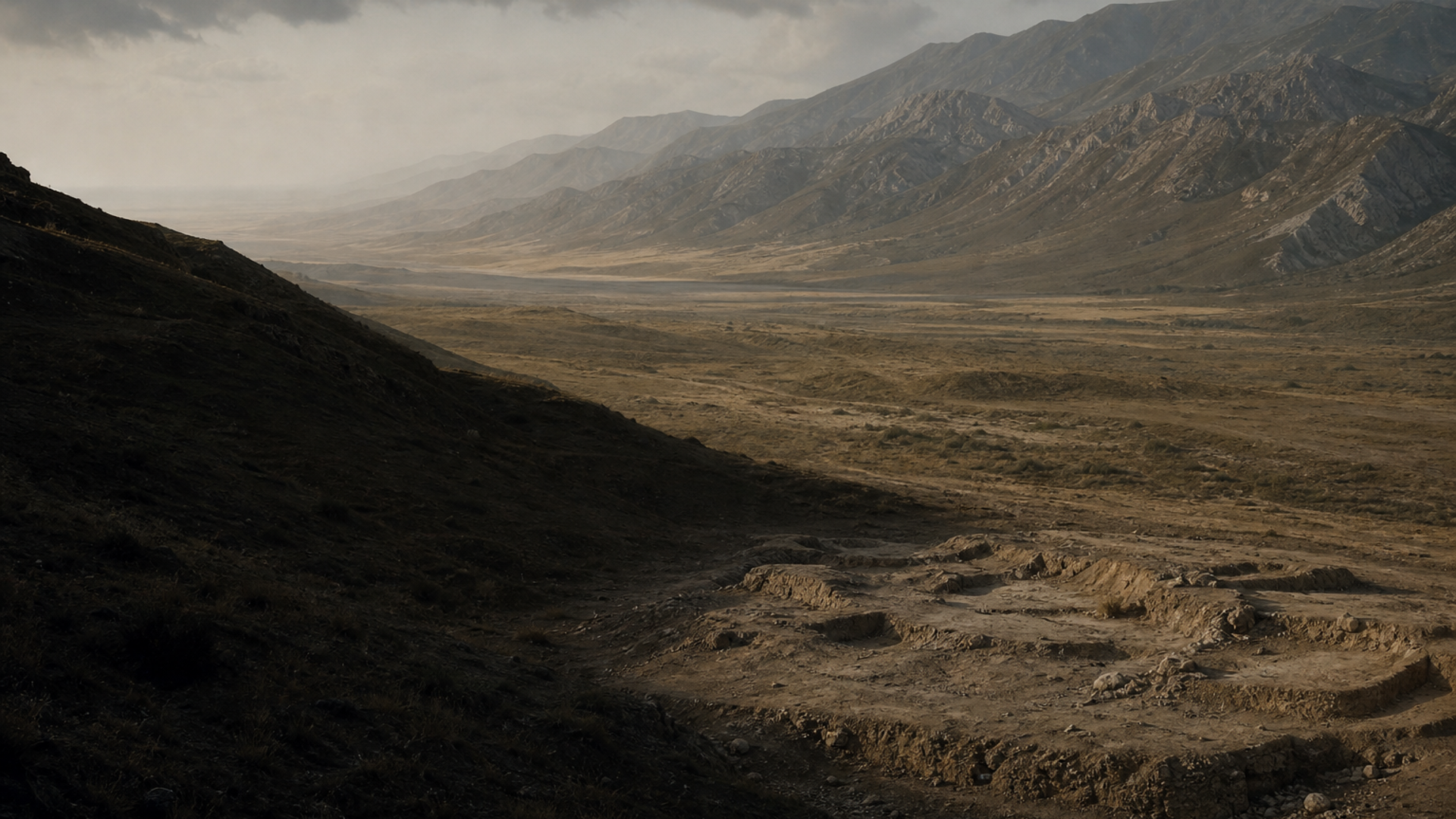
The everyday world of Late Neolithic inhabitants in the Azerbaijan lowlands can be evoked from subtle traces: hearths warm and smoked, broken pottery mended and reused, and animals kept close to homesteads. Archaeological data indicates small settlements where people tended cereals and pulses and managed domestic animals—sheep, goats and cattle are probable, reflecting Neolithic economies across the Caucasus and adjacent Near East. Stone tools, grinding stones and ceramic fragments recovered at nearby sites suggest food processing, textile work and household craft activities.
Social life likely blended kinship ties with seasonal rhythms: planting, harvest and pasture movement. Burials from these sites are important touchstones; they reflect community attention to the dead and offer the genetic material that connects bodies to broader population histories. Yet many social details—hierarchies, religious practices, and the full extent of exchange networks—remain opaque. Archaeobotanical and zooarchaeological data are still limited for these exact sites, so reconstructions combine local finds with broader regional patterns to build a plausible portrait of daily life.