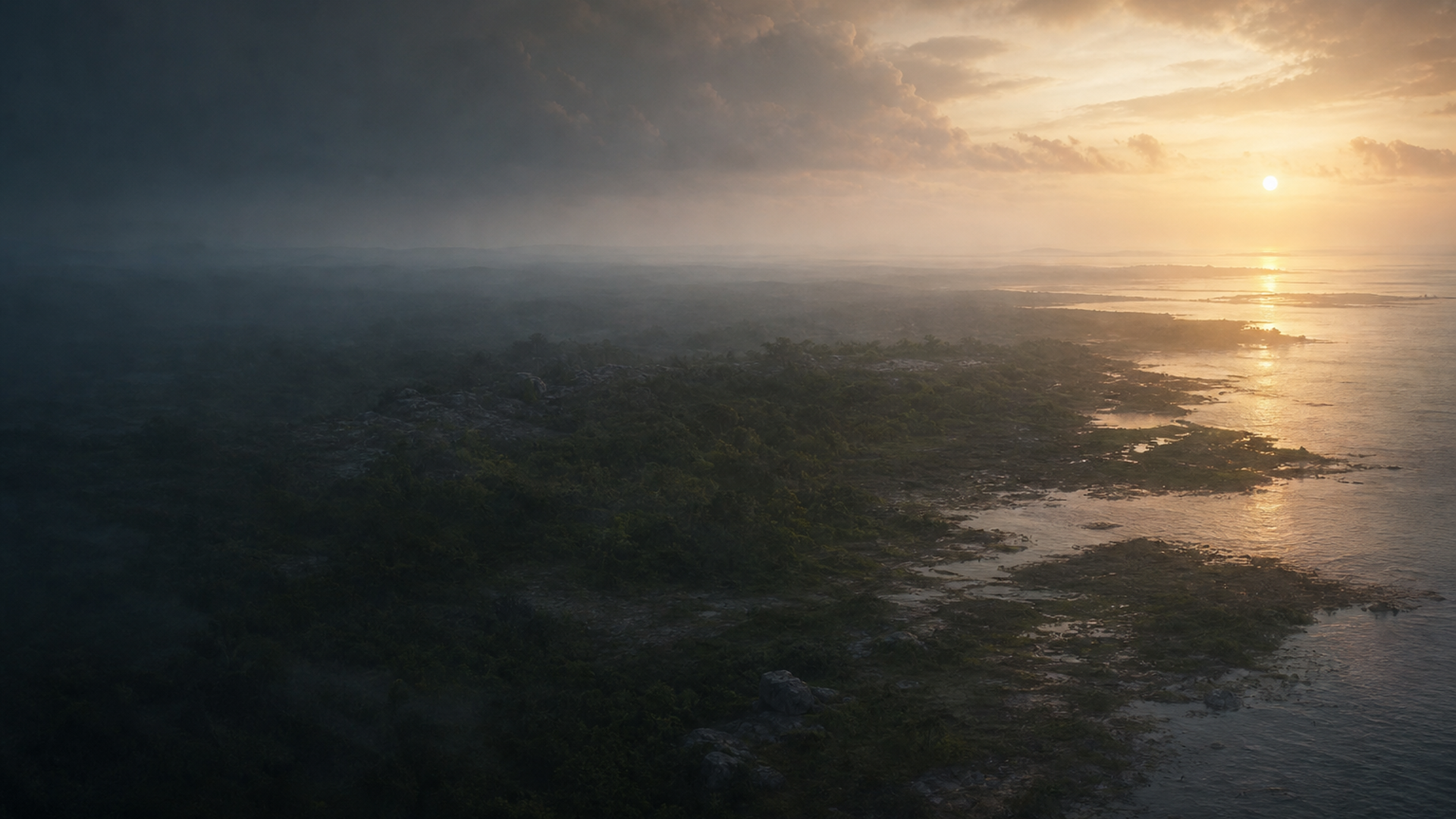
Along the shimmering edges of lagoons and river mouths in what is now southern Belize, people were already shaping a way of life tuned to water and forest. Archaeological data from Mayahak Cab Pek indicate human presence between ca. 7050 and 6600 BCE, placing these remains squarely in the early Holocene — a time of rising sea levels, shifting coastlines, and expanding tropical forests. The material traces are sparse but evocative: stone tools reworked for both cutting and scraping, and a depositional context that suggests seasonal use of coastal resources.
Limited evidence suggests these communities exploited estuarine fish, shellfish, and wetland plants, moving across a mosaic of mangrove, riverine and inland habitats. Regional comparisons with contemporaneous sites in Belize and the Yucatan Peninsula point to a network of small, mobile groups rather than large, sedentary villages. The Mayahak Cab Pek assemblage fits a broader picture of early Holocene settlement in Mesoamerica, where human groups responded creatively to environmental change.
Because only two individuals are sampled, interpretations of population origin remain cautious. Archaeological indicators combined with the genetic signal hint at continuity of deep maternal lineages in the region, but more samples are required to clarify migration pathways and demographic structure during the early Holocene.