Menu
Store
Blog
Brazil — South Coast (Cubatão I)

Cubatão I Sambaqui, 2700 BP

Coastal mound-builders on Brazil’s south shore, glimpsed through shells and mitochondrial DNA

807 CE - 4122700 BCE
Scroll to begin
Chapter I

The Story

Understanding the Cubatão I Sambaqui, 2700 BP culture

Archaeological and genetic evidence from Cubatão I (South Coast, Brazil) links Sambaqui shell-mound builders to deep Native American maternal lineages (mtDNA D1, A2). Two ancient individuals (807–412 BCE) offer a tentative window into coastal lifeways and population continuity; conclusions remain preliminary.

Time Period

807–412 BCE (≈2700 BP)

Region

Brazil — South Coast (Cubatão I)

Common Y-DNA

Not reported / no data

Common mtDNA

D1, A2

Chapter II

Timeline

Key moments in the history of this culture

800 BCE

Cubatão I occupation (approx.)

Radiocarbon dates place human activity and burials at Cubatão I between 807 and 412 BCE, within the Sambaqui tradition on Brazil's south coast.

Chapter III

Origins & Emergence

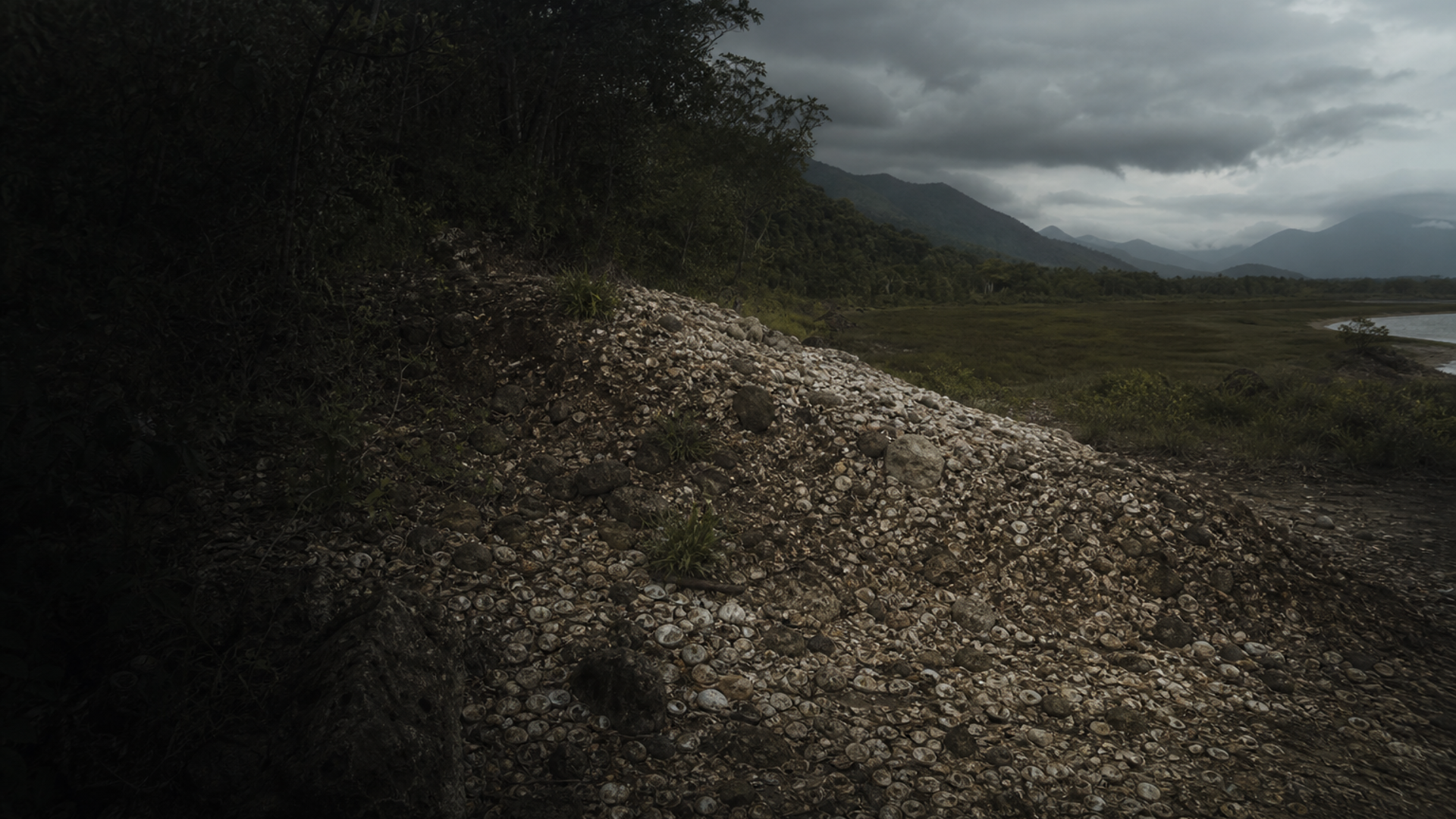
Along the Atlantic fringe of southern Brazil, the mounded shells and layered hearths of Cubatão I speak to a long-lived coastal tradition known broadly as the Sambaqui culture. Archaeological data indicates these shell middens accumulated over generations as people exploited estuaries, beaches and shallow coastal waters. Radiocarbon-dated materials from Cubatão I place the two sampled individuals between 807 and 412 BCE — roughly 2700 years before present — a period when sambaquis were regional focal points of settlement and ritual.

The cinematic sweep of oyster beds and towering shell heaps belies a complex social landscape: midden architecture, human interments within shells, and abundant faunal remains together imply sedentism or repeated seasonal return. Limited evidence suggests local continuity with earlier Holocene coastal populations, but precise demographic origins remain unresolved. The two genetic samples from Cubatão I provide maternal-line glimpses (mtDNA D1 and A2) consistent with deep Native American ancestry in coastal Brazil. Because only two individuals are sampled, any reconstruction of origins is provisional; broader sampling is needed to test hypotheses about migration, local continuity, or interaction with inland groups.

  • Sambaqui shell middens at Cubatão I reflect prolonged coastal occupation
  • Radiocarbon-dated individuals: 807–412 BCE (≈2700 BP)
  • Maternal lineages (mtDNA D1, A2) align with Native American ancestry
Chapter IV

Daily Life & Society

Archaeological remains from Cubatão I evoke a daily world shaped by sea and estuary. Middens preserve fish bones, shellfish, and bird remains — a menu dominated by marine resources. Stone tools, bone implements and hearth features indicate fish-processing, shell-working, and domestic activities. Shell mounds functioned as both refuse and elevated living surfaces, protecting camps from tides and concentrating community spaces for food preparation and possibly ritual.

Burials placed within shell deposits show deliberate mortuary practice; grave goods are scarce but the interment contexts suggest social recognition. Spatial clustering of hearths and discard zones implies coordinated group activity, perhaps seasonal aggregation of kin groups. Craft specialization is hinted by worked shell ornaments and shaped bone, though scale and social stratification remain uncertain.

Archaeological data indicates a resilient coastal adaptation tuned to estuarine productivity, with mobility patterns likely ranging from seasonal rounds to semi-sedentary residence depending on resource availability and social ties.

  • Diet dominated by fish, shellfish, and coastal birds
  • Shell middens served as living platforms, discard zones, and burial contexts
Chapter V

Genetic Profile

Genetic data from Cubatão I is limited but informative. Two individuals yielded mitochondrial haplogroups D1 and A2 — lineages widely recognized in Native American populations and consistent with a deep, pre-Columbian maternal ancestry along South America’s Atlantic margin. These mtDNA results align with archaeological expectations of long-term regional continuity among coastal hunter-gatherers.

No consistent Y‑chromosome pattern is reported for these samples (either due to preservation, coverage, or absence of male-specific data), so paternal-line inferences cannot be made from the current dataset. Given the sample count is only two, genetic conclusions are highly preliminary: while the presence of D1 and A2 supports Native American maternal ancestry at Cubatão I, they do not reveal population structure, gene flow, or affinity to specific inland or transcontinental groups.

Future higher-coverage genomes and increased sample numbers would allow testing of questions such as: continuity versus replacement, degrees of relatedness to other sambaqui sites, and connections to wider South American population histories. For now, the genetic signal complements the archaeological portrait of coastal Sambaqui lifeways without yet resolving broader demographic dynamics.

  • mtDNA haplogroups: D1 (1 sample) and A2 (1 sample)
  • Paternal (Y‑DNA) data not reported; sample size (n=2) makes results preliminary
Chapter VI

Legacy & Modern Connections

The shell mounds of Cubatão I are tangible heirs of millennia-long coastal stewardship. Contemporary coastal communities and Indigenous groups across southern Brazil retain cultural memories and material practices tied to marine resources that echo sambaqui economies. Genetic continuity in maternal lineages, suggested but not proven by two samples, raises the possibility of long-term local ancestry in the region.


However, caution is essential: with only two mitochondrial genomes, we cannot claim direct ancestry links to modern populations. Archaeological continuity in settlement patterns and resource use suggests cultural persistence, but demographic histories — including post-contact population change and recent admixture — require broader genetic and ethnographic study. Cubatão I remains a powerful focal point for integrating archaeology and ancient DNA to illuminate how coastal lifeways shaped human history in southern Brazil.

  • Archaeological continuity suggests enduring coastal lifeways
  • Two ancient mtDNA samples hint at maternal continuity but are insufficient for firm ancestry claims
AI Powered

AI Assistant

Ask questions about the Cubatão I Sambaqui, 2700 BP culture

AI Assistant by DNAGENICS

Unlock this feature
Ask questions about the Cubatão I Sambaqui, 2700 BP culture. Our AI assistant can explain genetic findings, historical context, archaeological evidence, and modern connections.
Sample AI Analysis

The Cubatão I Sambaqui, 2700 BP culture represents a fascinating chapter in human history...

Genetic analysis reveals connections to earlier populations while showing evidence of unique adaptations and cultural innovations. The ancient DNA samples provide insights into migration patterns, social structures, and the biological relationships between ancient populations.

This is a preview of the AI analysis. Unlock the full AI Assistant to explore detailed insights about:

  • Genetic composition and ancestry
  • Migration patterns and origins
  • Daily life and cultural practices
  • Modern genetic legacy
Use code for 35% off Expires May 20