Menu
Store
Blog
Tierra del Fuego (North), Argentina

Echoes at La Arcillosa

A single 5,800‑year‑old voice from northern Tierra del Fuego connects stones, sea and genes

4040 CE - 37105800 BCE
Scroll to begin
Chapter I

The Story

Understanding the Echoes at La Arcillosa culture

Human remains from La Arcillosa 2 (4040–3710 BCE) in north Tierra del Fuego offer a rare glimpse into early Fuegian life. Archaeological context and an mtDNA C lineage hint at coastal foragers and deep Pan‑American maternal roots, but conclusions remain preliminary (n=1).

Time Period

4040–3710 BCE (≈5800 BP)

Region

Tierra del Fuego (North), Argentina

Common Y-DNA

Not determined (no Y samples)

Common mtDNA

C (1 sample)

Chapter II

Timeline

Key moments in the history of this culture

3880 BCE

La Arcillosa 2 individual dated

Radiocarbon dating places the La Arcillosa 2 human remains at c. 4040–3710 BCE, providing a mid‑Holocene anchor for northern Tierra del Fuego occupation.

Chapter III

Origins & Emergence

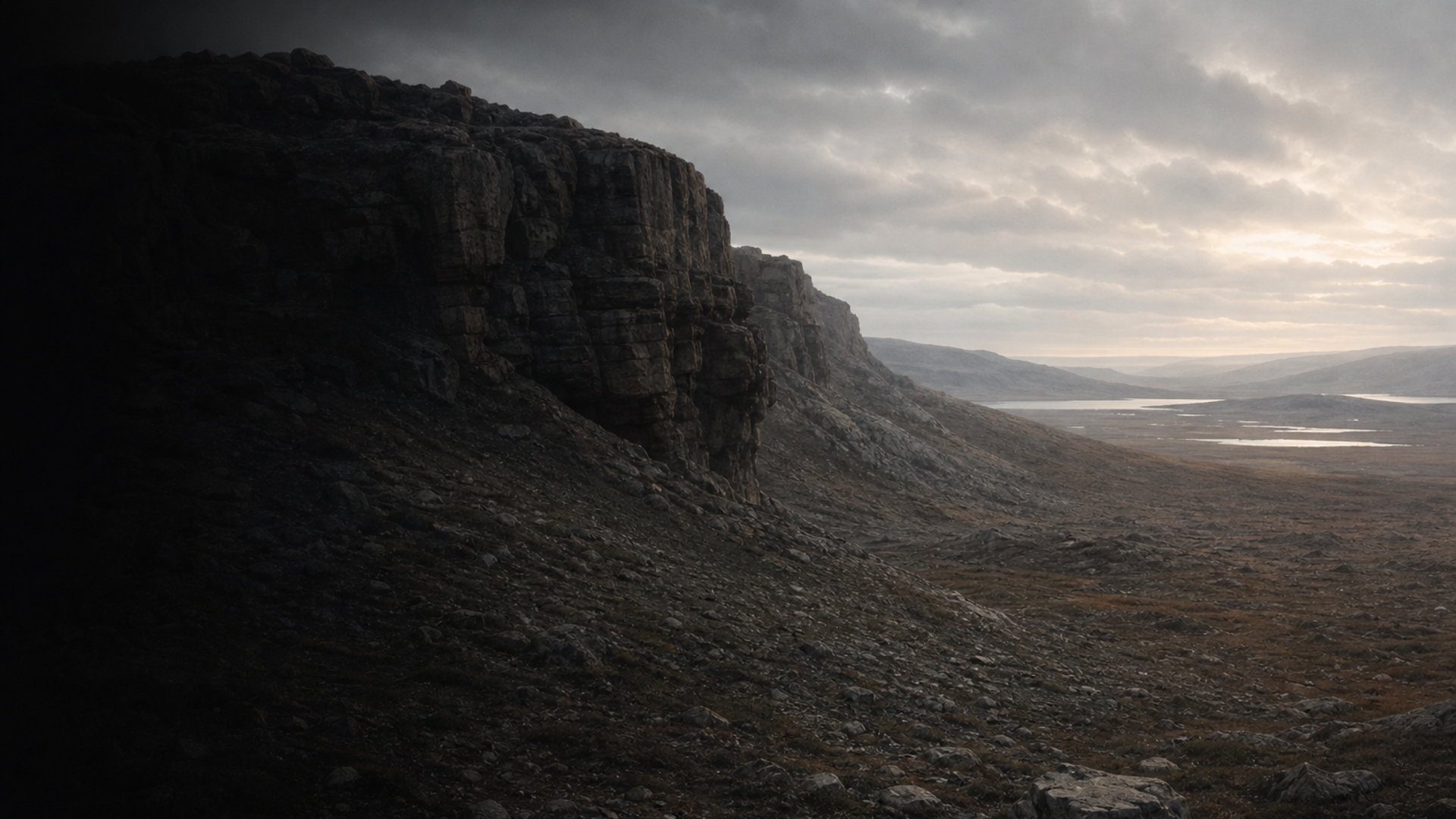
La Arcillosa 2 sits on the northern edge of Tierra del Fuego, where wind‑scoured coasts meet a mosaic of cold shrublands and sheltered bays. Dated to 4040–3710 BCE (≈5,800 years before present), the human remains recovered at the site are a solitary but evocative window into the Late Holocene coastal occupations of the southernmost tip of South America. Archaeological data indicates that by this time people had long adapted to the harsh maritime margins of the Southern Cone, exploiting rich intertidal and nearshore resources.

Regional lithic scatters, hearths and coastal deposits elsewhere in Fuegian and Patagonian contexts suggest repeated seasonal use of bays and channels. Limited evidence suggests that groups moving along the coast developed specialized knowledge of tides, seabird colonies and marine mammals. The presence of mtDNA haplogroup C in the La Arcillosa 2 individual aligns with one of the primary pan‑American maternal lineages, consistent with broader patterns of early settlement in the Americas. However, with only a single genetic sample, any narrative of population movement, continuity or replacement must remain tentative. Ongoing excavation, wider sampling and interdisciplinary dating will be essential to transform this solitary voice into a chorus that can speak to origins across the southern archipelago.

  • Site: La Arcillosa 2, North Tierra del Fuego, Argentina
  • Date: 4040–3710 BCE (≈5800 BP)
  • Evidence: Human remains (n=1) — preliminary data only
Chapter IV

Daily Life & Society

Imagine a shoreline braided with kelp and pebbled beaches, where smoke curls from stone‑lined hearths and the cry of seabirds marks the seasons. Though La Arcillosa 2 yields only a single individual, archaeological inference from nearby Fuegian sites suggests a lifeway oriented to the sea: shellfish and intertidal foraging, seabird egg‑taking, fishing and opportunistic hunting of pinnipeds and small terrestrial game. Material culture in the region tends toward lightweight, repairable tools suited for mobility and frequent movement between sheltered coves.

Social groups were likely small, flexible bands whose networks stretched along the coast. Exchange of raw materials and curated tools between bays would have been practical adaptations to unpredictable weather and resource pulses. The cold, windy environment required skilled clothing, hearth technologies and intimate knowledge of local seasons. Symbolic life — expressed in personal ornaments, use‑wear on tools, or spatial choices for hearths and burials — is harder to recover from a single find, but ethnographic analogies and regional archaeology point to rich traditions of place‑based knowledge and maritime craft. Archaeological data indicates resilience and deep ecological knowledge, yet most reconstructions remain inferential given the paucity of direct evidence at La Arcillosa 2.

  • Maritime subsistence: intertidal foraging, seabirds, fish
  • Small, mobile social groups with coastal networks
Chapter V

Genetic Profile

The genetic signal from La Arcillosa 2 is constrained but meaningful. The single sampled individual carries mitochondrial haplogroup C, one of the principal early maternal lineages found across the Americas (alongside A, B, D and X). MtDNA C in this Fuegian context may reflect deep pan‑American maternal ancestry that reached southernmost South America by the mid‑Holocene.

Critical caveats apply: sample count is one. With n=1, any population‑level inference is highly preliminary. No Y‑chromosome haplogroup is reported for this individual, so paternal lineages remain unknown. DNA preservation in sub‑Antarctic and maritime soils is often poor; the recovery of usable mtDNA here is encouraging but may bias interpretations toward better‑preserved maternal markers.

Genetic patterns observed in other southern South American ancient genomes suggest a mixture of long‑term regional continuity and episodes of gene flow, but whether La Arcillosa 2 represents local continuity, a transient coastal band, or part of a broader southern dispersal cannot be resolved without more samples. Future aDNA work targeting additional individuals, isotopic studies and genome‑wide data will be needed to place this mtDNA C lineage within migration models for the Southern Cone and to test hypotheses about coastal versus interior dispersal routes during the Holocene.

  • mtDNA haplogroup C detected (n=1) — aligns with Pan‑American maternal lineages
  • No Y‑DNA reported; population conclusions are highly provisional
Chapter VI

Legacy & Modern Connections

The echo from La Arcillosa 2 reaches into ethical and cultural conversations today. Indigenous communities of the Southern Cone — including the historical peoples of Tierra del Fuego — maintain living connections to place, memory and maritime practices. Archaeogenetic finds like this one can illuminate deep ancestry, but they must be interpreted in partnership with descendant communities and handled with respect for repatriation and cultural values.

Scientifically, even a single ancient genome holds the power to seed further inquiry: it reminds us that southernmost South America was occupied by skilled coastal foragers well before the Common Era. Cautious integration of archaeological, isotopic and genetic evidence can enrich narratives of human resilience in cold maritime landscapes. Yet the most responsible legacy of La Arcillosa 2 will be collaborative research that balances scientific curiosity with the priorities and perspectives of local and Indigenous stakeholders.

  • Highlights the need for community engagement and ethical stewardship
  • Encourages further sampling to test continuity with modern southern groups
AI Powered

AI Assistant

Ask questions about the Echoes at La Arcillosa culture

AI Assistant by DNAGENICS

Unlock this feature
Ask questions about the Echoes at La Arcillosa culture. Our AI assistant can explain genetic findings, historical context, archaeological evidence, and modern connections.
Sample AI Analysis

The Echoes at La Arcillosa culture represents a fascinating chapter in human history...

Genetic analysis reveals connections to earlier populations while showing evidence of unique adaptations and cultural innovations. The ancient DNA samples provide insights into migration patterns, social structures, and the biological relationships between ancient populations.

This is a preview of the AI analysis. Unlock the full AI Assistant to explore detailed insights about:

  • Genetic composition and ancestry
  • Migration patterns and origins
  • Daily life and cultural practices
  • Modern genetic legacy
Use code for 35% off Expires May 20