Menu
Store
Blog
Albania_Medieval Albania — Kolonja Plateau; Kukës District

Echoes from the Kolonja Plateau

Two medieval burials in Albania reveal tentative maternal links across the Balkans

773 CE - 989 CE
2 Ancient Samples
Scroll to begin
Chapter I

The Story

Understanding the Echoes from the Kolonja Plateau culture

Archaeological and genetic signals from two medieval burials (773–989 CE) in Shtikë and Kënetë, Albania. Limited ancient DNA shows mtDNA H and U; Y-chromosome data are unreported. Findings are preliminary but illuminate maternal lineages and regional connections in Medieval Albania.

Time Period

773–989 CE (Medieval)

Region

Albania — Kolonja Plateau; Kukës District

Common Y-DNA

Not reported / no calls

Common mtDNA

H (1), U (1)

Chapter II

Timeline

Key moments in the history of this culture

773 CE

Earliest sampled burial at Shtikë

A burial from Shtikë dated to 773 CE provides one of two medieval genetic samples from Albania, anchoring maternal lineage data to a specific upland site.

900 CE

Regional historical backdrop

The 9th–10th centuries saw shifting Byzantine influence and regional migrations across the western Balkans, creating a complex cultural backdrop for local communities.

989 CE

Latest sampled burial at Kënetë

A burial from Kënetë in the Kukës District dated to 989 CE represents the second sampled individual, expanding geographic coverage to northeastern Albania.

Chapter III

Origins & Emergence

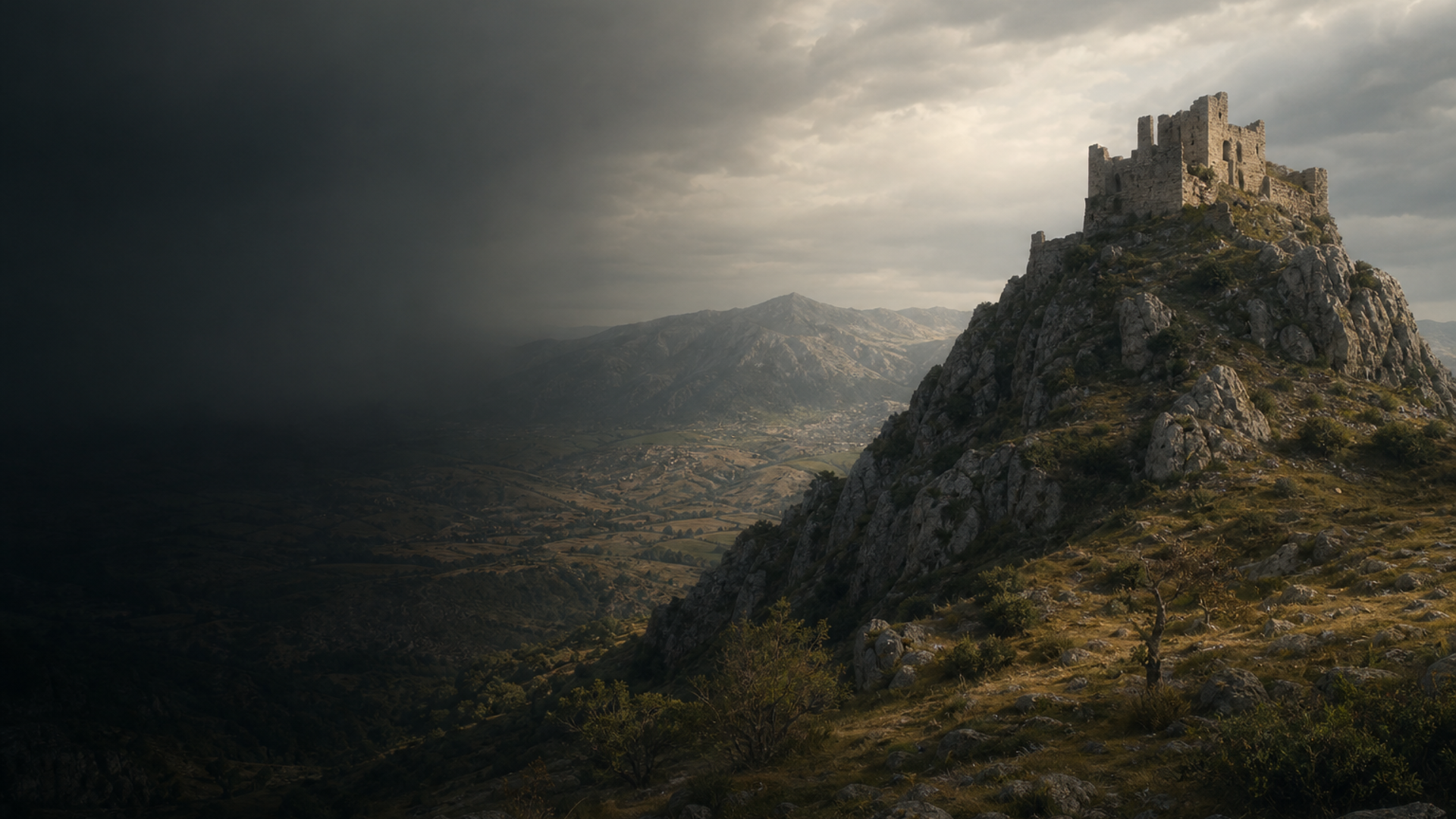
The two sampled individuals come from discrete medieval contexts in southeastern and northeastern Albania: Shtikë on the Kolonja Plateau (Southeastern) and Kënetë in the Kukës District (Northeastern). Archaeological data indicate these are cemetery-related burials dated by associated stratigraphy and radiocarbon or typological parallels to the period 773–989 CE, a century of shifting political horizons in the western Balkans as Byzantine influence, local principalities, and migratory pressures met across mountain passes.

Landscape and material traces place these people on a stage shaped by valleys, transhumant routes, and fortified lowlands. Limited evidence suggests local continuity of settlement from late antiquity into the early medieval period, with adaptations in burial orientation and grave goods reflecting both local custom and wider Balkan practices. The cinematic silhouette of shepherds, farmers, and travelers moving between upland pastures and market towns is reconstructed from pottery scatters, simple metal objects, and the graves themselves.

Because we are working with only two genomes, any narrative of population movement, cultural ancestry, or social change must remain cautious. These individuals are touchstones — evocative glimpses rather than definitive chapters — that nonetheless anchor genetic data into named places and dates: Shtikë and Kënetë, 8th–10th centuries CE.

  • Samples from Shtikë (Kolonja Plateau) and Kënetë (Kukës District)
  • Dates constrained to 773–989 CE by archaeological context
  • Limited sample size; interpretations remain provisional
Chapter IV

Daily Life & Society

Archaeological traces at Shtikë and Kënetë suggest everyday existence anchored to pastoralism, small-scale cultivation, and local craft. Stone-built terraces and traces of agricultural implements in the broader Kolonja and Kukës landscapes indicate communities that mixed seasonal grazing with cereal fields. Burials from these sites are modest: simple inhumations with occasional personal items — iron implements, simple dress fittings, and beads — pointing to pragmatic lifeways rather than high-status display.

Religious and cultural signals are subtle. The period falls into the era of Christian institutional influence in parts of Albania, but local devotional practice could vary widely; funerary rites show a blend of regional traditions rather than a single, uniform ritual. Trade and communication networks tied these upland communities to valley towns and to the wider Balkans; small imported objects and ceramic forms attest to contacts that could transmit ideas, goods, and genes.

Seen close up, daily life in medieval Albanian uplands is best imagined as a choreography of seasons: flocks driven to summer pastures, hearth-centered households weaving, and local markets where durable goods change hands. The two sampled individuals were part of that rhythm — ordinary lives whose bones now carry genetic echoes of broader human movements.

  • Economy centered on pastoralism and small-scale farming
  • Funerary evidence suggests modest, locally patterned burials
Chapter V

Genetic Profile

Genetic recovery from these two medieval burials is fragmentary but informative when treated with caution. Both individuals yielded mitochondrial DNA calls: one belongs to haplogroup H and the other to haplogroup U. Haplogroup H is widespread across Europe and often common in later prehistoric and historic populations; haplogroup U is an older maternal lineage with deep roots in European prehistory and is present among Mesolithic, Neolithic, and later groups. These maternal assignments suggest continuity of broadly European maternal lineages in medieval Albanian contexts.

No reliable Y-chromosome (paternal) haplogroup is reported for these samples, either because of poor preservation, insufficient coverage, or failed male-specific enrichments. That absence is important: without paternal markers we cannot assess male-line continuity, incoming male-mediated migration, or sex-biased admixture patterns.

Because the sample count is extremely low (n = 2), any broader population claims would be premature. However, the mtDNA types are consistent with regional medieval and modern Balkan diversity, and they fit within a pattern where maternal lineages often show persistence even as autosomal ancestry may shift. Future sampling across more cemeteries and secure archaeological contexts will be essential to test hypotheses about continuity, Slavic-era admixture, Byzantine ties, and micro-regional diversity in Medieval Albania.

  • mtDNA: H (1 individual), U (1 individual)
  • No Y-DNA reported; paternal lines remain unresolved
Chapter VI

Legacy & Modern Connections

These two genomes offer a slender but vivid thread connecting medieval Albania to the genetic tapestry of the Balkans. Modern Albanian populations show a mix of deep local ancestry and later admixture events; the presence of mtDNA H and U in medieval burials is compatible with patterns of maternal continuity seen elsewhere in Europe, where mitochondrial lineages can persist through periods of cultural and demographic change.

Cinematic as the idea may be — a direct maternal line stretching from an 8th- or 10th-century woman to present-day neighbors — it must be framed in scientific restraint. With only two samples, we cannot quantify continuity or proportions of ancestry. Instead these individuals serve as anchors: named places (Shtikë, Kënetë) and dates that future studies can build upon. Expanded sampling and integrated archaeological analysis will clarify how these early medieval threads interweave with later Slavic movements, Byzantine administration, and Ottoman-era transformations to shape the genetic map of Albania today.

  • mtDNA types suggest possible maternal continuity into the region
  • Small sample size means connections to modern populations are provisional
Chapter VII

Sample Catalog

2 ancient DNA samples associated with the Echoes from the Kolonja Plateau culture

Ancient DNA samples from this era, providing genetic insights into the people who lived during this period.

2 / 2 samples
Portrait Sample Country Era Date Culture Sex Y-DNA mtDNA
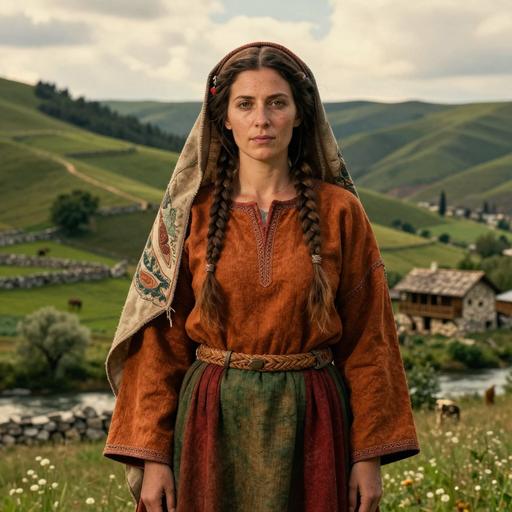
Portrait of ancient individual I13839 from Albania, dated 889 CE
I13839
Albania Albania_Medieval 889 CE Byzantine Empire F - U4c1
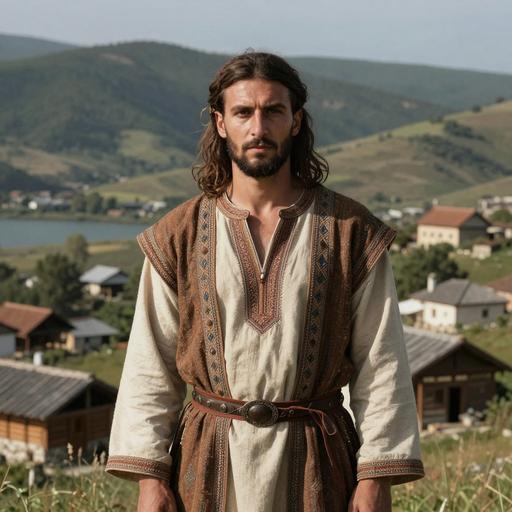
Portrait of ancient individual I14622 from Albania, dated 773 CE
I14622
Albania Albania_Medieval 773 CE Byzantine Empire M - H11a
AI Powered

AI Assistant

Ask questions about the Echoes from the Kolonja Plateau culture

AI Assistant by DNAGENICS

Unlock this feature
Ask questions about the Echoes from the Kolonja Plateau culture. Our AI assistant can explain genetic findings, historical context, archaeological evidence, and modern connections.
Sample AI Analysis

The Echoes from the Kolonja Plateau culture represents a fascinating chapter in human history...

Genetic analysis reveals connections to earlier populations while showing evidence of unique adaptations and cultural innovations. The ancient DNA samples provide insights into migration patterns, social structures, and the biological relationships between ancient populations.

This is a preview of the AI analysis. Unlock the full AI Assistant to explore detailed insights about:

  • Genetic composition and ancestry
  • Migration patterns and origins
  • Daily life and cultural practices
  • Modern genetic legacy
Use code for 35% off Expires May 20