Menu
Store
Blog
Czechia_EarlyMedieval_EarlySlav Bohemia, Croatia, Slovakia, Bosnia, Russia (Murmansk)

Echoes of Early Slavs

Archaeology and DNA tracing Slavic lives across Central and Eastern Europe

200 CE - 1900 CE
2 Ancient Samples
Scroll to begin
Chapter I

The Story

Understanding the Echoes of Early Slavs culture

Archaeological contexts from Bohemia to the Balkans, paired with 14 ancient genomes, illuminate Early Medieval Slavic communities (200–1900 CE). Genetic signals and burial assemblages suggest regional continuity and admixture, though small sample size makes conclusions preliminary.

Time Period

200–1900 CE (focus Early Medieval)

Region

Bohemia, Croatia, Slovakia, Bosnia, Russia (Murmansk)

Common Y-DNA

R (2), I (1), G (1)

Common mtDNA

H (8), U (3), V (1), J (1), H9a (1)

Chapter II

Timeline

Key moments in the history of this culture

200 CE

Late Antiquity Village Life

Rural settlements and local economies persist in Central Europe as Roman influence wanes and new social networks form.

550 CE

Early Slavic Expansion

Archaeological evidence marks demographic shifts and the spread of Slavic material culture across Central and Eastern Europe (6th–9th c.).

900 CE

Medieval Consolidation

Formation of early medieval polities in Bohemia and the Balkans reshapes settlement patterns and material culture.

1500 CE

Late Medieval Transformations

Regional interactions, trade shifts, and political pressures create new demographic layers reflected archaeologically.

Chapter III

Origins & Emergence

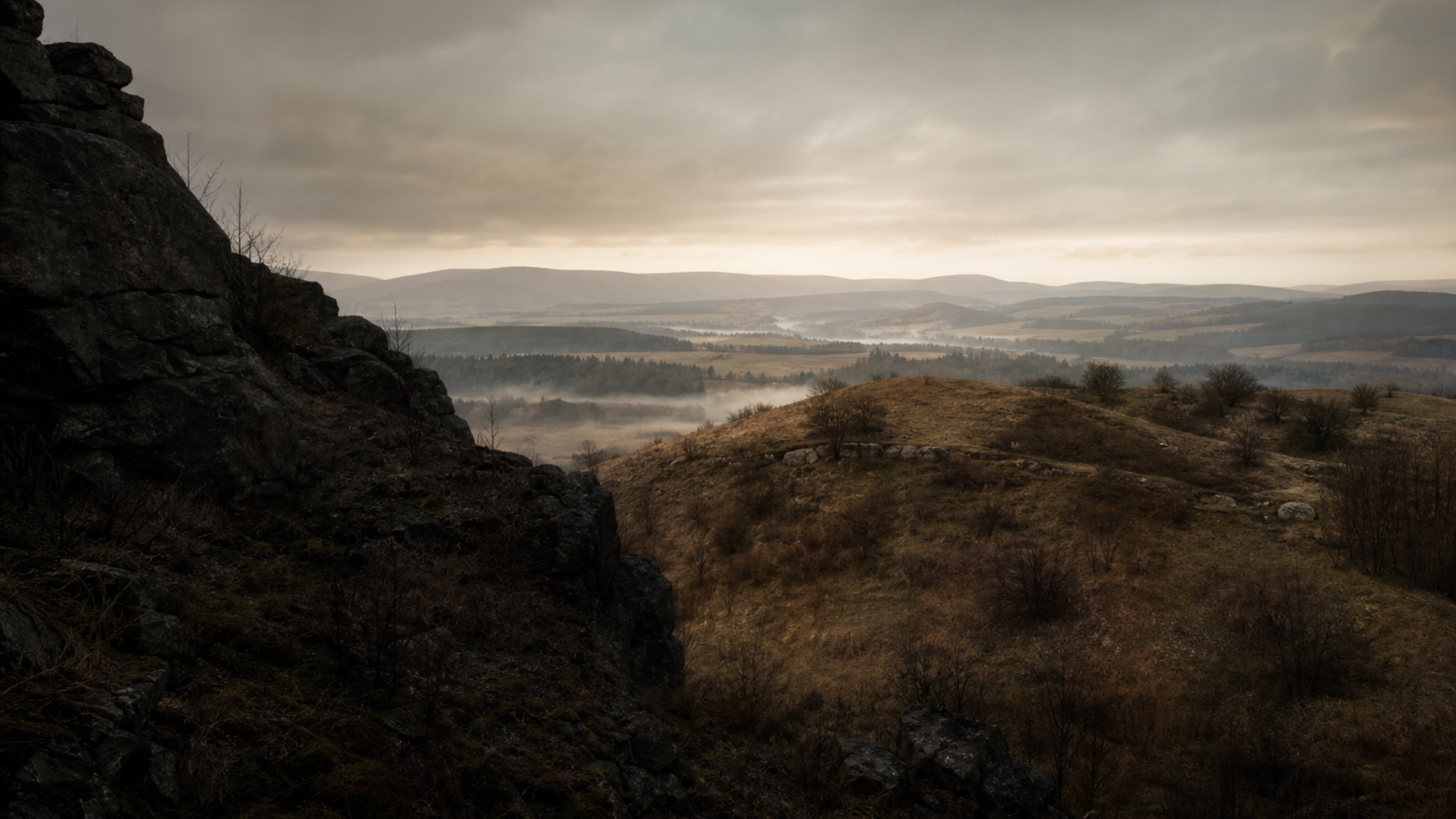
Across river valleys and forest margins from the Elbe basin to the eastern Adriatic, the archaeological silhouette of early Slavic life emerges in scattered settlements and cemeteries. Sites named in our dataset—Brandýsek (Central Bohemian Region), Jagodnjak-Krčevine (Osijek-Baranja County, Croatia), and the far-northern Chalmny-Varre (Murmansk, Russia)—capture only fragments of a larger, mobile cultural landscape. Material markers such as hand-built pottery, simple inhumation graves with few goods, and timber-built dwelling traces point to communities whose lifeways were shaped by mixed farming, woodland resources, and seasonal mobility.

Archaeological data indicates a major demographic transformation across the 6th–9th centuries CE, often called the Early Slavic expansion, when groups spread into the emptied borderlands of post-Roman and post-migration Europe. The sites represented here span centuries (200–1900 CE) and reflect continuity, regional adaptation, and later medieval developments. Limited evidence and the uneven geographic spread of remains mean that these archaeological signals must be read cautiously: where material culture appears uniform across wide areas, local traditions and interactions with neighboring populations often produced subtle but important differences.

  • Fragmentary site distribution from Bohemia to Murmansk reflects mobility and sampling bias
  • Material culture: hand-built pottery, timber dwellings, simple inhumations
  • Major demographic shifts concentrated in 6th–9th centuries CE, archaeological nuance required
Chapter IV

Daily Life & Society

In the dim light of long winters and the open warmth of summer fields, Early Slavic communities organized around small villages, kin networks, and seasonal resource cycles. Archaeological trenches at Jagodnjak-Krčevine and Brandýsek reveal house plans built of timber and daub, storage pits for grain, and hearth-centered domestic spaces that spoke to mixed economies of cereal agriculture, animal husbandry, foraging and fishing where rivers allowed. Grave assemblages tend to be modest: single inhumations, occasional ornaments or iron tools, and the presence of children's graves alongside adults—suggesting household-based burial practices rather than grand elite monuments.

Settlement clustering near fertile loess soils in the Czech lands and river valleys in Croatia and Bosnia hints at territorial attachments, while sites like Chalmny-Varre in Murmansk testify to Slavic cultural reach or connections at northern margins. Craft and exchange networks appear pragmatic: ironworking fragments, bone combs, and locally fired ceramics coexist with occasional imported goods, reflecting both local skill and long-distance ties.

Archaeological evidence indicates socially variegated communities rather than uniform political structures; leadership likely operated through personal ties, seasonal cooperation, and control of local resources rather than centralized bureaucracies.

  • Small timber villages with mixed farming and seasonal subsistence
  • Modest grave goods indicate household-level social organization
Chapter V

Genetic Profile

Fourteen ancient genomes from sites across Czechia, Croatia, Slovakia, Bosnia-Herzegovina and as far north as Murmansk provide a first genetic glimpse into populations labeled here as Slavic. The Y-DNA distribution in this dataset is dominated by haplogroup R (2 samples), with single instances of I and G; mitochondrial lineages are heavily weighted toward haplogroup H (8 samples), with U (3), V (1), J (1) and a specific H9a (1). Mitochondrial H’s prevalence mirrors broader European maternal continuity during the first and second millennia CE.

These genetic signals suggest a heterogeneous population profile: patrilineal markers include lineages (R and I) common across Europe and often associated with post-Neolithic and Bronze Age expansions, while maternal diversity points to long-standing local continuity and regional admixture. Archaeogenetic data indicates that Slavic-associated groups were not genetically uniform; instead they likely formed through interaction between migrating groups and established local populations, producing a mosaic of ancestries.

With only 14 genomes, interpretations must remain cautious. Sample numbers are modest, spatially uneven (for example, a single northern sample at Chalmny-Varre), and temporally broad (200–1900 CE), which limits resolution about when specific genetic shifts occurred. Nevertheless, the combined archaeological and genetic picture highlights continuity in maternal lineages and variable paternal signatures consistent with complex population dynamics during the Early Medieval period.

  • mtDNA dominated by H (8/14), indicating maternal continuity with broader Europe
  • Y-DNA shows R and I presence, suggesting mixed ancestry and regional male-line diversity
Chapter VI

Legacy & Modern Connections

The archaeological and genetic shadows of Early Slavic communities reach into the present: place names, linguistic continuities, and demographic legacies connect modern populations in the Czech Republic, Slovakia, Croatia and Bosnia-Herzegovina to these early medieval horizons. Ancient DNA indicates that some maternal lineages common today were already frequent in the past, while paternal lineages show more regional variation—consistent with historical patterns of migration, conquest, and local integration.

It is important to avoid direct, simplistic narratives equating archaeological culture with modern ethnic identity. Genetics adds depth: it reveals patterns of continuity, admixture, and mobility that complement material culture. As sample sizes increase and dating resolution improves, we expect to refine our understanding of how Early Slavic communities formed, moved, and merged with neighbors. For now, these 14 genomes provide evocative, provisional links between past lives in timber villages and the living genetic tapestry of modern Central and Eastern Europe.

  • Maternal continuity suggests long-term local genetic threads into modern populations
  • Genetic diversity reflects migration, admixture, and regional historical events
Chapter VII

Sample Catalog

2 ancient DNA samples associated with the Echoes of Early Slavs culture

Ancient DNA samples from this era, providing genetic insights into the people who lived during this period.

2 / 2 samples
Portrait Sample Country Era Date Culture Sex Y-DNA mtDNA
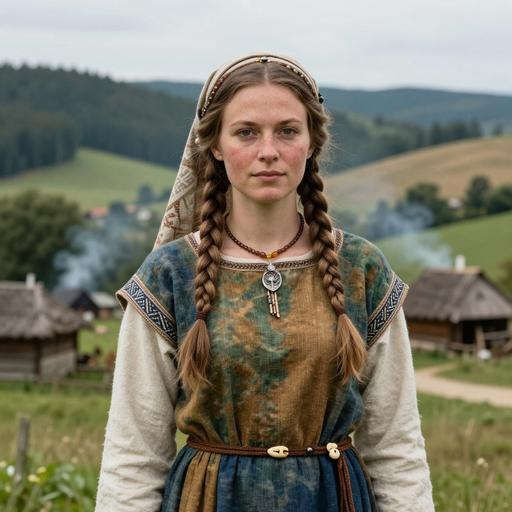
Portrait of ancient individual RISE568 from Czechia, dated 600 CE
RISE568
Czechia Czechia_EarlyMedieval_EarlySlav 600 CE Slavic F - H44a
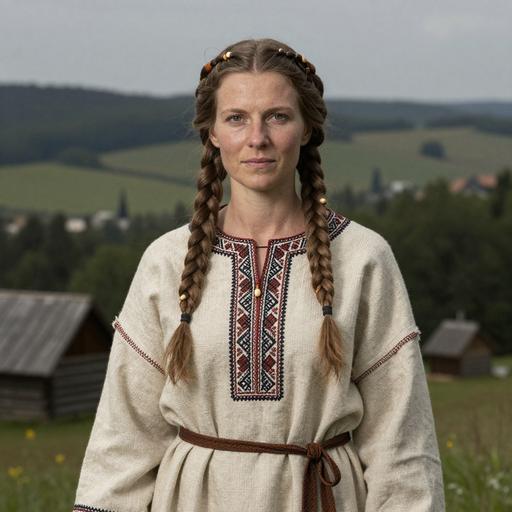
Portrait of ancient individual RISE569 from Czechia, dated 660 CE
RISE569
Czechia Czechia_EarlyMedieval_EarlySlav 660 CE Slavic F - H1af
AI Powered

AI Assistant

Ask questions about the Echoes of Early Slavs culture

AI Assistant by DNAGENICS

Unlock this feature
Ask questions about the Echoes of Early Slavs culture. Our AI assistant can explain genetic findings, historical context, archaeological evidence, and modern connections.
Sample AI Analysis

The Echoes of Early Slavs culture represents a fascinating chapter in human history...

Genetic analysis reveals connections to earlier populations while showing evidence of unique adaptations and cultural innovations. The ancient DNA samples provide insights into migration patterns, social structures, and the biological relationships between ancient populations.

This is a preview of the AI analysis. Unlock the full AI Assistant to explore detailed insights about:

  • Genetic composition and ancestry
  • Migration patterns and origins
  • Daily life and cultural practices
  • Modern genetic legacy
Use code for 30% off Expires May 12