
Menu
Store
Blog
Russia_Yazykovo_N Upper Volga, Western Siberia (Russia)

Forest Neolithic — Upper Volga

A shadowed world of lakes, pottery and genomes from northern Russia

6594 CE - 3193 BCE
1 Ancient Samples
Scroll to begin
Chapter I

The Story

Understanding the Forest Neolithic — Upper Volga culture

The Forest Neolithic (6594–3193 BCE) describes lakeside hunter‑gatherer and early Eneolithic communities across the Upper Volga and western Siberia. Archaeology from Sakhtysh, Afontova‑Gora and Ust'-Isha combined with 26 ancient genomes reveals deep maternal continuity (mtDNA U) and mixed paternal links to Eurasian steppe and Siberia.

Time Period

6594–3193 BCE

Region

Upper Volga, Western Siberia (Russia)

Common Y-DNA

R (≈10), I (≈4), Q (≈3), C (≈2), F (≈1) — subset

Common mtDNA

U (22), Z1 (2), K (1), A+ (1)
Chapter II

Timeline

Key moments in the history of this culture

6594 BCE

Earliest dated Forest Neolithic sample

The oldest sample in the assemblage dates to c. 6594 BCE, marking early lakeside occupations in the Upper Volga and adjacent regions.

Chapter III

Origins & Emergence

The Forest Neolithic unfolds across lake basins and river valleys of northern Russia between the mid‑7th and early 4th millennium BCE. Archaeological sites included here—Sakhtysh‑2, Sakhtysh‑2a, Sakhtysh‑8 (Ivanovo Oblast), Afontova‑Gora and Dolgoye‑Ozero (Krasnoyarsk Krai), Ust'-Isha (Altai Krai), Yazykovo (Ulyanovsk Oblast), Kumyshanskaya Cave (Sverdlovsk Oblast) and Zamostye‑2 (Moscow Oblast)—preserve house traces, pottery, and burials that link coastal lakeside economies with forest resources.

Material culture shows affinities to the Volosovo and Lyalovo traditions: fine tempered pottery, polished stone tools, and ritualized burials with ochre. Limited evidence suggests these communities emerged from Mesolithic hunter‑gatherers who increasingly adopted local Eneolithic practices along the Volga‑Oka axis. Archaeological data indicates episodic contact with northern Ural and West Siberian networks, reflected in decorative styles and raw material movement.

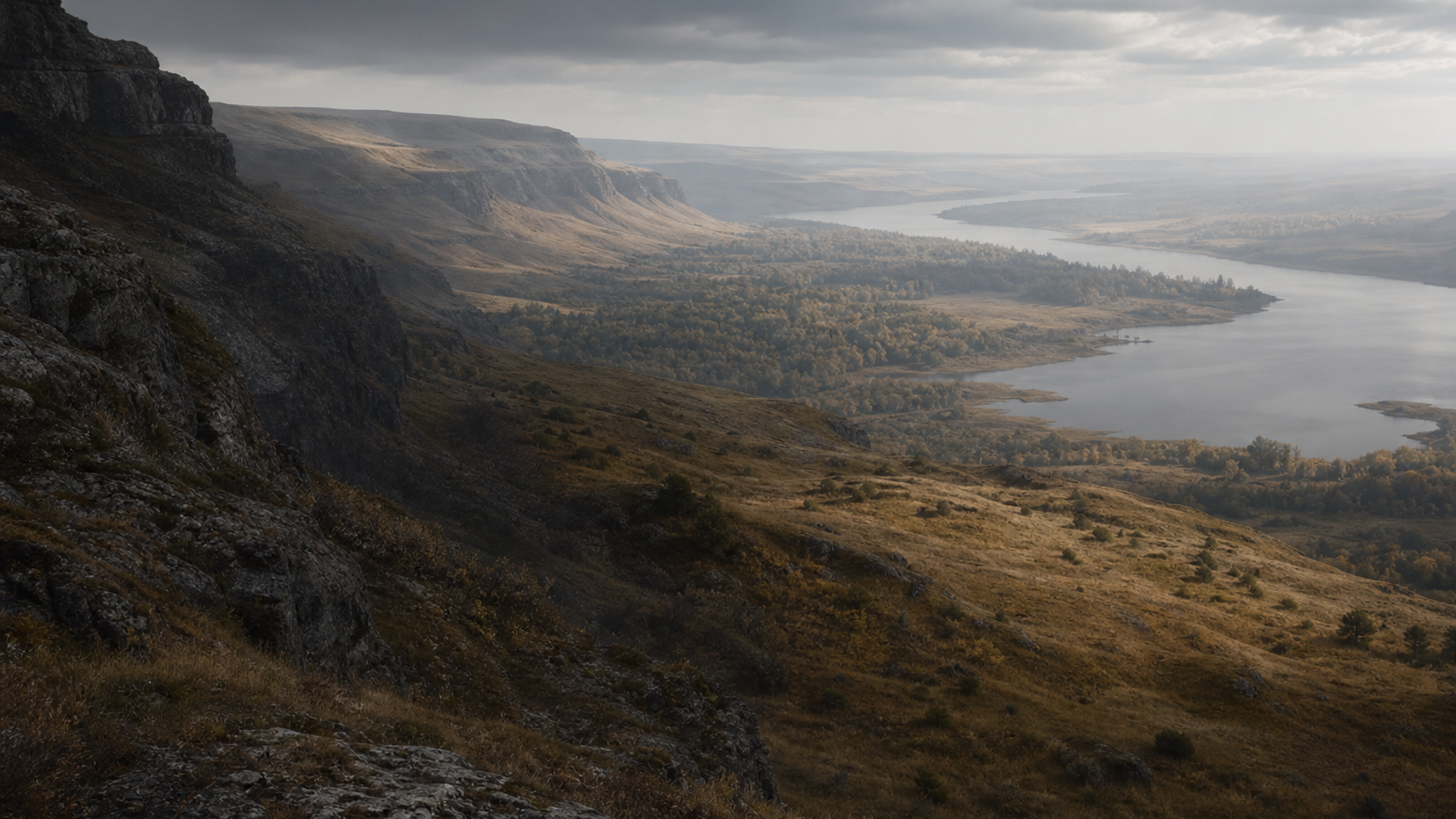
The cinematic landscape—peat bogs, birch‑pine forests and slow rivers—shaped lifeways and mobility. Although the archaeological record is regionally uneven, the combined site assemblage demonstrates a persistent forest‑zone adaptation spanning millennia.

  • Sites span 6594–3193 BCE across Upper Volga and western Siberia
  • Material culture links to Volosovo and Lyalovo traditions
  • Evidence for long‑distance contacts with northern Ural and Siberian groups
Chapter IV

Daily Life & Society

Daily life for Forest Neolithic communities was tied to lakes, rivers and mixed forest mosaics. Faunal assemblages and toolkits indicate a balanced economy of fishing (nets, bone points), seasonal hunting (elk, deer, beaver) and gathering of nuts and aquatic plants. Settlements were often seasonal or semi‑permanent on lake shores and river terraces, where shallow hearths and post‑holes hint at wooden houses.

Burial practices at Sakhtysh and Zamostye‑2 reveal social differentiation: graves sometimes contained pottery, stone tools and organic grave goods, and the use of ochre is recurrent. Craft specialization appears limited but visible in pottery shaping and antler working. Decorative motifs—cord impressions and comb patterns—tie communities into wider stylistic networks stretching to the Volga and northern forests.

Seasonality governed mobility: winter aggregations near sheltered valleys, spring and summer dispersals to fishing and hunting grounds. These rhythms are reflected archaeologically by seasonal bone profiles and habitation features.

Archaeological data indicates resilient, place‑rooted lifeways that balanced mobility with long‑term landscape knowledge.

  • Lakeside settlements with seasonal mobility
  • Fishing, hunting and plant gathering dominated subsistence
Chapter V

Genetic Profile

Twenty‑six genomes sampled from Forest Neolithic sites provide a rare window into demographic history. Maternal lineages are dominated by mtDNA U (22/26), a hallmark of European and Siberian Mesolithic populations, suggesting strong maternal continuity with pre‑farming hunter‑gatherer groups across northern Eurasia. Two Z1, one K and one A+ further indicate occasional inputs from northern Siberian and wider Eurasian pools.

Y‑chromosome data are reported for a subset of individuals (counts sum to ~20). Haplogroup R is the most frequent (≈10), with I (≈4) also present—elements often associated with European hunter‑gatherer and early Holocene groups. The presence of Q (≈3) and C (≈2) points to links with Siberian and northern Eurasian paternal ancestries. A single F signal hints at rarer eastern affinities. Because Y‑data come from a subset of remains, interpretations about paternal structure are preliminary.

Combined, the genetic picture paints a community with deep Mesolithic maternal roots and a mixed paternal heritage: predominantly local European/forest‑zone lineages with measurable Siberian connections. Limited sample sizes for some haplogroups advise caution: the patterns are suggestive but not definitive, and future sampling may refine these signals.

  • Strong maternal continuity: mtDNA U dominant (22/26)
  • Paternal mix: R and I common, Q and C indicate Siberian inputs
Chapter VI

Legacy & Modern Connections

The Forest Neolithic sits at a cultural crossroads: its pottery styles and burial rites echo into later Volosovo and Volga‑Oka traditions. Genetically, the persistence of mtDNA U links these communities to a broader Mesolithic echo in modern northern and northeastern Eurasian populations. Paternal signals of R and I suggest continuity with western Eurasian forest populations, while Q and C connect to eastern Siberia—together reflecting millennia of small‑scale migration and exchange.

These ancient genomes thus help fill a paleogenetic map of northern Eurasia, showing how lakeside lifeways mediated contact between west and east. While many questions remain—especially about social organization and the tempo of interaction—the combined archaeological and genetic evidence preserves a vivid portrait of resilient forest communities that shaped the genetic landscape of northern Eurasia.

  • Maternal continuity with Mesolithic populations across northern Eurasia
  • Genetic signals reflect both western forest and eastern Siberian connections
Chapter VII

Sample Catalog

1 ancient DNA samples associated with the Forest Neolithic — Upper Volga culture

Ancient DNA samples from this era, providing genetic insights into the people who lived during this period.

1 / 1 samples
Portrait Sample Country Era Date Culture Sex Y-DNA mtDNA
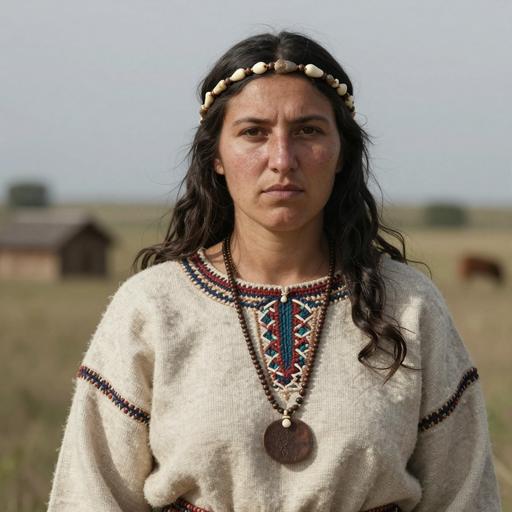
Portrait of ancient individual JAZ001 from Russia, dated 5365 BCE
JAZ001
Russia Russia_Yazykovo_N 5365 BCE Forest Neolithic F - U5a2b2
AI Powered

AI Assistant

Ask questions about the Forest Neolithic — Upper Volga culture

AI Assistant by DNAGENICS

Unlock this feature
Ask questions about the Forest Neolithic — Upper Volga culture. Our AI assistant can explain genetic findings, historical context, archaeological evidence, and modern connections.
Sample AI Analysis

The Forest Neolithic — Upper Volga culture represents a fascinating chapter in human history...

Genetic analysis reveals connections to earlier populations while showing evidence of unique adaptations and cultural innovations. The ancient DNA samples provide insights into migration patterns, social structures, and the biological relationships between ancient populations.

This is a preview of the AI analysis. Unlock the full AI Assistant to explore detailed insights about:

  • Genetic composition and ancestry
  • Migration patterns and origins
  • Daily life and cultural practices
  • Modern genetic legacy
Use code for 30% off Expires May 12





