Menu
Store
Blog
Armenia_EIA Armenian Highlands (Armenia)

Echoes of the Armenian Early Iron Age

Funerary landscapes and maternal lineages from 1150–420 BCE in the Armenian Highlands

1150 CE - 420 BCE
14 Ancient Samples
Scroll to begin
Chapter I

The Story

Understanding the Echoes of the Armenian Early Iron Age culture

Archaeological and genetic snapshots from 14 samples (1150–420 BCE) across Armenian cemeteries reveal a maternal lineage mix typical of the Caucasus and Near East. Evidence is limited but suggests regional continuity, local traditions, and links to broader Early Iron Age dynamics.

Time Period

1150–420 BCE

Region

Armenian Highlands (Armenia)

Common Y-DNA

Not reported / limited data

Common mtDNA

T2b (2), K (2), H (1), U3c (1), U7a (1)

Chapter II

Timeline

Key moments in the history of this culture

1150 BCE

Early Iron Age signatures appear in the Armenian Highlands

Local funerary styles and early iron use emerge across Armenian sites, marking transitions from Late Bronze Age patterns (1150 BCE).

Chapter III

Origins & Emergence

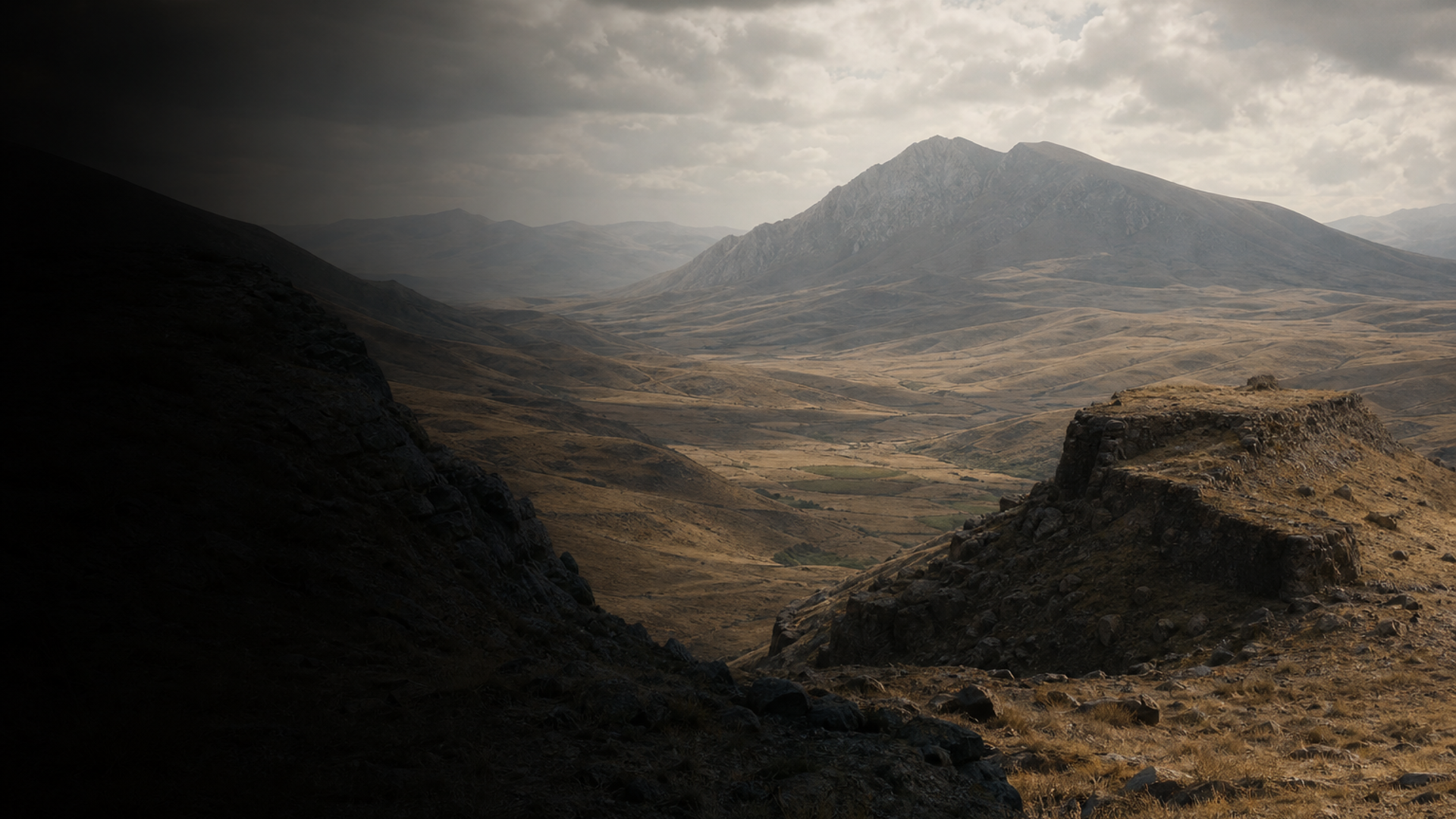
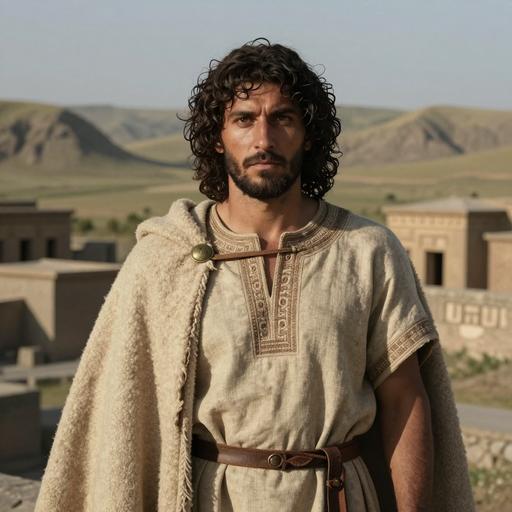
The Armenian Early Iron Age unfolds across a highland tapestry of rocky plateaus and river valleys where small cemeteries and settlement mounds mark human presence between 1150 and 420 BCE. Archaeological sites sampled for the Armenia_EIA dataset — including Bover Cemetery, the Pijut Archaeological Complex, Bragdzor cemetery, Noratus, and Sarukhan — preserve funerary architecture, ceramic styles, and metalwork that bridge the Late Bronze Age and later Iron Age polities.

Archaeological data indicate a period of local continuity in funerary practice alongside innovations: increased use of iron tools, refinements in metalworking, and evolving ceramic forms. This era overlaps with the early expansion of regional powers in the highlands and the emergence of Urartian cultural influence in parts of the Armenian Highlands during the 9th–6th centuries BCE. Limited evidence suggests both persistent local traditions and new connections by mobility and exchange across the southern Caucasus and adjacent Near East.

Genetically, the maternal lineages recovered here reflect a West Asian and Caucasus-oriented repertoire rather than a single migratory episode. However, with 14 individuals sampled, conclusions about population origins and movements must remain provisional: archaeogenetic interpretation benefits from integrating more genome-wide data and broader contextual sampling.

  • Sites sampled: Bover Cemetery, Pijut, Bragdzor, Noratus, Sarukhan
  • Dates: 1150–420 BCE, bridging Late Bronze and Early Iron Age
  • Evidence for local continuity with regional interactions
Chapter IV

Daily Life & Society

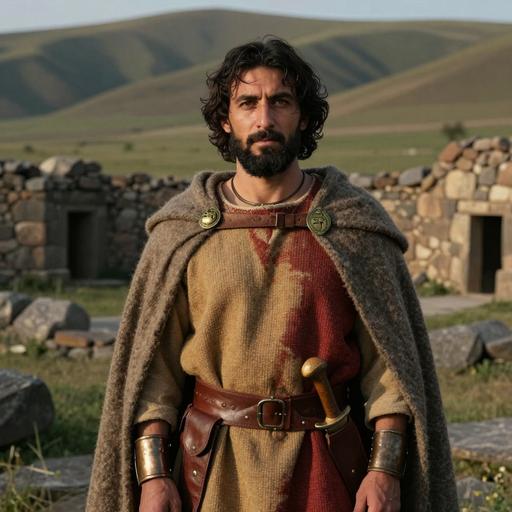
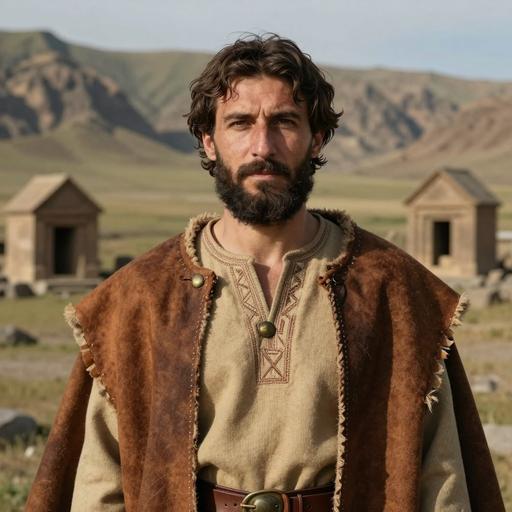
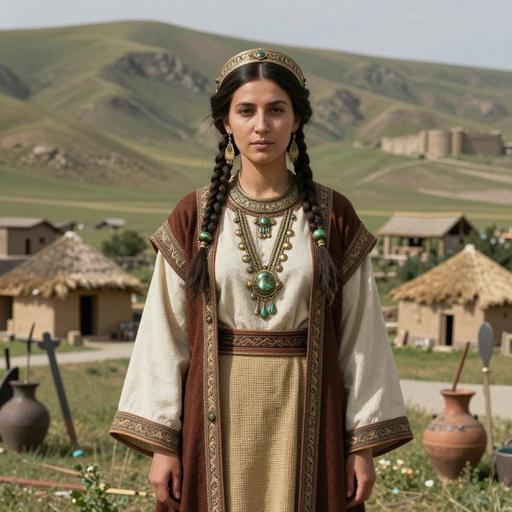
The material traces of everyday life in the Armenian Early Iron Age are fragmentary but vivid: burial grounds yield pottery vessels, bronze and iron tools, ornaments, and occasionally weaponry, suggesting communities engaged in mixed farming, pastoralism, and craft specialization. Cemeteries such as Bragdzor and Noratus provide cinematic snapshots — rows of graves punctuated by stone settings, the glint of metal from a funerary assemblage, and ceramic sherds whose shapes echo long-lived traditions.

Archaeological evidence indicates a landscape of small agrarian hamlets connected by seasonal pasture routes and localized exchange networks. Metalworking advances, including iron use, transformed tools and household items, while luxury objects and imported wares point to participation in wider trade networks. Social differentiation appears in grave goods, where more richly furnished burials suggest emerging hierarchies or differing roles within communities.

Skeletal remains, when preserved, hint at physically demanding lifeways shaped by fieldwork, herding, and craft. Where present, animal remains and plant macrofossils contribute to reconstructions of diet and economy, but preservation is uneven and interpretations remain cautiously framed by the available data.

  • Mixed farming and pastoralism with craft specialization
  • Burial variability points to social differentiation and exchange
Chapter V

Genetic Profile

The Armenia_EIA assemblage comprises 14 sampled individuals dated between 1150 and 420 BCE. Mitochondrial DNA is the clearer signal in this dataset: observed mtDNA haplogroups include T2b (2 individuals), K (2), H (1), U3c (1), and U7a (1). These maternal lineages are broadly consistent with a Caucasus–Near Eastern maternal repertoire — T and K are widespread across Anatolia and Europe, while U7 and U3 subclades have stronger affinities to the Near East and the Caucasus.

Importantly, Y-chromosome haplogroup data are not consistently reported for these samples, so paternal lineages and sex-biased migration dynamics cannot be robustly assessed from this set alone. Likewise, genome-wide analyses would be necessary to quantify ancestry components commonly discussed for the region (for example, Caucasus Hunter-Gatherer–related ancestry, Anatolian farmer ancestry, and steppe-related inputs). Archaeogenetic studies in the southern Caucasus more broadly have documented complex admixture over millennia; the mtDNA spectrum here aligns with that pattern but does not on its own resolve the timing or source of autosomal admixture.

Because the sample count is modest, and several haplogroup counts are singletons, interpretations remain preliminary. Expanded sampling and nuclear DNA data would provide stronger evidence for continuity, migration, and social structure in the Armenian Early Iron Age.

  • mtDNA: T2b (2), K (2), H (1), U3c (1), U7a (1) — suggests Caucasus/Near East maternal ties
  • Y-DNA: not consistently reported; autosomal data needed to assess admixture
Chapter VI

Legacy & Modern Connections

The human stories preserved in Armenia_EIA sites echo into the present through material culture, landscape use, and genetic echoes. Archaeological continuity in settlement patterns and craft traditions suggests that Late Bronze Age lifeways adapted rather than vanished, feeding into later Iron Age polities and cultural formations in the highlands. Cinematic scenes — smoke from a hearth in a stone-walled dwelling, a smith shaping iron at dusk, or a procession to a cemetery on a windswept plateau — convey continuity of place even as social structures evolved.

Genetically, some broader ancient-to-modern comparisons in the Caucasus report partial continuity between Iron Age and later populations, but also later admixture events. For Armenia_EIA specifically, the small maternal sample hints at regional continuity with the Caucasus and Near East; however, definitive links to modern Armenian genetic diversity require larger, genome-wide datasets. In short, these samples provide evocative, preliminary glimpses that anchor modern genetic landscapes in deep, complex histories.

  • Material and genetic evidence suggest elements of regional continuity
  • Definitive links to modern populations require more genome-wide data
Chapter VII

Sample Catalog

14 ancient DNA samples associated with the Echoes of the Armenian Early Iron Age culture

Ancient DNA samples from this era, providing genetic insights into the people who lived during this period.

14 / 14 samples
Portrait Sample Country Era Date Culture Sex Y-DNA mtDNA
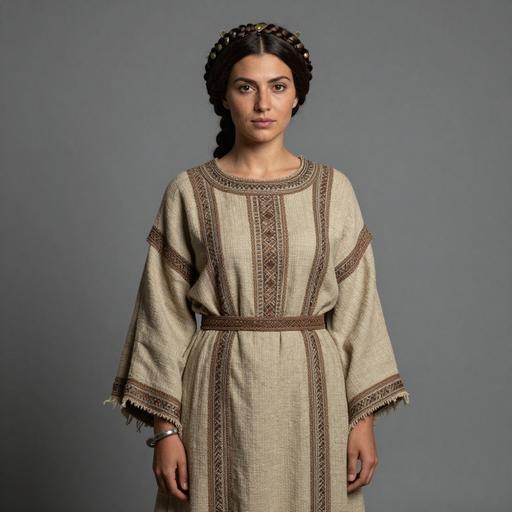
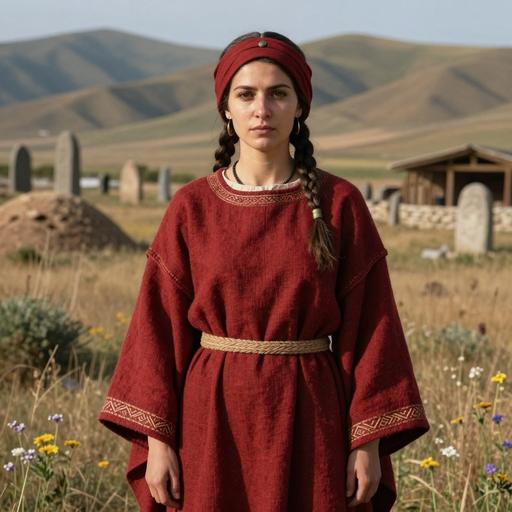
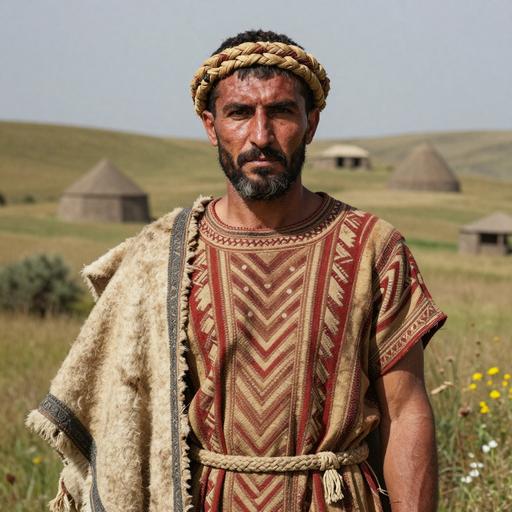
Portrait of ancient individual I19322 from Armenia, dated 777 BCE
I19322
Armenia Armenia_EIA 777 BCE Ancient Near Eastern Civilization F - X2
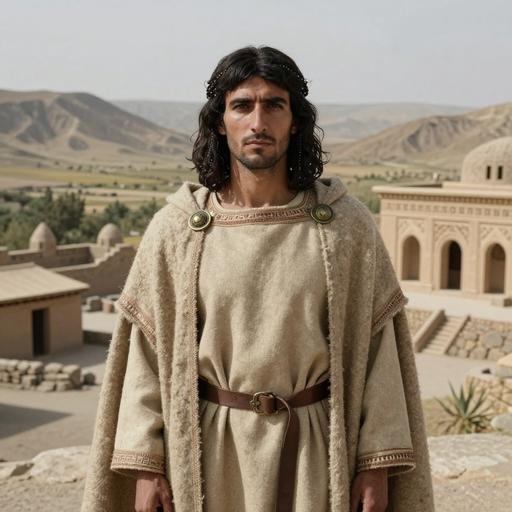
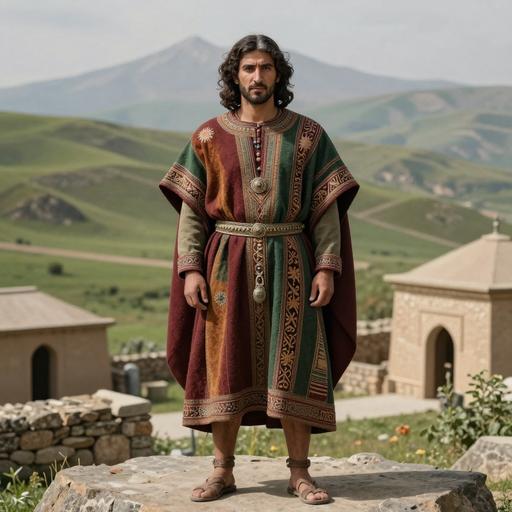
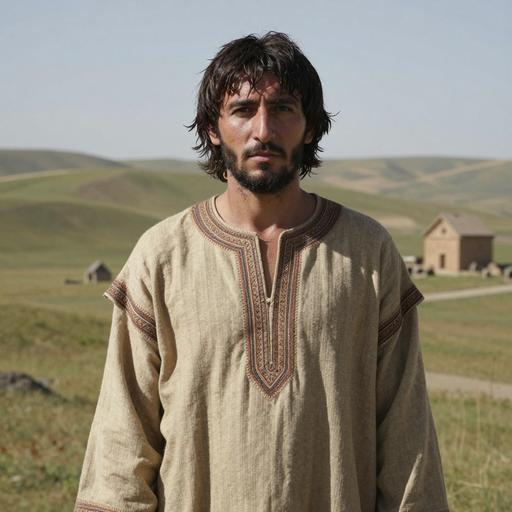
Portrait of ancient individual I16191 from Armenia, dated 779 BCE
I16191
Armenia Armenia_EIA 779 BCE Ancient Near Eastern Civilization M - U7a
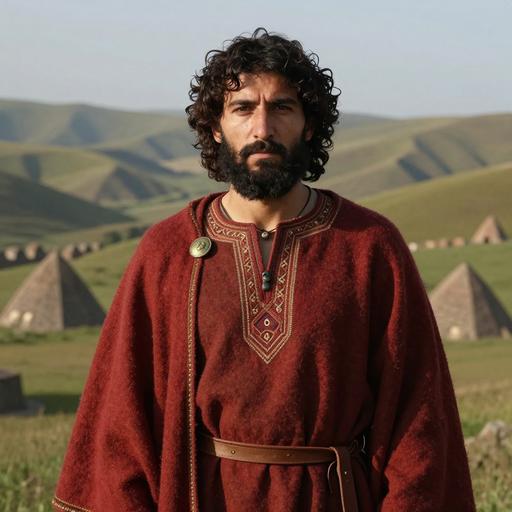
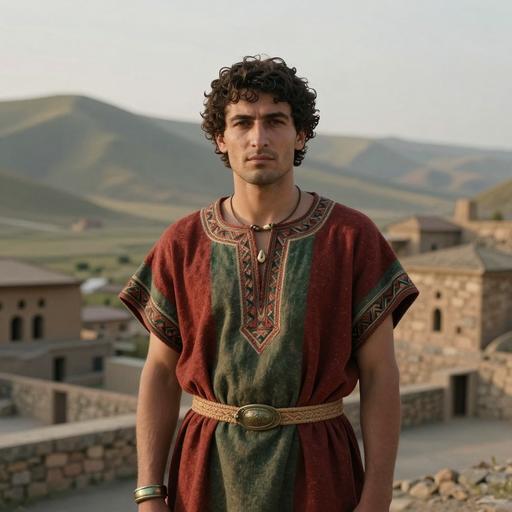
Portrait of ancient individual I16117 from Armenia, dated 765 BCE
I16117
Armenia Armenia_EIA 765 BCE Ancient Near Eastern Civilization M - U3c
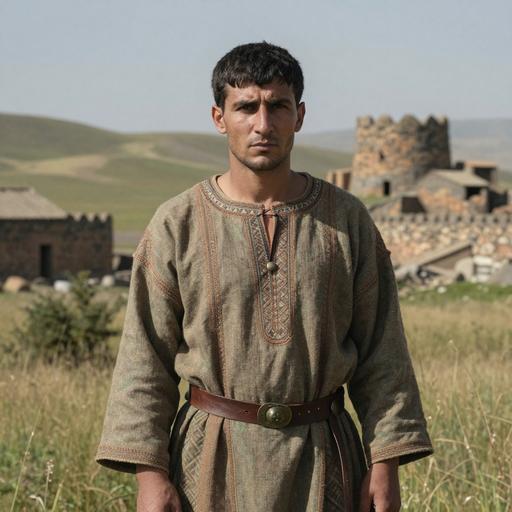
Portrait of ancient individual I17181 from Armenia, dated 776 BCE
I17181
Armenia Armenia_EIA 776 BCE Ancient Near Eastern Civilization F - T2b
Portrait of ancient individual I16116 from Armenia, dated 1150 BCE
I16116
Armenia Armenia_EIA 1150 BCE Ancient Near Eastern Civilization F - H14a
Portrait of ancient individual I20444 from Armenia, dated 788 BCE
I20444
Armenia Armenia_EIA 788 BCE Ancient Near Eastern Civilization M - T2a1b2b
Portrait of ancient individual I17180 from Armenia, dated 755 BCE
I17180
Armenia Armenia_EIA 755 BCE Ancient Near Eastern Civilization M - U4d3
Portrait of ancient individual I16219 from Armenia, dated 773 BCE
I16219
Armenia Armenia_EIA 773 BCE Ancient Near Eastern Civilization M - T2b
Portrait of ancient individual I16193 from Armenia, dated 800 BCE
I16193
Armenia Armenia_EIA 800 BCE Ancient Near Eastern Civilization M - T2
Portrait of ancient individual I16194 from Armenia, dated 800 BCE
I16194
Armenia Armenia_EIA 800 BCE Ancient Near Eastern Civilization M - K3
AI Powered

AI Assistant

Ask questions about the Echoes of the Armenian Early Iron Age culture

AI Assistant by DNAGENICS

Unlock this feature
Ask questions about the Echoes of the Armenian Early Iron Age culture. Our AI assistant can explain genetic findings, historical context, archaeological evidence, and modern connections.
Sample AI Analysis

The Echoes of the Armenian Early Iron Age culture represents a fascinating chapter in human history...

Genetic analysis reveals connections to earlier populations while showing evidence of unique adaptations and cultural innovations. The ancient DNA samples provide insights into migration patterns, social structures, and the biological relationships between ancient populations.

This is a preview of the AI analysis. Unlock the full AI Assistant to explore detailed insights about:

  • Genetic composition and ancestry
  • Migration patterns and origins
  • Daily life and cultural practices
  • Modern genetic legacy
Use code for 35% off Expires May 21