Menu
Store
Blog
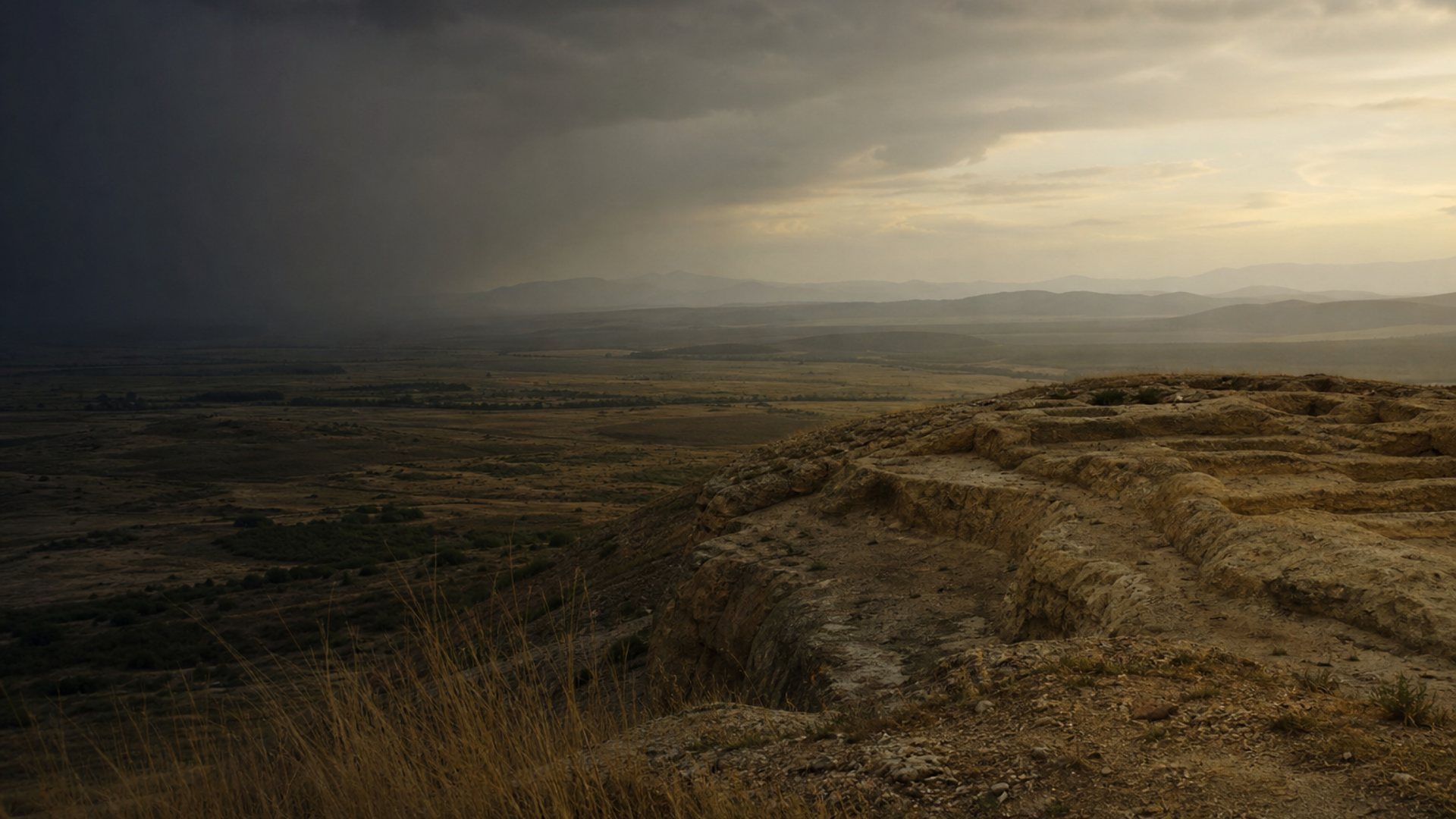
Lower Thracian Plain, Bulgaria (Nova Zagora)

Ezero Dawn: Nova Zagora Early Bronze Age

Two glimpses from Sabrano into Bulgaria's 4th–3rd millennium BCE world

3300 CE - 2700 BCE
Scroll to begin
Chapter I

The Story

Understanding the Ezero Dawn: Nova Zagora Early Bronze Age culture

Archaeological finds from the Ezero culture at Sabrano (Nova Zagora, Bulgaria) dated 3300–2700 BCE reveal settlement tells, emerging metallurgy, and one mtDNA K lineage from two samples — a small but evocative window into Early Bronze Age transformations.

Time Period

3300–2700 BCE

Region

Lower Thracian Plain, Bulgaria (Nova Zagora)

Common Y-DNA

Not reported / low sample count

Common mtDNA

K (1 of 2 samples)

Chapter II

Timeline

Key moments in the history of this culture

2500 BCE

Height of Ezero occupation near Nova Zagora

Archaeological assemblages at Sabrano suggest intensified settlement activity, craft specialization, and copper use in the Lower Thracian plain around 2500 BCE.

Chapter III

Origins & Emergence

Stretching across the later 4th and early 3rd millennia BCE, the Ezero horizon in Bulgaria marks a cinematic turning point: sun-bleached tells, copper flashing on chisels, and pottery shapes that carry echoes of Chalcolithic networks. Archaeological data indicates the Ezero complex (3300–2700 BCE) grew from local Chalcolithic roots in the Lower Thracian plain and incorporated influences from adjacent Balkan and Aegean communities. Sites around Nova Zagora—most notably material recovered at Sabrano—display settlement continuity alongside new craft specializations and changing mortuary behaviors.

Limited evidence suggests this was a period of intensified metal use and regional exchange rather than wholesale population replacement. Tell formation and household assemblages imply sedentary villages with interwoven domestic and workshop spaces. At the same time, stylistic shifts in ceramics and the appearance of new tool types point to networks of interaction that reshaped local lifeways. While the archaeological picture is rich, the genetic window is narrow: only two sampled individuals from Sabrano are available, so broader demographic narratives must remain cautious and provisional.

  • Ezero culture dated c. 3300–2700 BCE in Lower Thrace
  • Sabrano (Nova Zagora) yields key settlement and material evidence
  • Archaeological signs of metallurgy and expanded exchange networks
Chapter IV

Daily Life & Society

Daily life in Ezero communities combined rooted farming rhythms with the sparks of new craft technologies. Archaeological data indicates mixed cereal cultivation and animal husbandry supported clustered villages built on low tells; hearths, storage pits, and craft areas were integral to domestic space. Pottery—both utilitarian and decorated—served cooking, storage, and social display, while worked copper and stone tools signal advancing craft specialization.

Personal ornaments and functional items recovered at Sabrano paint a textured social scene: identities tied to household production, exchange, and lifelong crafting skills. Limited burial data from the region suggest variability in funerary practice, hinting at social differentiation, but the paucity of securely associated graves with genetic samples prevents definitive reconstructions of status or kinship systems. In all, Ezero daily life seems to have balanced conservative agricultural routines with emergent metallurgical and exchange networks that would shape the Balkans' trajectory into the Bronze Age.

  • Mixed farming and animal husbandry sustained villages on tells
  • Copper tools and specialized craft areas appear alongside pottery
Chapter V

Genetic Profile

Genetic data for Bulgaria_EBA_Ezero is extremely limited: only two individuals sampled from Sabrano (Nova Zagora). Of these, one carries mitochondrial haplogroup K; Y-chromosome lineages were not reported for these samples. Because the sample count is so small (<10), any genetic inference must be treated as preliminary.

Mitochondrial haplogroup K is associated in many studies with lineages that spread into Europe during and after the Neolithic farmer expansions; its presence in an Ezero-era individual is consistent with maternal continuity from earlier farming populations in the Balkans. However, a single mtDNA match cannot reveal the population-wide balance of ancestries. Archaeological data indicates continuity in settlement and material culture from Chalcolithic farmers, which could align with predominant farmer-derived ancestry, but regional Early Bronze Age contexts elsewhere in the Balkans show variable steppe-related admixture emerging in this period. Without reported Y-DNA or genome-wide autosomal data for these two Sabrano samples, we cannot assess male-mediated migrations, admixture proportions, or kinship patterns.

In sum: the mtDNA K result is informative at the individual level and compatible with farmer-lineage persistence, but broader demographic claims for the Ezero assemblage require many more genomes from well-contextualized graves.

  • Only 2 samples from Sabrano; conclusions are highly preliminary
  • One mtDNA K lineage found; no reported Y-DNA in these samples
Chapter VI

Legacy & Modern Connections

The archaeological imprint of the Ezero horizon—settlement consolidation, metallurgy, and expanding exchange—contributed to the cultural foundations of later Bronze Age societies in the Balkans. Genetically, maternal lineages such as mtDNA K persist in modern European populations, underscoring long threads of continuity, but the modest sample size from Sabrano prevents specific ancestry-to-modern links.


Archaeological legacies include technical traditions in metalworking and ceramic forms that fed into subsequent regional developments. For contemporary genetic studies, these two Ezero samples offer a tantalizing starting point: they hint at farmer-lineage continuity in southern Bulgaria while reminding researchers that only a larger, well-dated set of genomes can illuminate how Ezero communities contributed to the genetic tapestry of Southeastern Europe.

  • Material culture influenced later Bronze Age developments in the Balkans
  • mtDNA K presence hints at Neolithic farmer continuity, but broader links remain untested
AI Powered

AI Assistant

Ask questions about the Ezero Dawn: Nova Zagora Early Bronze Age culture

AI Assistant by DNAGENICS

Unlock this feature
Ask questions about the Ezero Dawn: Nova Zagora Early Bronze Age culture. Our AI assistant can explain genetic findings, historical context, archaeological evidence, and modern connections.
Sample AI Analysis

The Ezero Dawn: Nova Zagora Early Bronze Age culture represents a fascinating chapter in human history...

Genetic analysis reveals connections to earlier populations while showing evidence of unique adaptations and cultural innovations. The ancient DNA samples provide insights into migration patterns, social structures, and the biological relationships between ancient populations.

This is a preview of the AI analysis. Unlock the full AI Assistant to explore detailed insights about:

  • Genetic composition and ancestry
  • Migration patterns and origins
  • Daily life and cultural practices
  • Modern genetic legacy
Use code for 35% off Expires May 21