Menu
Store
Blog
South Coast, Brazil (Galheta IV)

Galheta IV Sambaqui: Coastal Ancestor

A 7th–9th century CE burial from Galheta IV linking shell‑mound life to a Native American maternal lineage

644 CE - 8331200 CE
Scroll to begin
Chapter I

The Story

Understanding the Galheta IV Sambaqui: Coastal Ancestor culture

Single ancient-DNA sample (644–833 CE) from the Galheta IV sambaqui on Brazil's south coast. Mitochondrial haplogroup C1c detected; archaeological evidence ties the individual to shell-mound coastal lifeways. Conclusions are preliminary given n=1.

Time Period

644–833 CE (≈1200 BP)

Region

South Coast, Brazil (Galheta IV)

Common Y-DNA

Unknown / not reported

Common mtDNA

C1c (1 sample)

Chapter II

Timeline

Key moments in the history of this culture

2500 BCE

Emergence of Sambaqui mound‑building

Shell‑mound (sambaqui) traditions expand along Brazil's coast, leaving layered middens that record long‑term coastal occupation and resource use.

Chapter III

Origins & Emergence

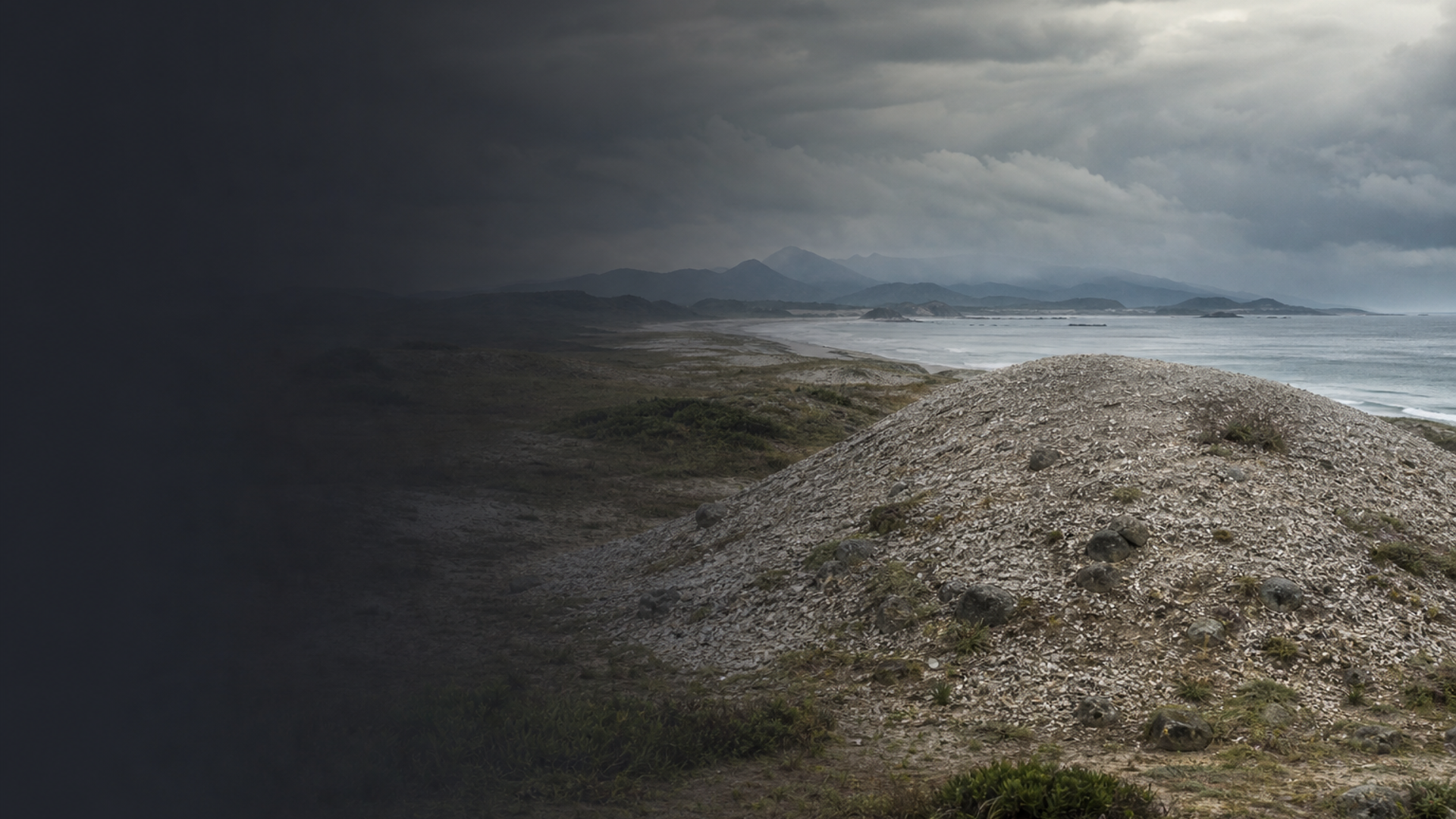
Galheta IV sits on the temperate south coast of Brazil where the long tradition of sambaqui — expansive shell‑mound and midden complexes — records millennia of human occupation. Archaeological data indicates that these mounds were formed by intensive coastal foraging, repeated occupation episodes, and the disposal of shells, bones, and other cultural debris. The dated interval for this DNA sample, 644–833 CE, places the individual within a late phase of sambaqui activity when sites often contained formal burials and complex stratigraphy.

The emergence of sambaqui landscapes spans thousands of years in southern and southeastern Brazil; localized traditions waxed and waned in response to coastal ecology, sea‑level changes, and human mobility. At Galheta IV, stratigraphic excavation and midden analysis suggest a community deeply engaged with the rich littoral resources — fish, shellfish, and marine mammals — alongside plant processing and tool production. Limited evidence suggests some degree of social differentiation at larger sambaqui sites, reflected in burial placement and grave goods, though specific details for Galheta IV remain sparse.

Key uncertainties remain: precise demographic size, the permanence of settlements, and external contacts. The single genetic sample offers a new line of inquiry into maternal ancestry, but broader conclusions about origins for the Galheta IV population require more samples and integrated dating.

  • Galheta IV: late sambaqui phase (644–833 CE)
  • Sambaqui formed by intensive coastal foraging and repeated occupation
  • Long regional tradition; local dynamics shaped by ecology and mobility
Chapter IV

Daily Life & Society

Archaeological data from sambaqui sites paints a cinematic picture of everyday life on Brazil’s ancient shores: gatherings by salt spray and the steady percussion of stone tools as coastal communities harvested shellfish, fished from boats, and processed marine and terrestrial resources. At larger sambaqui, layered middens preserve the detritus of diet, craft, and ritual — thick deposits of shells, fish bone, worked stone, and occasional ceramic fragments.

For Galheta IV specifically, depositional patterns and burial contexts indicate repeated use of the spot for both subsistence and commemoration. People likely organized daily life around tidal cycles and seasonal migrations of key species, with craft specialization in bone and shell working. Spatial organization within sambaqui could include discrete activity areas, hearths, and interment spaces; however, on‑site variability is high and excavation coverage at Galheta IV remains limited. Archaeological data indicates community resilience and deep local knowledge of coastal resources, even as broader social networks may have linked sambaqui groups along the coast.

Interpretations of social structure — kinship, leadership, and exchange — remain tentative at Galheta IV because of sparse material remains and the single genomic sample. Ethnoarchaeological analogies help imagine household rhythms, but direct evidence is fragmentary.

  • Diet dominated by marine resources; shell and bone middens preserve daily refuse
  • Crafts included bone and shell working; spatially structured activity within mounds
Chapter V

Genetic Profile

The ancient DNA result from Galheta IV is limited but meaningful: the single analyzed individual carries mitochondrial haplogroup C1c. C1c is one of several founding Native American maternal lineages, widely observed across ancient and modern Indigenous populations of the Americas. This maternal marker aligns with expectations for pre‑Columbian coastal populations in South America and suggests maternal continuity with broader Native American genetic diversity.

No Y‑chromosome haplogroup is reported for this individual, so paternal lineage cannot be assessed. With only one sequenced sample (n=1), population‑level inferences are premature. Archaeogenetic patterns from other coastal sambaqui and nearby regions show variability — some studies report continuity with present‑day Indigenous groups, while others reveal complex admixture over time — but direct comparisons to Galheta IV are constrained by limited sampling.

Genetics complements archaeology here by anchoring one thread of ancestry in a tangible individual. Combined future sampling across Galheta IV strata and neighboring sambaqui will be required to test hypotheses about maternal lineage continuity, mobility along the coast, and potential genetic links between sambaqui builders and inland groups. For now, the C1c result offers a cautious glimpse: a coastal life recorded both in shell and in mitochondria.

  • mtDNA C1c detected — a Native American maternal lineage
  • n=1: conclusions are preliminary; no Y‑DNA reported
Chapter VI

Legacy & Modern Connections

The Galheta IV individual connects a human face to the enduring sambaqui landscape. Archaeological traces in shell and bone speak to sustained expertise in coastal living, while the mitochondrial C1c lineage ties that life to the larger tapestry of Indigenous Americas. For descendant communities and researchers alike, such findings underscore continuity of place and ancestral ties to the shore.

However, the legacy must be framed with humility: one genetic sample cannot map community identity or continuity on its own. Archaeological data indicates deep-time occupations of the coast, and when combined with expanded ancient DNA sampling, these lines of evidence can illuminate migration, exchange, and resilience in the face of environmental change. Responsible collaboration with local and Indigenous stakeholders is essential to interpret and honor these connections.

  • Links archaeological presence to Indigenous maternal ancestry
  • Broad conclusions require more samples and community collaboration
AI Powered

AI Assistant

Ask questions about the Galheta IV Sambaqui: Coastal Ancestor culture

AI Assistant by DNAGENICS

Unlock this feature
Ask questions about the Galheta IV Sambaqui: Coastal Ancestor culture. Our AI assistant can explain genetic findings, historical context, archaeological evidence, and modern connections.
Sample AI Analysis

The Galheta IV Sambaqui: Coastal Ancestor culture represents a fascinating chapter in human history...

Genetic analysis reveals connections to earlier populations while showing evidence of unique adaptations and cultural innovations. The ancient DNA samples provide insights into migration patterns, social structures, and the biological relationships between ancient populations.

This is a preview of the AI analysis. Unlock the full AI Assistant to explore detailed insights about:

  • Genetic composition and ancestry
  • Migration patterns and origins
  • Daily life and cultural practices
  • Modern genetic legacy
Use code for 35% off Expires May 20