Menu
Store
Blog
Belgium_UP_GoyetQ53_1 Goyet cave, Namur province, Belgium (Troisième caverne)

Goyet Q53-1 — Upper Paleolithic Belgium

A lone 26,440–25,823 BCE individual from Troisième caverne ties cave life to ancient genomes

26440 CE - 25823 BCE
1 Ancient Samples
Scroll to begin
Chapter I

The Story

Understanding the Goyet Q53-1 — Upper Paleolithic Belgium culture

Single Upper Paleolithic genome from Goyet's Troisième caverne (c. 26.4–25.8k BCE). Archaeological remains and mtDNA U2 hint at deep European hunter‑gatherer lineages. Conclusions are preliminary because only one sample is available.

Time Period

c. 26,440–25,823 BCE

Region

Goyet cave, Namur province, Belgium (Troisième caverne)

Common Y-DNA

Unknown / not reported (no male haplogroup data)

Common mtDNA

U2 (1 sample)

Chapter II

Timeline

Key moments in the history of this culture

26300 BCE

Individual dated at Goyet

A human sample from Troisième caverne yields radiocarbon dates centered near 26.3k BCE and mitochondrial haplogroup U2.

Chapter III

Origins & Emergence

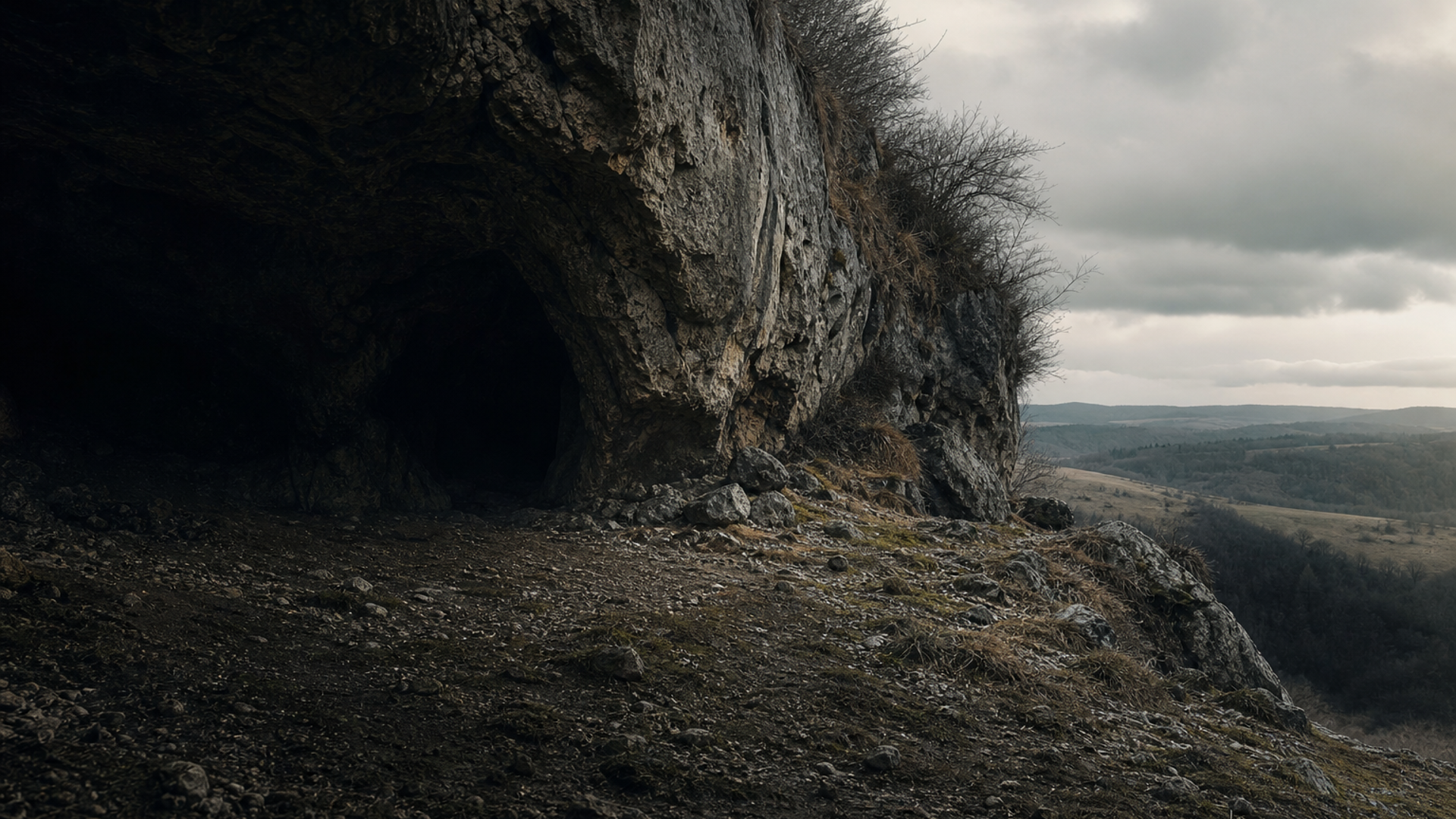
The lone individual catalogued as Belgium_UP_GoyetQ53_1 derives from the Troisième caverne of Goyet cave, a deep limestone refuge in the Namur region of modern Belgium. Radiocarbon-calibrated dates place the burial or deposition between roughly 26,440 and 25,823 BCE, situating this person in the later Upper Paleolithic — a cold, dynamic interval that precedes the Last Glacial Maximum. Archaeological data from Goyet cave indicate repeated human use across millennia; stratified deposits contain stone tools, faunal remains, and traces of habitation that together evoke episodic sheltering and long-distance mobility. The technological signature at Goyet has been variously attributed to late Gravettian and related traditions, but precise cultural assignment for this single individual remains uncertain.

From an archaeological perspective, the site sits at the interface of open periglacial landscapes and sheltered river valleys. Such settings offered predictable hunting opportunities and seasonal resources, which shaped human movement and social networks. Geochemical and stratigraphic work at Goyet shows reworking in places, so context must be read carefully. Limited evidence suggests that the people who used the cavern engaged in specialized hunting of large herbivores, curated stone toolkits, and occasional long-distance exchange of raw materials. This single genome provides a rare genetic window into a population otherwise known only from stone and bone, but with only one sample the picture of origin and emergence is necessarily tentative.

  • Dated to c. 26,440–25,823 BCE, late Upper Paleolithic
  • From Troisième caverne, Goyet cave, Namur, Belgium
  • Archaeology suggests periglacial hunter‑gatherer occupations
Chapter IV

Daily Life & Society

The cinematic image of life at Goyet is one of harsh winters and brief summers, where small bands of mobile hunter‑gatherers moved across a mosaic of steppe and riverine corridors. Archaeological deposits in the Goyet complex preserve stone tools and butchered bone fragments consistent with repeated seasonal occupations: individuals likely tracked herds, prepared hides, and maintained versatile toolkits. Hearth lenses and concentrations of lithic debris indicate episodic hearth-centered activity areas within the cave’s chambers, though preservation and later disturbance complicate fine-grained reconstructions.

Social life in such groups would have emphasized cooperation, knowledge transmission, and mobility. Curated blades and retouched points imply careful maintenance of tools carried between camps, while long-range raw materials found in the broader region point to networks of exchange or seasonal aggregation. Artistic expression and symbolic behavior are known elsewhere in Upper Paleolithic Europe; at Goyet, such expressions are less abundant in the preserved record or await clearer attribution. Importantly, interpretations of social structure and diet for Belgium_UP_GoyetQ53_1 are mediated by the single-sample constraint: archaeological inferences are drawn from the broader site context rather than from this individual alone.
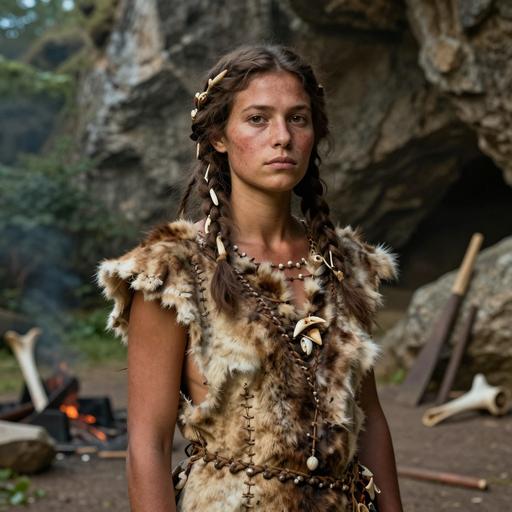
  • Seasonal mobility, hunting of large herbivores, and curated toolkits
  • Evidence of episodic hearths and repeated cave use, but context is complex
Chapter V

Genetic Profile

Genetic analysis of Belgium_UP_GoyetQ53_1 produced mitochondrial haplogroup U2. U2 is one of several maternal lineages documented in Upper Paleolithic Europe and is interpreted as part of the deep maternal diversity present among Pleistocene hunter‑gatherers. The presence of U2 in this individual aligns with a broader pattern in which U‑lineages (including U2, U4, U5 and others) were prominent among pre‑Holocene Europeans, suggesting long-standing maternal ancestries that predate many later post‑glacial demographic shifts.

No Y‑chromosome haplogroup is reported for this sample (either because the individual was female, coverage was insufficient, or male-specific data were not recovered), so paternal affinities remain unknown. Genome-wide data from a single specimen can reveal affinity to contemporaneous or geographically adjacent Upper Paleolithic individuals, but with n = 1 any population-level inference is preliminary. Ancient DNA from Goyet and comparable caves helps map the mosaic of Paleolithic ancestry in Europe — showing regional continuity in some maternal lineages and complex patterns of movement in others — yet the small sample size here limits the resolution. Future discoveries and additional genomes from Goyet’s stratified deposits will be essential to confirm whether the U2 lineage represents a local maternal continuity or a more mobile demographic signal.

  • Mitochondrial haplogroup U2 detected (1 sample)
  • No Y‑DNA reported; genome-wide conclusions are preliminary (n = 1)
Chapter VI

Legacy & Modern Connections

The legacy of Belgium_UP_GoyetQ53_1 lies less in direct descent lines and more in the story the genome tells about deep European ancestry. Maternal lineages like U2 are threads in the tapestry of Pleistocene Europe, contributing to the genetic substrate that later populations inherited, reshaped, and layered with new migrations. Archaeological continuity at Goyet cave underscores the locale’s long role as a human refuge across climatic swings — a place where cultural and biological legacies were forged and occasionally preserved.

Because only one sample is available, any claims of continuity to modern Belgians or other groups must be cautious: ancient genomes document ancestry components, not simple one-to-one descent. Nevertheless, combining the archaeological record of Goyet with this early mtDNA datapoint enriches our understanding of how small, mobile groups persisted through severe environmental change and contributed to the genetic mosaic of later Europe.

  • U2 represents a deep maternal lineage contributing to Europe’s Paleolithic heritage
  • Single-sample limits direct connections to modern populations; broader patterns require more data
Chapter VII

Sample Catalog

1 ancient DNA samples associated with the Goyet Q53-1 — Upper Paleolithic Belgium culture

Ancient DNA samples from this era, providing genetic insights into the people who lived during this period.

1 / 1 samples
Portrait Sample Country Era Date Culture Sex Y-DNA mtDNA
Portrait of ancient individual GoyetQ53-1 from Belgium, dated 26440 BCE
GoyetQ53-1
Belgium Belgium_UP_GoyetQ53_1 26440 BCE European Paleolithic F - U2
AI Powered

AI Assistant

Ask questions about the Goyet Q53-1 — Upper Paleolithic Belgium culture

AI Assistant by DNAGENICS

Unlock this feature
Ask questions about the Goyet Q53-1 — Upper Paleolithic Belgium culture. Our AI assistant can explain genetic findings, historical context, archaeological evidence, and modern connections.
Sample AI Analysis

The Goyet Q53-1 — Upper Paleolithic Belgium culture represents a fascinating chapter in human history...

Genetic analysis reveals connections to earlier populations while showing evidence of unique adaptations and cultural innovations. The ancient DNA samples provide insights into migration patterns, social structures, and the biological relationships between ancient populations.

This is a preview of the AI analysis. Unlock the full AI Assistant to explore detailed insights about:

  • Genetic composition and ancestry
  • Migration patterns and origins
  • Daily life and cultural practices
  • Modern genetic legacy
Use code for 35% off Expires May 20