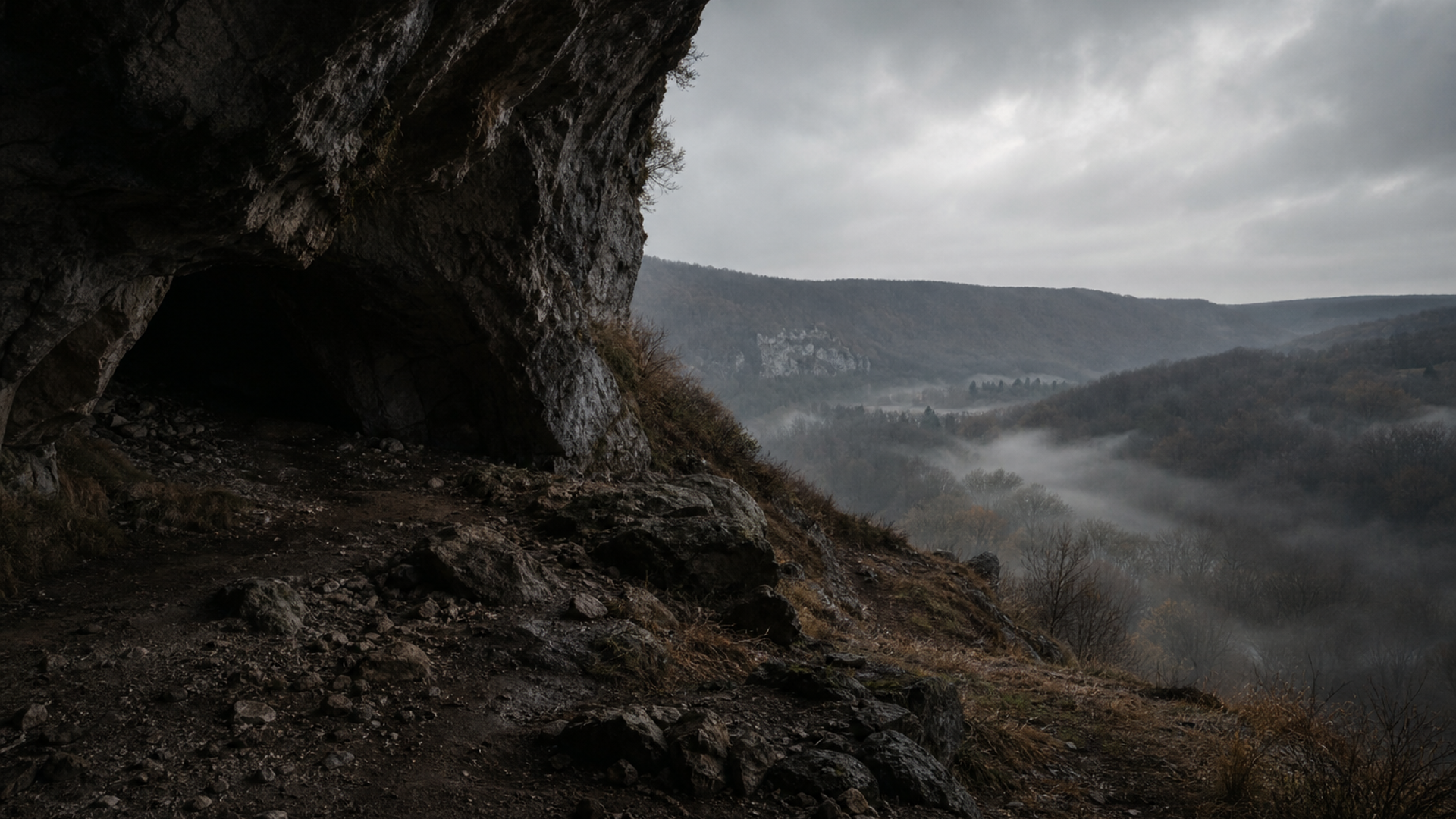
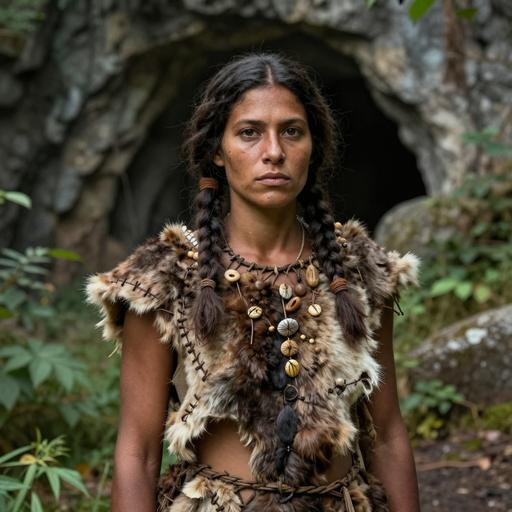
The individual labelled Belgium_UP_GoyetQ56_16 comes from the Troisième caverne (Third Cave) of Goyet cave, a deep, stratified karst site near the village of Goyet in Namur province. Radiocarbon-calibrated dates place the bone between 24,847 and 24,025 BCE, situating it firmly within the Upper Paleolithic horizon in northwestern Europe. Archaeological data indicates repeated human occupation of Goyet across millennia, with dense lithic scatters and faunal remains that speak to seasonal hunting, tool production, and long-term use of sheltered cave spaces.
Limited evidence suggests this individual belonged to mobile hunter-gatherer networks that exploited river valleys and upland plateaus of the Meuse basin. The material culture at Goyet shows technological affinities consistent with Upper Paleolithic adaptations—blade production, curated tools, and specialized hunting remains—though assigning a precise cultural label remains difficult without broader stratigraphic synthesis.
Because this genetic record is a single genome, any model of population emergence or migration must be cautious: it provides a luminous but solitary data point. Archaeology frames the human story; this genome adds genetic color to those layers, hinting at connections across Western Europe during a time of climatic oscillation and cultural innovation.