Menu
Store
Blog
Goyet Cave, Namur province, Belgium

Goyet Q56-16: A Paleolithic Maternal Echo

A solitary Upper Paleolithic individual from Goyet Cave connects stone, ochre and maternal lineage

24847 CE - 24025 BCE
Scroll to begin
Chapter I

The Story

Understanding the Goyet Q56-16: A Paleolithic Maternal Echo culture

Single Upper Paleolithic genome from Troisième caverne of Goyet Cave (c. 24.8–24.0k BCE). Archaeology ties this individual to cold-steppe lifeways; mtDNA U2 links maternal ancestry to wider Paleolithic Eurasia. Conclusions are preliminary due to one sample.

Time Period

c. 24,847–24,025 BCE

Region

Goyet Cave, Namur province, Belgium

Common Y-DNA

Unknown (no Y-DNA data for this sample)

Common mtDNA

U2 (1 individual)

Chapter II

Timeline

Key moments in the history of this culture

24436 BCE

Estimated occupation at Goyet Cave

Approximate midpoint of the dated range for the sample from Troisième caverne of Goyet Cave (c. 24.8–24.0k BCE).

Chapter III

Origins & Emergence

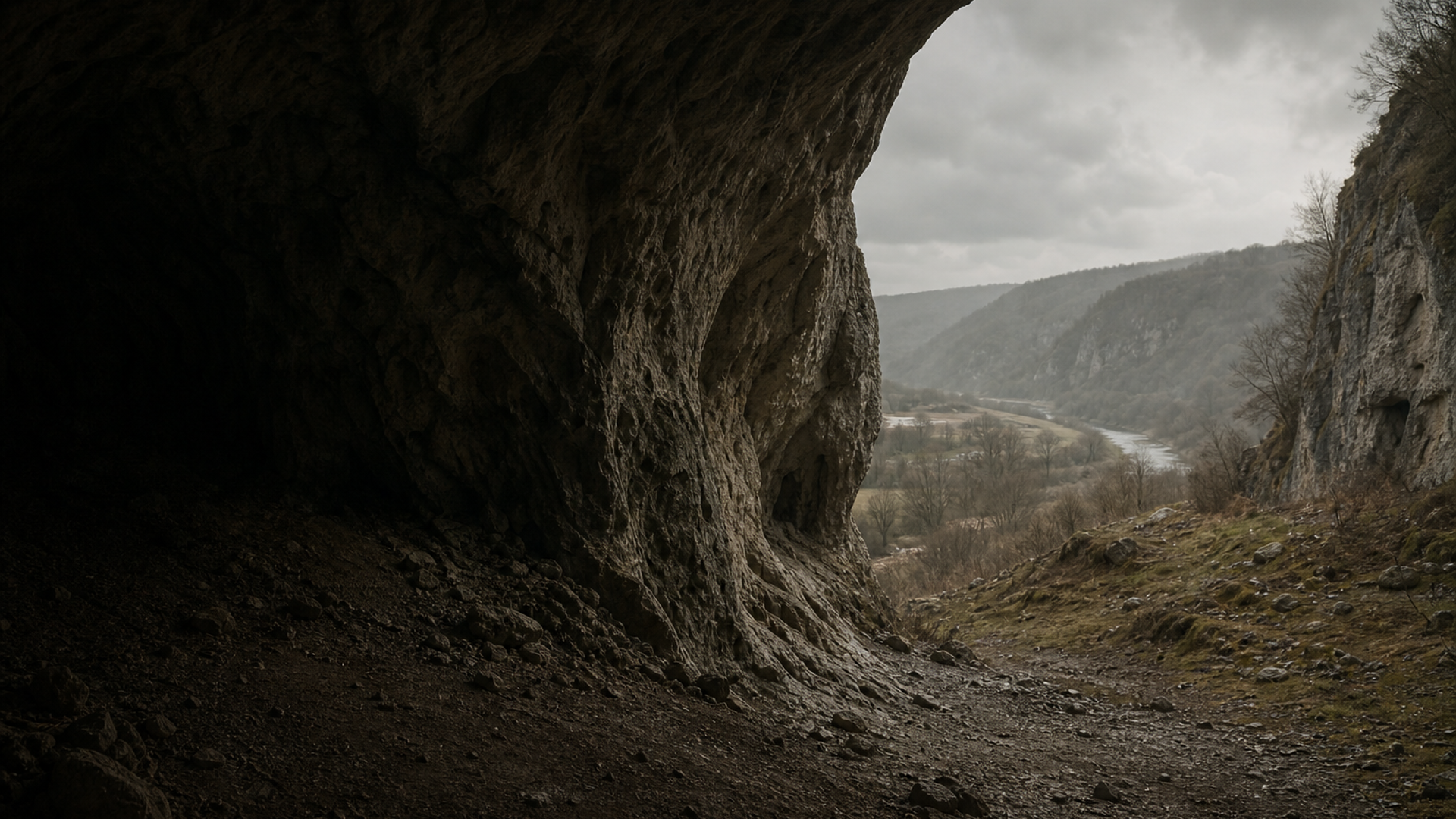
Nestled in the limestone recesses of the Troisième caverne of Goyet Cave (Namur, Belgium), the individual labeled Belgium_UP_GoyetQ56_16 lived into a world of brittle light and wind-scoured steppe roughly 24,800–24,000 years before present. Archaeological excavations at Goyet have revealed deeply stratified Upper Paleolithic deposits; these layers preserve stone tools, hearths and traces of repeated human use that speak to episodic occupation across millennia. Limited evidence suggests Gravettian-affiliated technologies occur in parts of the Goyet sequence, but direct cultural assignment for a single specimen must be cautious.

The human presence here is expressed through the choreography of shelter and mobility rather than grand architecture: cave recesses offered protected hearths, vantage points for observing migrating herds, and spaces for social practice. The skeletal material from Goyet contributes to a patchwork of early modern human occupation in northwestern Europe at the height of the Last Glacial Maximum’s advance and retreat. Archaeological data indicates a landscape of seasonal resources and shifting territories; genetic data from this individual offers a maternal note within that broader symphony. Because this profile rests on one sampled individual, any narrative of population origin or migratory waves remains provisional and highlights the need for additional genomes from contemporaneous contexts.

  • Located in Troisième caverne, Goyet Cave (Namur, Belgium)
  • Dated to c. 24,847–24,025 BCE; Upper Paleolithic context
  • Cultural attribution tentative; possible Gravettian affinities in site sequence
Chapter IV

Daily Life & Society

A cinematic winter dawn at Pleistocene Goyet would have been dominated by low sun, frosted plains and the distant silhouettes of ungulates. Archaeological data indicates occupants relied on highly portable lithic toolkits shaped for hunting and hide processing; flint blades and backed points from the cave sequence point to skilled flake-based industries adapted for long-distance mobility and repeated retooling. Organic remains are sparse, but faunal assemblages in nearby Upper Paleolithic horizons suggest subsistence focused on reindeer, horse and other cold-adapted species when available.

Beyond subsistence, the cave itself functioned as a social stage. Traces of hearths, pigment residues and curated objects at Goyet imply ritualized and symbolic behaviors—elements of identity, memory and group cohesion that left little but evocative traces. The lived experience of this individual likely involved small cooperative bands, shared knowledge of landscape corridors, and seasonal movements timed to animal cycles. Archaeological observations underscore flexibility: repeated occupation episodes alternating with abandonment as climatic conditions shifted. However, because this profile is linked to a single genomic sample, reconstructions of social structure and population size remain hypothetical and reliant on broader comparative evidence from the region.

  • Portable stone toolkits suited to hunting and hide work
  • Use of cave space for hearths, tool repair, and possibly symbolic activities
Chapter V

Genetic Profile

The genetic signal from Belgium_UP_GoyetQ56_16 is singular yet informative: mitochondrial DNA belongs to haplogroup U2. In Paleolithic Eurasia, U2 lineages appear intermittently and are interpreted as part of a broader maternal tapestry that includes U5 and other deep-rooting haplogroups common among early modern Europeans. Archaeogenetic data indicates these maternal lineages reflect complex Paleolithic dispersals and regional continuity punctuated by demographic shifts.

Crucially, there is no Y-chromosome information published for this specimen, so paternal ancestry is unknown. With a sample count of one, any inference about population structure, affinities to nearby groups, or continuity into later populations must be framed as preliminary. Nevertheless, even a single mtDNA call can be integrated with archaeological context: an individual carrying U2 in northwestern Europe at ~24.5k BCE aligns with broader patterns of maternal diversity across Paleolithic Eurasia. Future genomes from Goyet and coeval sites will be needed to test hypotheses about local continuity, gene flow across ice-age landscapes, and how maternal lineages were distributed across hunter-gatherer networks.

Laboratory protocols, contamination checks and damage-pattern analyses underpin confidence in ancient mtDNA assignments; still, statistical population-genetic claims require larger sample sizes.

  • mtDNA haplogroup U2 detected in this individual
  • No Y-DNA data; sample count = 1 — interpretations are preliminary
Chapter VI

Legacy & Modern Connections

The genetic and archaeological whisper of Belgium_UP_GoyetQ56_16 ties a single life to deep Pleistocene networks that stretched across Europe and into western Asia. Haplogroup U2 today is rare in Europe but found at low frequency across Eurasia; this suggests that maternal threads from the Upper Paleolithic persisted, relocated or were diluted by later expansions. Archaeologically, Goyet’s long sequence documents resilience and adaptation to climatic oscillation—patterns that inform how later human groups inhabited northern latitudes.
For modern ancestry platforms, this individual provides a temporal anchor: an Upper Paleolithic maternal lineage from Belgium that contributes to models of Paleolithic diversity and migration. However, it must be reiterated that one genome cannot map the population history of a whole region. The legacy of Goyet Q56-16 is therefore twofold: a concrete data point adding nuance to Paleolithic maternal diversity, and a prompt for further sampling to reveal the fuller human story of northwestern Europe.

  • Connects Upper Paleolithic maternal diversity in Europe to broader Eurasian patterns
  • Single-sample status highlights the need for more genomic and archaeological data
AI Powered

AI Assistant

Ask questions about the Goyet Q56-16: A Paleolithic Maternal Echo culture

AI Assistant by DNAGENICS

Unlock this feature
Ask questions about the Goyet Q56-16: A Paleolithic Maternal Echo culture. Our AI assistant can explain genetic findings, historical context, archaeological evidence, and modern connections.

Sample AI Analysis

The Goyet Q56-16: A Paleolithic Maternal Echo culture represents a fascinating chapter in human history...

Genetic analysis reveals connections to earlier populations while showing evidence of unique adaptations and cultural innovations. The ancient DNA samples provide insights into migration patterns, social structures, and the biological relationships between ancient populations.

This is a preview of the AI analysis. Unlock the full AI Assistant to explore detailed insights about:

  • Genetic composition and ancestry
  • Migration patterns and origins
  • Daily life and cultural practices
  • Modern genetic legacy
Use code for 35% off Expires May 20



