Menu
Store
Blog
Armenia (Caucasus)

Iron Age Armenia: Echoes of the Highlands

Archaeology and DNA from Armenian sites, 1150–420 BCE

1150 CE - 420 BCE
Scroll to begin
Chapter I

The Story

Understanding the Iron Age Armenia: Echoes of the Highlands culture

Archaeological and genetic evidence from 14 Early Iron Age Armenian individuals (1150–420 BCE) reveals maternal lineages typical of West Eurasia and the Caucasus. Excavations at Bover, Pijut, Bragdzor, Noratus and Sarukhan illuminate regional continuity and interaction.

Time Period

1150–420 BCE

Region

Armenia (Caucasus)

Common Y-DNA

Not well characterized / limited reporting

Common mtDNA

T2b (2), K (2), H (1), U3c (1), U7a (1)

Chapter II

Timeline

Key moments in the history of this culture

1200 BCE

Late Bronze Age collapse and regional reorganization

Widespread disruptions c.1200 BCE lead to new settlement patterns and the cultural formations that crystallize into Early Iron Age communities in the Armenian Highlands.

Chapter III

Origins & Emergence

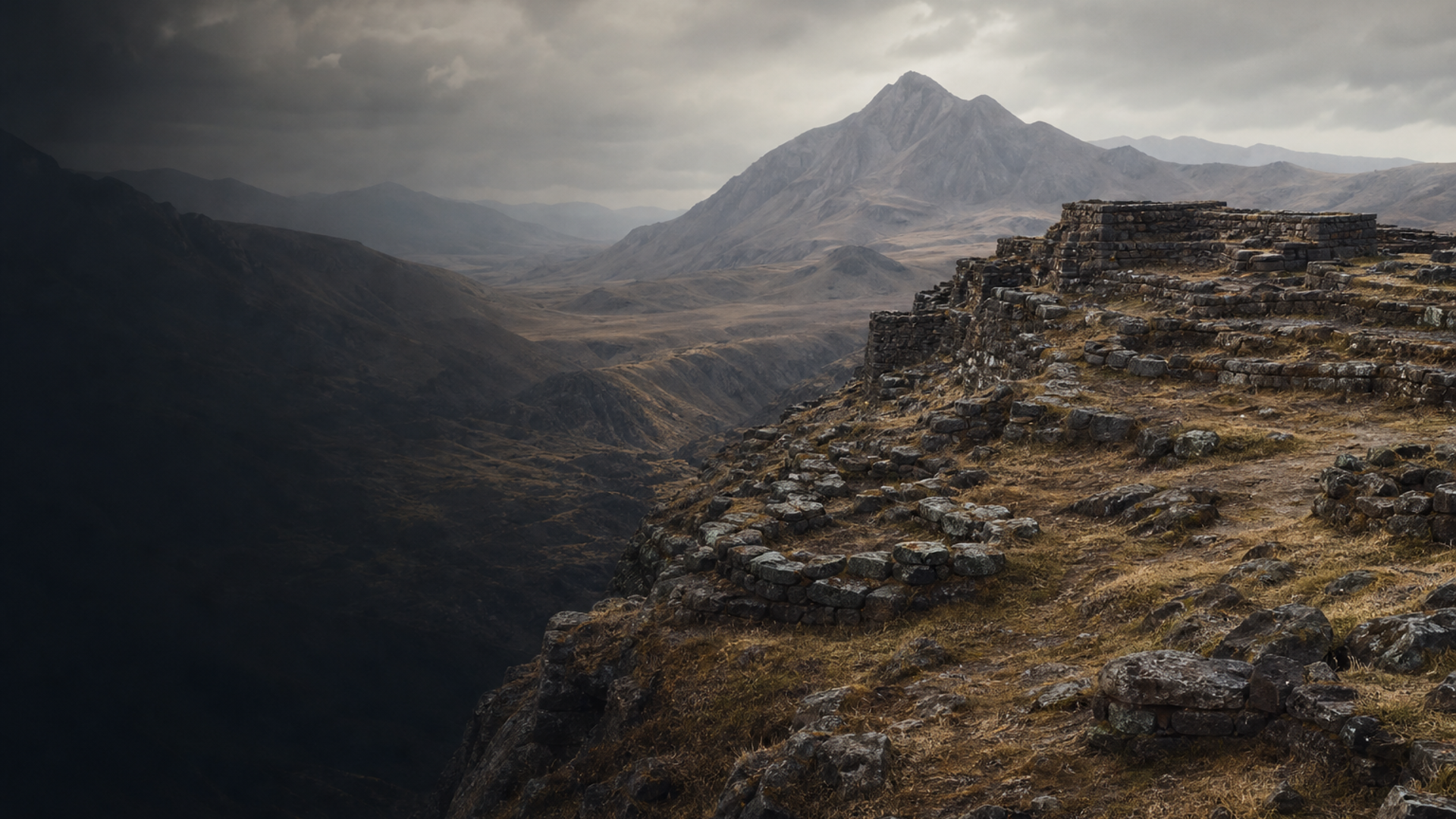
The period between 1150 and 420 BCE in the Armenian Highlands is a time of transformation. Following the upheavals at the end of the Late Bronze Age, local communities reconfigured social landscapes: fortified settlements grew on hilltops, metalworking intensified, and new burial patterns spread across valleys and plateaus. Archaeological data from named cemeteries — Bover Cemetery, Pijut Archaeological Complex, Bragdzor cemetery, Noratus and Sarukhan — provide a patchwork of mortuary evidence and material culture that speak to regional identities forming during the Early Iron Age.

Excavations show continuity with Bronze Age traditions alongside novel influences from neighboring Anatolia and the Zagros. Limited but telling indicators—grave orientations, weapon fragments, and pottery types—suggest households and networks that balanced pastoral mobility with emerging craft specialization. Chronologically, these sites sit within a broader timeline that includes the rise of regional polities in the 1st millennium BCE; archaeologists often link material change in eastern Anatolia and the southern Caucasus with changing trade and political connections.

Archaeological data indicates a landscape of resilient highland communities negotiating long-distance ties. While the material record sketches broad patterns, the integration of ancient DNA gives a complementary line of evidence to test models of continuity, migration and exchange.

  • Sites sampled: Bover, Pijut, Bragdzor, Noratus, Sarukhan
  • Period overlaps Early Iron Age transformations after 1200 BCE
  • Material culture shows blend of local continuity and external influences
Chapter IV

Daily Life & Society

Daily existence in Iron Age Armenian communities likely unfolded against a backdrop of steep valleys, irrigated fields and seasonal pastures. Archaeological remains point to mixed agro-pastoral economies: cereals and legumes supplemented herding of sheep and cattle, while craft specialists produced metal tools and ornaments for local use and exchange. Settlements often cluster near arable enclaves and trade corridors linking the highlands with Anatolia and the Iranian plateau.

Burial evidence from cemeteries such as Bragdzor and Bover reveals social differentiation. Some graves yielded richly furnished interments, while others were modest, indicating varying statuses or roles within communities. Stone-built features and simple pit graves co-occur, and several sites preserve traces of funerary offerings—pottery, metal objects and personal adornments—consistent with broader Iron Age mortuary practices in the region. Archaeological data indicates that ritualized remembrance and ancestor ties were an important part of social life, visible in the care invested in tomb construction and grave goods.

Craftspeople, herders and farmers shared a cultural horizon, but long-distance contacts—evident in imported materials and stylistic influences—suggest that these highland communities were neither isolated nor static.

  • Mixed farming and pastoralism dominated the economy
  • Cemeteries show social variation and ritualized burial practices
Chapter V

Genetic Profile

Fourteen individuals from Armenian Early Iron Age contexts provide a first window into maternal lineages in the highlands between 1150 and 420 BCE. Mitochondrial DNA haplogroups observed include T2b (2 individuals), K (2), H (1), U3c (1) and U7a (1). These lineages are broadly distributed across West Eurasia and the greater Near East; for example, haplogroups T and K are common in many European and Near Eastern ancient and modern populations, while U7a and U3c are often associated with Near Eastern and Caucasus-related maternal ancestry. Archaeogenetic patterns therefore point to a maternal gene pool reflecting both local Caucasus continuity and long-range connections into the Near East.

Common Y-DNA haplogroups are not well characterized in this dataset: male-line markers were either not reported for these samples or remain limited in number, so conclusions about paternal ancestry and mobility are preliminary. With 14 samples, the dataset is informative but modest: it allows cautious inferences about maternal diversity, yet more genomes—especially high-coverage male genomes—are needed to resolve paternal lineages, admixture timings, and fine-scale population structure.

Taken together with archaeological context, these genetic signals support a picture of a highland population rooted in local Bronze Age ancestry while engaging in persistent contact with neighboring regions. Ongoing sampling will refine this emerging genetic portrait.

  • 14 samples provide maternal haplogroup diversity (T2b, K, H, U3c, U7a)
  • Y-DNA signal: limited reporting; more male-line data required
Chapter VI

Legacy & Modern Connections

The genetic and archaeological legacy of Early Iron Age Armenia is felt in the deep palimpsest of the Caucasus. Some maternal lineages identified in these samples persist in later populations of the region, suggesting elements of continuity across millennia. Archaeological continuity in settlement patterns and material traditions also underpins cultural threads that connect the highland past to historical polities like Urartu and later Armenian kingdoms.

However, genetic continuity is not a simple one-to-one story. Population histories involve repeated episodes of interaction, migration and cultural change. Ancient DNA provides concrete markers that can be compared with modern genomes to trace affinities, but interpreting these affinities requires care: language, culture and genes do not always move together. Limited sample sizes and incomplete paternal data mean that claims of direct ancestry to modern Armenians should be phrased cautiously. Still, the combined archaeological and genetic evidence paints a vivid portrait of resilient highland communities whose echoes shape the region's later history.

  • Some maternal lineages show continuity with later Caucasus populations
  • Genetics complements archaeology; direct links to modern groups remain cautious
AI Powered

AI Assistant

Ask questions about the Iron Age Armenia: Echoes of the Highlands culture

AI Assistant by DNAGENICS

Unlock this feature
Ask questions about the Iron Age Armenia: Echoes of the Highlands culture. Our AI assistant can explain genetic findings, historical context, archaeological evidence, and modern connections.
Sample AI Analysis

The Iron Age Armenia: Echoes of the Highlands culture represents a fascinating chapter in human history...

Genetic analysis reveals connections to earlier populations while showing evidence of unique adaptations and cultural innovations. The ancient DNA samples provide insights into migration patterns, social structures, and the biological relationships between ancient populations.

This is a preview of the AI analysis. Unlock the full AI Assistant to explore detailed insights about:

  • Genetic composition and ancestry
  • Migration patterns and origins
  • Daily life and cultural practices
  • Modern genetic legacy
Use code for 40% off Expires Feb 26