Menu
Store
Blog
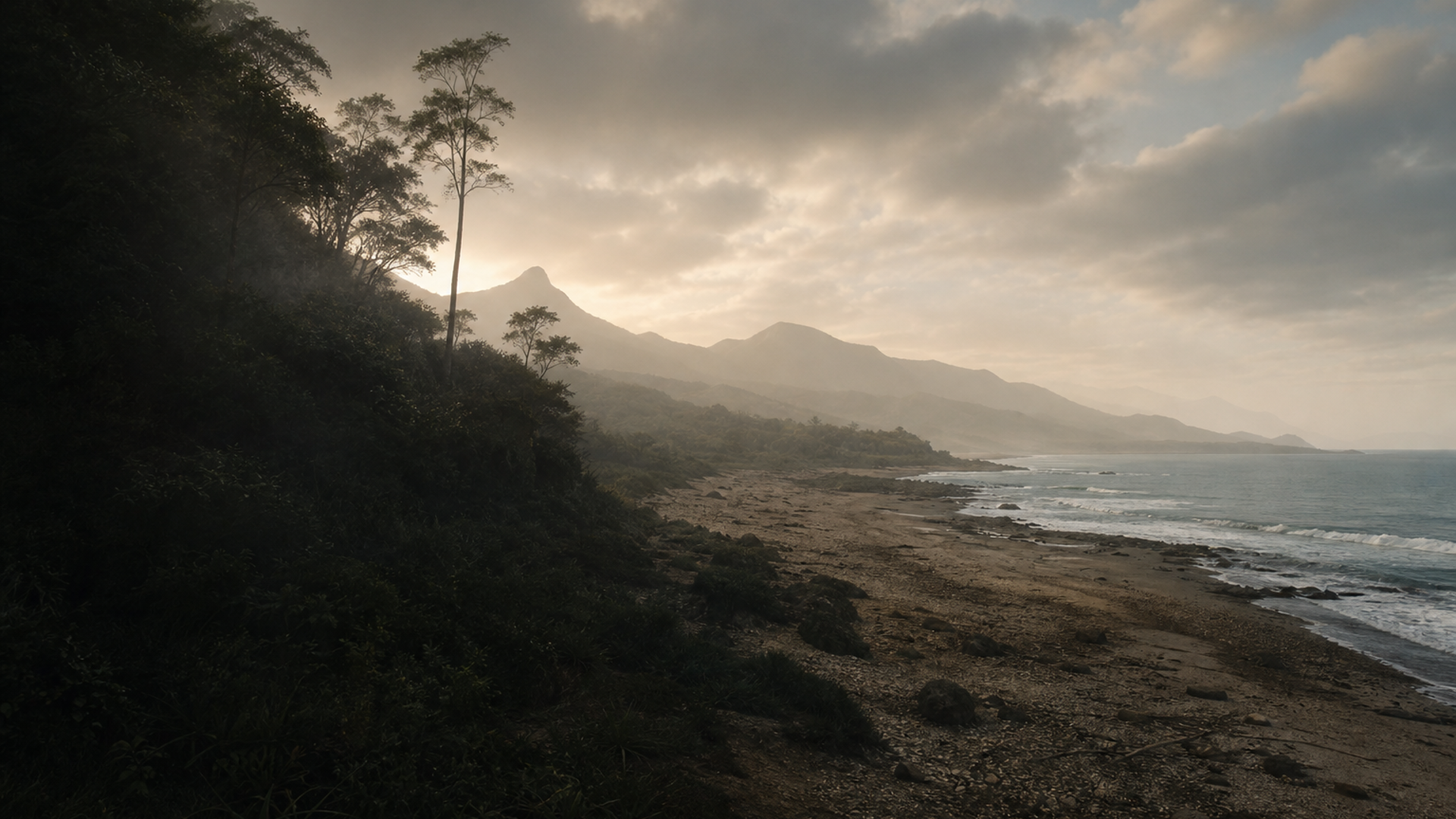
South coast, Brazil (Jabuticabeira II)

Jabuticabeira II: Sambaqui Coast

Late sambaqui coastal community revealed by shell mounds, burials, and ancient DNA

364 CE - 572200 BCE
Scroll to begin
Chapter I

The Story

Understanding the Jabuticabeira II: Sambaqui Coast culture

Archaeological and aDNA data from Jabuticabeira II (south coast Brazil) illuminate a late Sambaqui coastal community (364–57 BCE). Two samples show mtDNA C1c, suggesting Indigenous maternal lineages; conclusions remain preliminary given the small sample size.

Time Period

364–57 BCE (≈2200 BP)

Region

South coast, Brazil (Jabuticabeira II)

Common Y-DNA

Unknown / not reported

Common mtDNA

C1c (2 samples)

Chapter II

Timeline

Key moments in the history of this culture

364 BCE

Radiocarbon dates at Jabuticabeira II

Human remains analyzed from Jabuticabeira II are dated to 364–57 BCE, situating these individuals in the late Sambaqui period.

Chapter III

Origins & Emergence

The Jabuticabeira II site is part of the larger sambaqui phenomenon—large shell-mound (sambaqui) settlements built along Brazil's Atlantic coast. Archaeological deposits at Jabuticabeira II contain dense layers of shell, fish bone, and occasional hearths and burials that record repeated, long-term use of rich littoral resources. Radiocarbon dates associated with the human remains analyzed here fall within 364–57 BCE, placing these individuals in the late Sambaqui phase approximately 2,200 years before present.

Archaeological data indicates these coastal communities emerged from millennia of maritime foraging and local adaptation to estuaries and bays. Shell mounds accumulated as both midden and monumentalized places—locations of daily processing, ritual activity, and interment. Spatial patterns in Meso- and macro-faunal remains, the architecture of midden layers, and mortuary treatments at Jabuticabeira II point to a community structured around marine resources and repeated seasonal practices.

Limited evidence suggests that sambaqui populations maintained long-term occupation of favored coastal promontories, but the origins of specific lineages and the degree of interaction with inland groups remain uncertain. The DNA results presented here are from only two individuals, so any narratives of population movement or social organization must be treated as provisional and hypothesis-generating rather than definitive.

  • Part of the sambaqui tradition: large coastal shell middens and burials
  • Radiocarbon-dated to 364–57 BCE (~2200 BP)
  • Long-term coastal occupation, but origins and interactions remain uncertain
Chapter IV

Daily Life & Society

The archaeological signature of Jabuticabeira II evokes a coastal life shaped by tides, fish runs, and estuarine productivity. Midden deposits are dominated by bivalve shells and fish remains, supplemented by occasional terrestrial fauna and plant residues—evidence for a broad-spectrum subsistence focused on marine resources. Stone tools and grindstones recovered in association with the mounds suggest food processing and craft activities took place within and beside midden layers.

Burial contexts inside sambaquis are often complex: individuals may be interred within mound stratigraphy, sometimes accompanied by shell or stone placements that indicate careful mortuary practice. Variation in burial position and associated artifacts implies social differentiation, but the scale and nature of social ranking at Jabuticabeira II remain open questions. Settlement patterns—dense local reuse of coastal spots—suggest strong place attachment and accumulated knowledge of tidal and seasonal cycles.

Archaeobotanical and isotopic studies from related sambaqui sites highlight heavy marine protein consumption and seasonal resource scheduling. At Jabuticabeira II, the archaeological record preserves daily practices—cooking, tool production, and interment—that together form a cinematic portrait of a community tuned to the sea.

  • Diet dominated by seafood: bivalves, fish, and estuarine species
  • Middens functioned as living spaces, kitchens, and burial grounds
Chapter V

Genetic Profile

Ancient DNA from two individuals excavated at Jabuticabeira II yields a clear maternal signal: both samples carry mitochondrial haplogroup C1c. Haplogroup C1c is one of several founding Native American maternal lineages distributed across the Americas, and its presence at a late Sambaqui site is consistent with regional continuity of Indigenous maternal lineages along the Atlantic coast. However, no Y-chromosome haplogroup information is reported for these individuals, so paternal lineage patterns are currently unresolved.

Because the sample count is only two, genetic inferences must remain cautious. Two concordant mtDNA results can indicate a localized maternal continuity or kin clustering within a burial context, but they are insufficient to demonstrate population-wide patterns. Archaeogeneticists therefore treat these findings as preliminary: they are valuable as direct time-anchored data points that can be compared to larger datasets as more samples become available.

When integrated with archaeological evidence, the mtDNA results help anchor hypotheses about mobility, kinship, and community structure. For example, repeated maternal haplogroups in a single mound might reflect matrilocal residence or family-based burial practices, but alternative explanations—sample bias, small burial population, or post-depositional mixing—cannot be excluded. Future sampling, isotopic mobility analyses, and comparison to inland and later coastal populations will be essential to move from tentative observation to robust population history.

  • Both samples carry mtDNA haplogroup C1c, a Native American maternal lineage
  • Sample size (n=2) is very small—results are preliminary and hypothesis-generating
Chapter VI

Legacy & Modern Connections

Sambaqui sites like Jabuticabeira II are enduring landscape features that link present-day coastal communities to deep time. Shell mounds remain visible in some areas and are culturally significant; they also preserve biological remains that make direct genetic connections to the past possible. The detection of C1c in late Sambaqui individuals is compatible with a broader picture in which Indigenous maternal lineages persisted along the Atlantic littoral well into the late first millennium BCE.

Interpreting genetic continuity requires careful engagement with descendant communities and a commitment to expanding sample coverage. The legacy of Jabuticabeira II is both archaeological and ethical: it offers scientific insight into coastal lifeways while reminding researchers that small, powerful datasets must be contextualized within local histories and modern cultural landscapes. Continued collaboration, respectful curation, and broader aDNA sampling will help clarify how these ancient coastal people relate to present-day Indigenous populations.

  • Shell mounds are tangible heritage linking modern communities to ancient coastal lifeways
  • Genetic links are plausible but require more samples and community collaboration
AI Powered

AI Assistant

Ask questions about the Jabuticabeira II: Sambaqui Coast culture

AI Assistant by DNAGENICS

Unlock this feature
Ask questions about the Jabuticabeira II: Sambaqui Coast culture. Our AI assistant can explain genetic findings, historical context, archaeological evidence, and modern connections.
Sample AI Analysis

The Jabuticabeira II: Sambaqui Coast culture represents a fascinating chapter in human history...

Genetic analysis reveals connections to earlier populations while showing evidence of unique adaptations and cultural innovations. The ancient DNA samples provide insights into migration patterns, social structures, and the biological relationships between ancient populations.

This is a preview of the AI analysis. Unlock the full AI Assistant to explore detailed insights about:

  • Genetic composition and ancestry
  • Migration patterns and origins
  • Daily life and cultural practices
  • Modern genetic legacy
Use code for 35% off Expires May 20