Menu
Store
Blog
South Coast, Brazil (Jabuticabeira II)

Jabuticabeira II — Sambaqui, 1300 BP

A single ancient maternal lineage from a coastal shell-mound brings archaeology and DNA into conversation.

553 CE - 6461300 CE
Scroll to begin
Chapter I

The Story

Understanding the Jabuticabeira II — Sambaqui, 1300 BP culture

Archaeological and genetic evidence from Jabuticabeira II (South Coast, Brazil) links the Sambaqui tradition to Indigenous maternal lineages (mtDNA B2). With one sample dated to 553–646 CE, conclusions are preliminary but evocative of long-term coastal lifeways.

Time Period

c. 553–646 CE (≈1300 BP)

Region

South Coast, Brazil (Jabuticabeira II)

Common Y-DNA

Not reported / no male sample

Common mtDNA

B2 (1 sample)

Chapter II

Timeline

Key moments in the history of this culture

2500 BCE

Early sambaqui formation

Emergence of large shell-mound construction along parts of the Brazilian coast, marking intensified coastal foraging and place-making.

Chapter III

Origins & Emergence

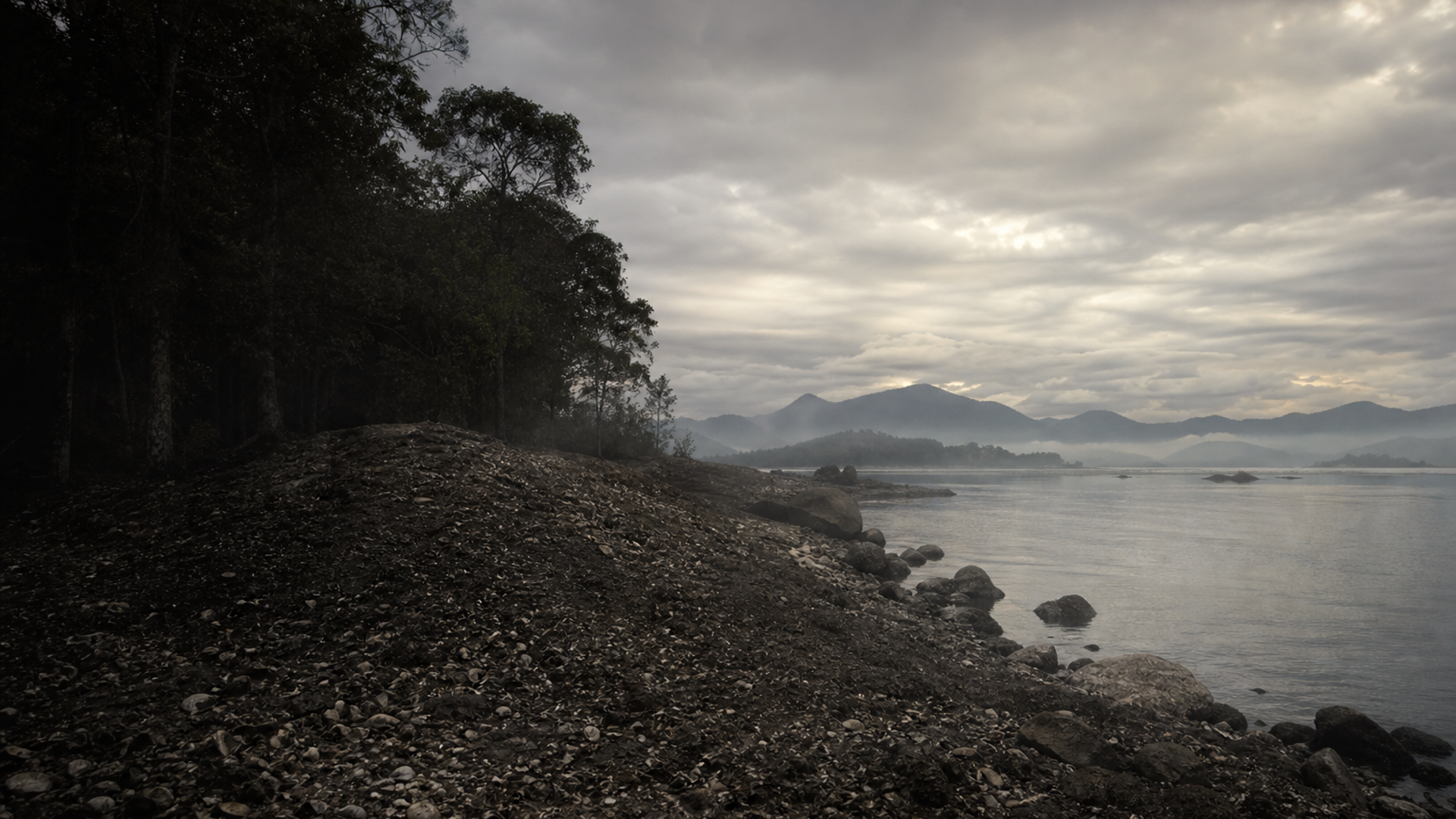
The Sambaqui phenomenon — vast shell mounds and concentrated coastal deposits — is one of South America's most striking Holocene landscapes. Jabuticabeira II sits on the southern Brazilian shore and represents a moment within this long coastal sequence. Archaeological data indicates sustained shellfish harvesting, episodic mound construction, and use of these deposits as living, ceremonial, and burial spaces.

The specimen dated here to between 553 and 646 CE falls well within the late prehistoric sequence of sambaqui builders. Limited evidence suggests the social and economic systems that created the mounds had deep roots: shell-mound formation and coastal specialization began centuries to millennia earlier in different parts of the Brazilian coast.

Material culture from Jabuticabeira II—shell, fish bone, occasional worked stone and bone—reflects intensive marine resource use combined with localized trade or exchange. These mounds were not simply refuse piles but cumulative records of habitation and memory, rising as silent monuments along lagoons and beaches. Archaeological interpretation emphasizes continuity and regional variability: the people who shaped these landscapes were expert coastal foragers whose practices changed through time in response to environment and social choices.

  • Jabuticabeira II: a major sambaqui site on Brazil's south coast
  • Sample dated to c. 553–646 CE within a long Holocene tradition
  • Sambaquis represent complex, built coastal landscapes of food, memory, and burial
Chapter IV

Daily Life & Society

Imagine a shore where the tide and people collaborated: fish and shellfish provided the backbone of diet, while lagoons and estuaries offered seasonal abundance. Excavations at Jabuticabeira II reveal thick midden layers of shells and bones, hearths, and human interments, suggesting repeated habitation and structured use of place.

Artifacts are often modest — bone points, shell tools, and occasional ground stone — yet they speak to skilled craft traditions tuned to marine lifeways. Burials in sambaquis sometimes incorporate grave goods and layered deposits, indicating social complexity and ritualized treatment of the dead. The size and form of mounds imply collective labor and long-term place attachment: generations returned to the same promontories to eat, work, and bury their dead.

Archaeological evidence points to flexible mobility. People exploited nearshore zones intensively but likely maintained ties to inland resources and social networks. Seasonal scheduling, craft specialization, and inter-site exchange would have structured daily existence along the shorelines.

  • Dominant subsistence: shellfish, fish, and nearshore resources
  • Mounds functioned as habitation, midden, and cemetery — reflecting social memory
Chapter V

Genetic Profile

The genetic finding from this context is a single mitochondrial genome assigned to haplogroup B2. B2 is one of the founding maternal lineages widespread among Indigenous peoples across the Americas and is commonly observed in both ancient and modern Native American populations. This maternal signal aligns with expectations for long-standing Indigenous ancestry on the Brazilian coast.

However, it is essential to emphasize the preliminary nature of conclusions: this dataset is one individual (sample count = 1). With such limited sampling, population-level inferences — about continuity, migration, or demographic change — remain tentative. The absence of reported Y‑DNA prevents any assessment of paternal lineages at Jabuticabeira II.

Archaeogenetics complements archaeology here by anchoring one human life within broader continental maternal lineages. Future work with more radiocarbon-dated individuals, genome-wide data, and comparative sampling across sambaqui sites could resolve questions of regional continuity, kinship within mounds, and links between coastal and inland groups. For now, the mtDNA B2 result is a clear but solitary thread tying this sambaqui inhabitant to pan-American maternal ancestry.


  • mtDNA B2 present — a pan‑American Indigenous maternal lineage
  • Single sample limits population-level conclusions; more ancient DNA needed
Chapter VI

Legacy & Modern Connections

Sambaqui landscapes like Jabuticabeira II remain powerful palimpsests: places where deep-time coastal practices echo into the present. Archaeological continuity in settlement patterns and the presence of Indigenous maternal lineages suggest long-term occupation of these shores, but direct lines to specific modern communities require careful, community-led research and more genetic data.

Respectful collaboration with descendant communities, protection of burial contexts, and the expansion of ethically guided ancient DNA sampling are essential to transform preliminary signals into richer stories. Each new dataset has the potential to illuminate mobility, kinship, and resilience along Brazil's coasts — and to reconnect living peoples with ancestral places shaped by tide, season, and human hands.

  • Sambaquis are enduring cultural landscapes with archaeological and emotional resonance
  • Connecting ancient DNA to living communities requires more samples and ethical engagement
AI Powered

AI Assistant

Ask questions about the Jabuticabeira II — Sambaqui, 1300 BP culture

AI Assistant by DNAGENICS

Unlock this feature
Ask questions about the Jabuticabeira II — Sambaqui, 1300 BP culture. Our AI assistant can explain genetic findings, historical context, archaeological evidence, and modern connections.
Sample AI Analysis

The Jabuticabeira II — Sambaqui, 1300 BP culture represents a fascinating chapter in human history...

Genetic analysis reveals connections to earlier populations while showing evidence of unique adaptations and cultural innovations. The ancient DNA samples provide insights into migration patterns, social structures, and the biological relationships between ancient populations.

This is a preview of the AI analysis. Unlock the full AI Assistant to explore detailed insights about:

  • Genetic composition and ancestry
  • Migration patterns and origins
  • Daily life and cultural practices
  • Modern genetic legacy
Use code for 35% off Expires May 20



