Menu
Store
Blog
Austria_Klosterneuburg_Roman Pannonia (Klosterneuburg), Austria

Klosterneuburg: Roman Pannonia Revealed

A provincial Roman community on the Danube where archaeology meets early ancient DNA

1 CE - 450 CE
6 Ancient Samples
Scroll to begin
Chapter I

The Story

Understanding the Klosterneuburg: Roman Pannonia Revealed culture

Archaeological remains from Klosterneuburg (Pannonia, Austria) dated 1–450 CE reveal a Roman provincial settlement with mixed material culture. Six ancient DNA samples hint at local–imperial admixture, but small sample size makes genetic conclusions preliminary.

Time Period

1–450 CE

Region

Pannonia (Klosterneuburg), Austria

Common Y-DNA

Undetermined — not reported / limited samples (n=6)

Common mtDNA

Undetermined — not reported / limited samples (n=6)

Chapter II

Timeline

Key moments in the history of this culture

100 CE

Roman-era occupation at Klosterneuburg

Archaeological layers dated within 1–450 CE show settlement activity, material imports and funerary deposits at Klosterneuburg in Roman Pannonia.

Chapter III

Origins & Emergence

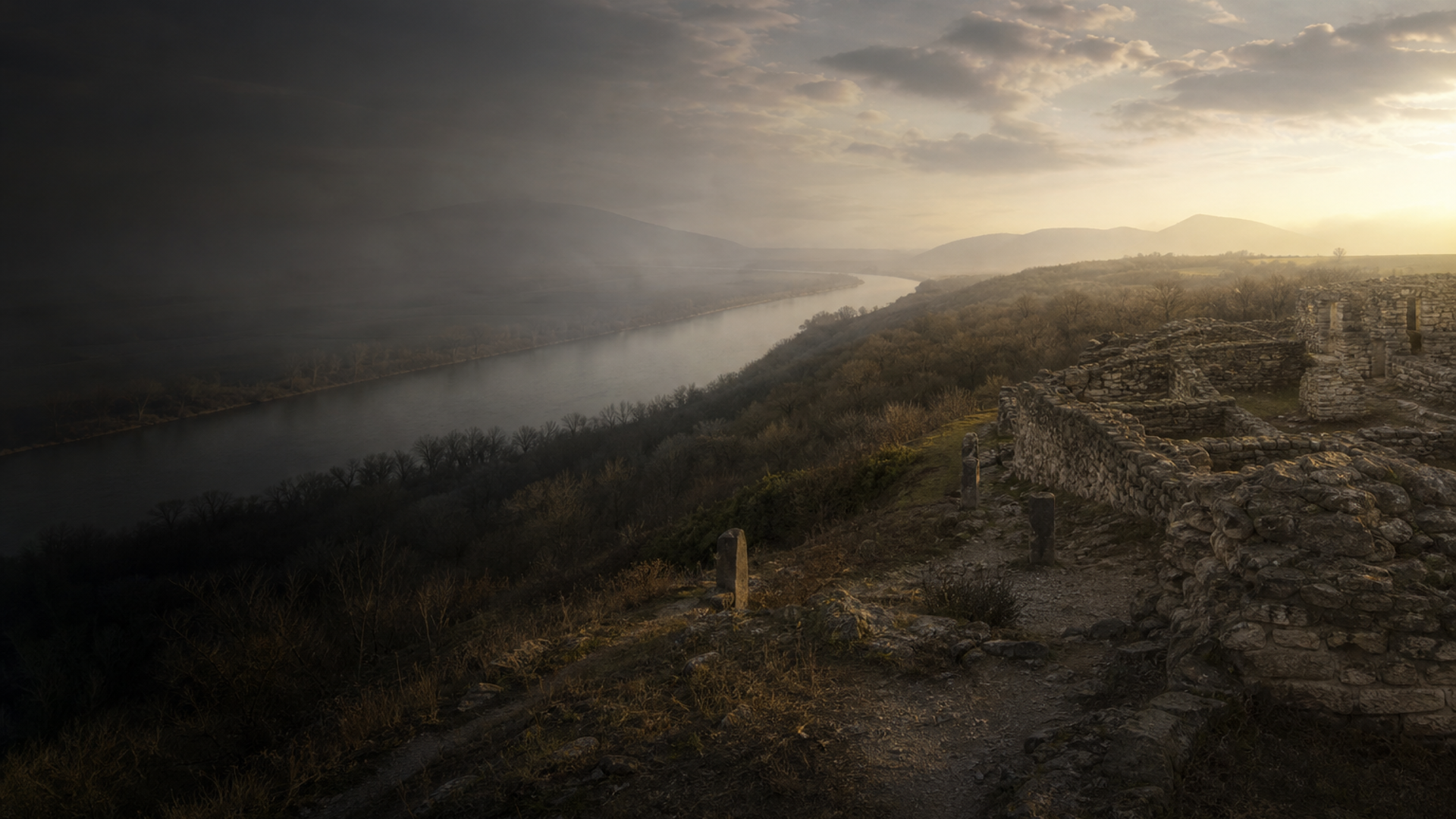
Klosterneuburg sits like a pause on the Danube — a place where river, road and empire met. Archaeological strata dated to the Roman imperial period (roughly 1–450 CE) record a provincial settlement within the Roman province of Pannonia. Excavations around Klosterneuburg and nearby sites show Roman-style building techniques, pottery imports, coins, and funerary practices alongside continuities with local Celtic and Illyrian traditions.

Archaeological data indicates phases of development: early imperial occupation with military and administrative ties, followed by continued rural and small-urban settlement into the late empire. Material culture — imported terra sigillata, local coarse wares, dress accessories and building fragments — paints a picture of a community integrated into imperial networks yet rooted in regional lifeways. Nearby Vindobona (modern Vienna) and riverine routes on the Danube linked Klosterneuburg to broader trade and troop movements.

Limited evidence suggests that some inhabitants were newcomers connected to the movement of people across the Roman world, while others descended from local Iron Age populations who adopted Roman material culture. The archaeological record at Klosterneuburg therefore speaks of cultural entanglement: a provincial landscape shaped by empire, mobility and local tradition.

  • Located on the Danube in Roman Pannonia (Klosterneuburg, Austria)
  • Material mix of Roman imports and local ceramic traditions
  • Linked to regional centers like Vindobona via river and road
Chapter IV

Daily Life & Society

Imagine the clang of a smith’s hammer, the cry of river traffic and the murmur of Latin and local speech blending in a provincial plaza. Archaeological traces at Klosterneuburg — housing foundations, oven fragments, pottery assemblages and burial deposits — suggest a mixed economy of agriculture, craft production and trade. Small farms and villa-like structures in the surrounding landscape would have produced cereals, grapes and livestock for local consumption and regional markets along the Danube.

Funerary evidence at Roman sites in Pannonia often shows varied mortuary practices: inhumations with both Roman-style grave goods and items rooted in older local traditions. Finds such as oil lamps, glass beads, and metalwork indicate everyday belongings of people negotiating identity in an imperial setting. Stone and wood construction adapted to local materials; reuse of older Iron Age features reflects continuity as much as change.

Bioarchaeological approaches commonly used at Pannonian sites — isotopic diet studies, osteology and ancient DNA — can reveal diet, mobility and health, although for Klosterneuburg the small number of genetic samples currently limits broad reconstructions. Nevertheless, the archaeological record evokes a lived landscape where local families, traders, soldiers and administrators interacted daily.

  • Mixed economy: agriculture, crafts and river trade
  • Mortuary practices blend Roman and local traditions
Chapter V

Genetic Profile

Genetic sampling at Klosterneuburg is currently very limited: six ancient individuals dated to 1–450 CE. With such a small sample size, any genetic portrait must be presented as preliminary. Archaeogenetic research across Roman provincial sites has repeatedly shown increased genetic heterogeneity compared with preceding periods, reflecting mobility, soldier settlement, and long-distance connections; Klosterneuburg likely participated in those processes to some degree.

For this specific Klosterneuburg series, uniparental markers (Y-DNA, mtDNA) are not robustly reported in the project metadata, so claims about dominant haplogroups cannot be made here. Archaeological context combined with broader regional aDNA datasets suggests a plausible mixture of local Iron Age ancestry with genetic inputs from other parts of the Roman world (Italy, the Balkans and beyond). However, the low number of samples (n=6) requires caution: patterns of kinship, sex-biased migration and community composition remain tentative until more genomes are analysed.

In short, Klosterneuburg’s genetic story hints at local–imperial admixture consistent with other Pannonian sites, but current data are insufficient for definitive statements. Future sampling and genome-wide analysis would clarify levels of mobility, presence of non-local individuals, and ancestry proportions.

  • Sample count is low (n=6) — genetic conclusions are preliminary
  • Evidence points toward local Iron Age ancestry mixed with imperial-era mobility
Chapter VI

Legacy & Modern Connections

The archaeological and early genetic signals from Klosterneuburg form a whisper of continuity across two millennia. Material remains tie the site to Roman administrative and trade networks along the Danube, while the genetic data — though limited — hint at the human movements that helped shape regional diversity.

Modern populations of Lower Austria carry layered ancestries accrued over prehistoric and historic periods; Klosterneuburg’s Roman-era inhabitants likely contributed to this palimpsest through both persistence and new arrivals. Because direct genetic links require larger sample sets, we must treat claims of continuity or replacement with care. Nevertheless, museum displays and public interpretation can use Klosterneuburg as a cinematic case study of how empire, mobility and local life intersect to produce the genetic and cultural landscapes we see today.

  • Contributes to the complex ancestral mosaic of Lower Austria
  • A useful case study for how imperial networks influence local genetics
Chapter VII

Sample Catalog

6 ancient DNA samples associated with the Klosterneuburg: Roman Pannonia Revealed culture

Ancient DNA samples from this era, providing genetic insights into the people who lived during this period.

6 / 6 samples
Portrait Sample Country Era Date Culture Sex Y-DNA mtDNA
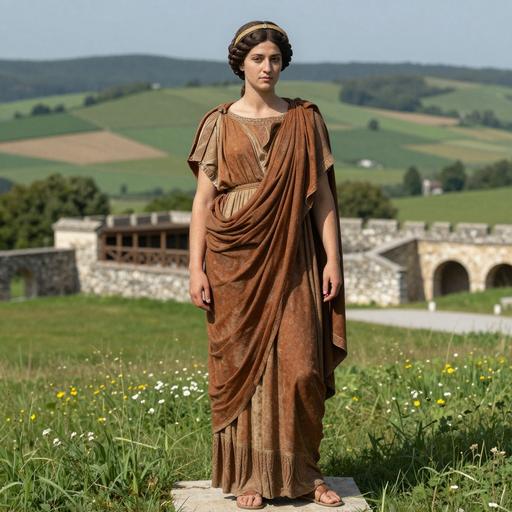
Portrait of ancient individual R10657 from Austria, dated 26 CE
R10657
Austria Austria_Klosterneuburg_Roman 26 CE Holy Roman Empire M - -
Portrait of ancient individual R10658 from Austria, dated 1 CE
R10658
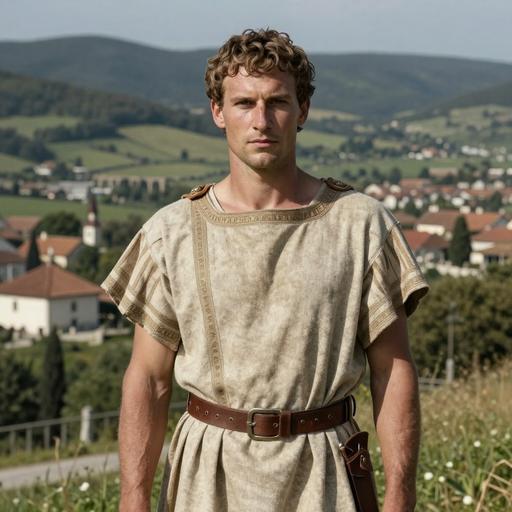
Austria Austria_Klosterneuburg_Roman 1 CE Holy Roman Empire F - -
Portrait of ancient individual R10659 from Austria, dated 26 CE
R10659
Austria Austria_Klosterneuburg_Roman 26 CE Holy Roman Empire M - -
Portrait of ancient individual R10660 from Austria, dated 1 CE
R10660
Austria Austria_Klosterneuburg_Roman 1 CE Holy Roman Empire F - -
Portrait of ancient individual R10654 from Austria, dated 258 CE
R10654
Austria Austria_Klosterneuburg_Roman 258 CE Holy Roman Empire M - -
Portrait of ancient individual R10656 from Austria, dated 1 CE
R10656
Austria Austria_Klosterneuburg_Roman 1 CE Holy Roman Empire M - -
AI Powered

AI Assistant

Ask questions about the Klosterneuburg: Roman Pannonia Revealed culture

AI Assistant by DNAGENICS

Unlock this feature
Ask questions about the Klosterneuburg: Roman Pannonia Revealed culture. Our AI assistant can explain genetic findings, historical context, archaeological evidence, and modern connections.
Sample AI Analysis

The Klosterneuburg: Roman Pannonia Revealed culture represents a fascinating chapter in human history...

Genetic analysis reveals connections to earlier populations while showing evidence of unique adaptations and cultural innovations. The ancient DNA samples provide insights into migration patterns, social structures, and the biological relationships between ancient populations.

This is a preview of the AI analysis. Unlock the full AI Assistant to explore detailed insights about:
  • Genetic composition and ancestry
  • Migration patterns and origins
  • Daily life and cultural practices
  • Modern genetic legacy
Use code for 35% off Expires May 20