Menu
Store
Blog
Krepost, Bulgaria (Southeastern Europe)

Krepost Neolithic Woman (c. 5723–5623 BCE)

A single Neolithic genome from Krepost links a Balkan burial to mtDNA lineage H5 — preliminary but evocative.

5723 CE - 5623 BCE
Scroll to begin
Chapter I

The Story

Understanding the Krepost Neolithic Woman (c. 5723–5623 BCE) culture

Sampled at Krepost, Bulgaria (5723–5623 BCE), this lone Neolithic individual carries maternal haplogroup H5. Archaeological context and ancient-DNA evidence tentatively connect local farming communities to wider Balkan Neolithic networks. Interpretations remain provisional due to a single sample.

Time Period

5723–5623 BCE

Region

Krepost, Bulgaria (Southeastern Europe)

Common Y-DNA

Unknown / not reported (sample size 1)

Common mtDNA

H5 (1)

Chapter II

Timeline

Key moments in the history of this culture

5673 BCE

Neolithic burial at Krepost (sampled)

Skeletal remains dated to c. 5723–5623 BCE were recovered at Krepost, Bulgaria; the individual yielded mtDNA H5 in a single ancient-DNA analysis.

Chapter III

Origins & Emergence

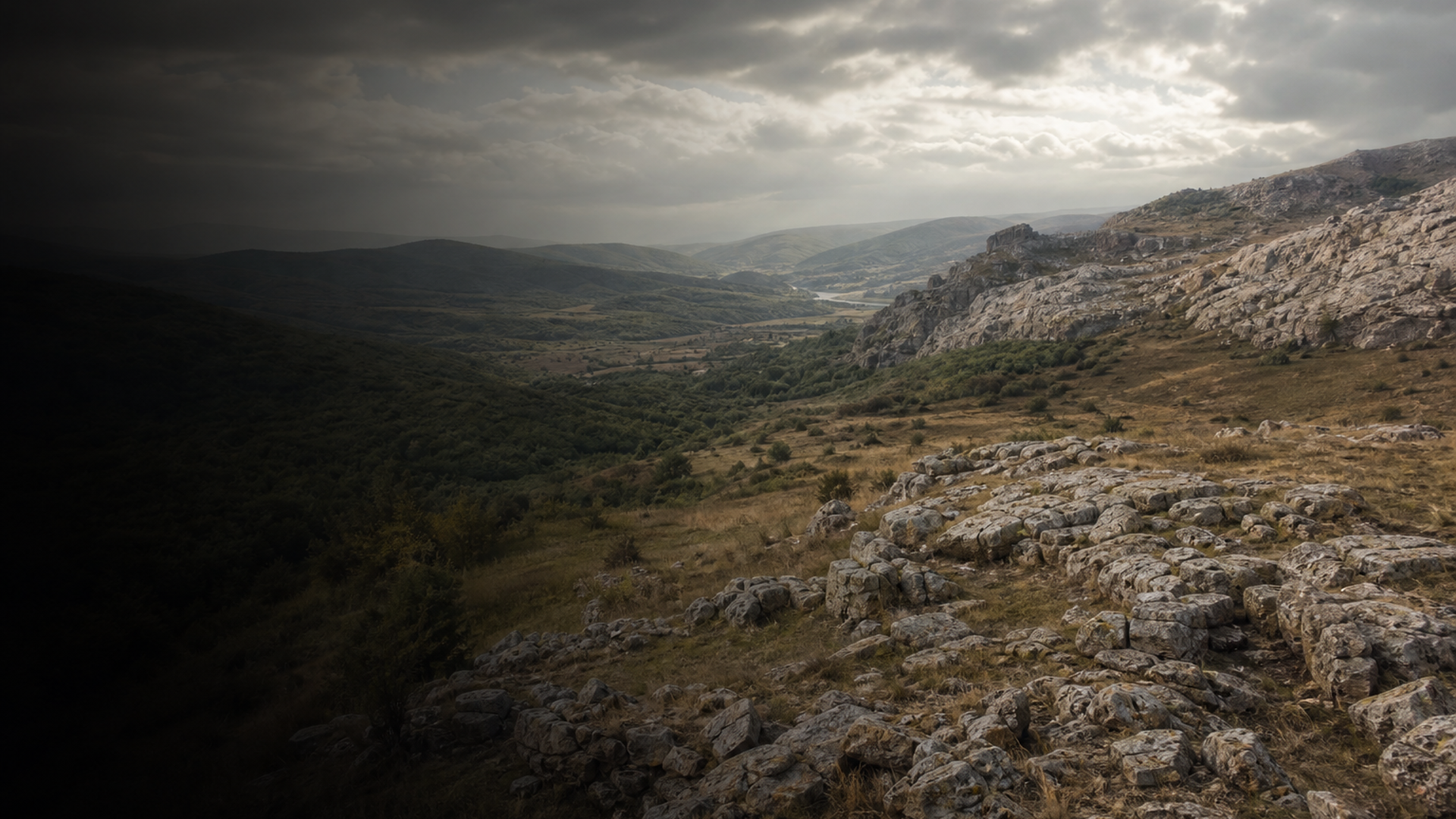
Archaeological data indicates that the site at Krepost sits within the heartland of Neolithic settlement in northeastern Bulgaria, a landscape of low ridges and river terraces where early farmers established long-lived villages. Radiocarbon dating of the sampled individual places the burial securely in the mid‑6th millennium BCE (5723–5623 BCE), a period when farming communities across the Balkans were consolidating pottery traditions, domesticates, and sedentary lifeways.

Material culture from Krepost and nearby sites shows affinities with broader Balkan Neolithic assemblages — coarse and fine ceramics, anthropomorphic figurines, and polished stone tools — indicating connections by trade or shared cultural practice. These archaeological signals, combined with the genetic trace preserved in the bones, open a window onto the movement of people and ideas across southeastern Europe during the Neolithic transition.

Limited evidence suggests that the Krepost individual belonged to a farming community integrated into regional exchange networks rather than a transient hunter‑gatherer group. However, with only one genome, we must avoid broad generalizations: this single individual offers a glimpse, not a complete portrait, of local origins and population dynamics.

  • Secure radiocarbon date: 5723–5623 BCE
  • Site context: Neolithic burial at Krepost, Bulgaria
  • Interpretation: Likely member of a settled farming group, within Balkan Neolithic cultural networks
  • Radiocarbon-dated to mid‑6th millennium BCE
  • Material culture consistent with Balkan Neolithic traditions
  • Single-sample evidence — preliminary view of local origins
Chapter IV

Daily Life & Society

Archaeological traces from Neolithic settlements in northeastern Bulgaria portray a world shaped by agriculture, craft specialization, and tight-knit household units. Villages near Krepost exploited rich alluvial soils for emmer, einkorn, and later pulses; domestic animals such as sheep, goats, cattle, and pigs supplied meat, milk, and hides. Hearths, storage pits, and pottery fragments recovered in the region indicate food preparation and storage strategies adapted to seasonal cycles.

Domestic architecture in the wider Balkan Neolithic often comprised wattle‑and‑daub houses or simple timber constructions; floors were compacted earth and interiors contained craft debris — ground stone tools, flint flakes, and ceramic sherds. Communal practices are suggested by shared burial customs and the placement of some graves within or adjacent to habitation areas, indicating ancestors remained central to household identity.

Social life likely blended practical cooperation with ritual observance: figurines and decorated vessels imply symbolic worlds and possibly domestic rites. Trade and exchange along river corridors and overland routes connected Krepost with neighboring communities, bringing raw materials and stylistic influences. Yet, we must remember—direct evidence tied to the sampled individual is limited; general reconstructions come from regional archaeological patterns rather than individual-specific finds.

  • Economy: mixed cereal cultivation and animal husbandry
  • Craft: pottery and ground stone tool production
  • Social structure: household-centered with regional exchange networks

  • Mixed farming economy with domesticated cereals and livestock
  • Household crafts (pottery, stone tools) and communal burial practices
Chapter V

Genetic Profile

Ancient-DNA results from the Krepost sample reveal mitochondrial haplogroup H5, a maternal lineage seen at low frequencies in Neolithic and later European contexts. Maternally inherited H subclades are often associated with farming populations in parts of Europe, though they are also present in diverse pre- and post‑Neolithic groups; thus, the presence of H5 at Krepost is intriguing but not determinative on its own.

Crucially, only a single individual was analyzed (sample count = 1). With such limited sampling, population-level inferences are highly tentative. Archaeological patterns across the Balkans and ancient-DNA studies elsewhere have shown that Neolithic farmers typically carried a mix of Anatolian‑derived farmer ancestry and varying amounts of local hunter‑gatherer ancestry. The Krepost mtDNA result is consistent with the idea that this region participated in those broader demographic processes, but we cannot quantify ancestry proportions or male-mediated lineages: Y‑DNA data were not reported for this sample.

Genetic interpretation should therefore be cautious: this H5 signal may reflect continuity with incoming farming groups, assimilation of local lineages, or stochastic survival of maternal lineages. Future sampling from Krepost and surrounding sites — including both autosomal genomes and Y‑chromosome markers — is necessary to move from a compelling anecdote to robust population history.

  • mtDNA: H5 observed in the single individual
  • Y-DNA: not reported / unknown
  • Sample size caveat: n=1 — conclusions are preliminary
  • mtDNA H5 detected (single individual)
  • No Y-DNA reported; autosomal ancestry unresolved
Chapter VI

Legacy & Modern Connections

The Krepost individual connects a living thread from the Neolithic past to present-day genetic landscapes: mitochondrial subclades like H5 persist in Europe and help trace maternal lineages over millennia. Archaeologically, the burial at Krepost contributes to our understanding of how early farming communities established themselves in the Balkans — a crucial corridor for subsequent European prehistory.

That said, any modern linkage must be framed by caution. One ancient maternal genome cannot map direct ancestry to modern populations; it can, however, highlight continuity of certain maternal lineages in the region and provide a data point in the larger tapestry of Southeastern European genetic history. As more samples are recovered and sequenced, the tentative connections implied by Krepost will either strengthen or be refined, enriching museum narratives that bridge objects, landscapes, and DNA.

  • Signals of maternal lineage continuity (H5) may persist into the present
  • Individual offers a prompt for expanded regional sampling and public engagement
  • Maternal lineage H5 contributes to long-term genetic narratives
  • Encourages further sampling to clarify regional ancestry links

AI Powered

AI Assistant

Ask questions about the Krepost Neolithic Woman (c. 5723–5623 BCE) culture

AI Assistant by DNAGENICS

Unlock this feature
Ask questions about the Krepost Neolithic Woman (c. 5723–5623 BCE) culture. Our AI assistant can explain genetic findings, historical context, archaeological evidence, and modern connections.
Sample AI Analysis

The Krepost Neolithic Woman (c. 5723–5623 BCE) culture represents a fascinating chapter in human history...

Genetic analysis reveals connections to earlier populations while showing evidence of unique adaptations and cultural innovations. The ancient DNA samples provide insights into migration patterns, social structures, and the biological relationships between ancient populations.

This is a preview of the AI analysis. Unlock the full AI Assistant to explore detailed insights about:

  • Genetic composition and ancestry
  • Migration patterns and origins
  • Daily life and cultural practices
  • Modern genetic legacy
Use code for 35% off Expires May 20