Menu
Store
Blog
Argentina_LagunaChica_6800BP Argentine Pampas (Laguna Chica)

Laguna Chica: Pampas Foragers (~6800 BP)

Fragile bones and ancient genomes from the Argentine Pampas illuminate early Holocene lives

7000 CE - 4500 BCE
3 Ancient Samples
Scroll to begin
Chapter I

The Story

Understanding the Laguna Chica: Pampas Foragers (~6800 BP) culture

Three human genomes from Laguna Chica (Pampas, Argentina) dated within 7000–4500 BCE reveal Native American founding mtDNA (A2, B2b, C1b) and a Y-haplogroup Q. Limited samples mean conclusions are preliminary, but archaeology and DNA together hint at early Holocene forager lifeways on the Pampas.

Time Period

7000–4500 BCE (approx.)

Region

Argentine Pampas (Laguna Chica)

Common Y-DNA

Q (1 sample)

Common mtDNA

B2b (1), C1b (1), A2 (1)

Chapter II

Timeline

Key moments in the history of this culture

4850 BCE

Human remains dated at Laguna Chica

Three human individuals from Laguna Chica are dated to the early–mid Holocene, providing the genetic samples that link Pampas foragers to continental Native American lineages.

Chapter III

Origins & Emergence

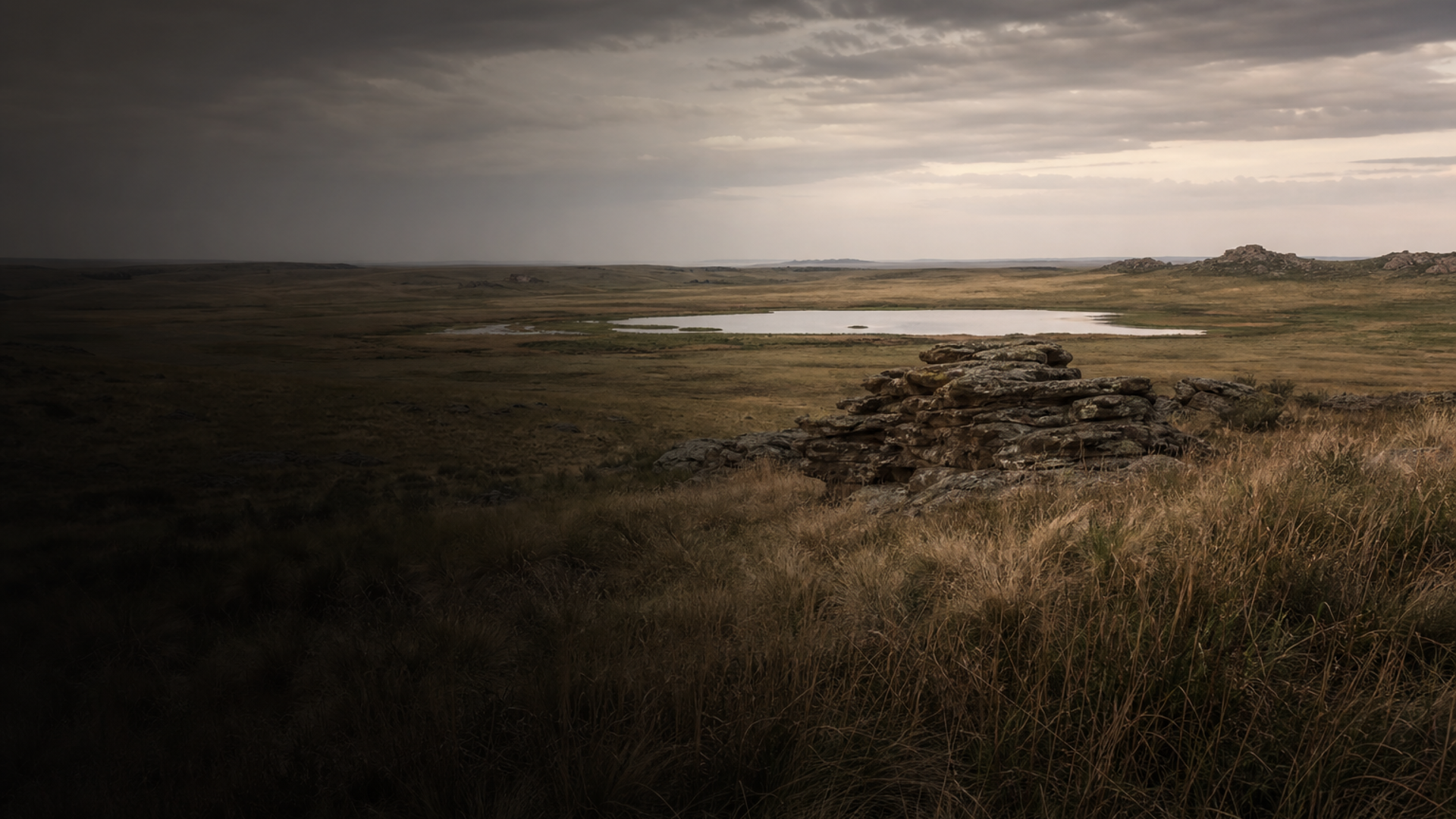
Nestled in the broad grasses of the Pampas, Laguna Chica sits as a thin but luminous thread in Argentina's early Holocene tapestry. Archaeological data indicates human presence in this region during the warmer, post‑glacial centuries between roughly 7000 and 4500 BCE. The site name — Laguna Chica — denotes the locality where three individuals were recovered and dated within this broad range; their remains and the sediments that encased them offer a rare window into hunter‑gatherer settlement across a landscape shifting from late Pleistocene woodlands to open grasslands.

Environmental reconstruction for the Pampas at this time suggests expanding grassland and wetland mosaics that would have supported big and small game, migratory birds, and rich plant resources. These changing ecologies likely shaped mobility, seasonality, and toolkits. Archaeological evidence from Laguna Chica and nearby contemporaneous localities indicates ephemeral camps and lithic scatters rather than large sedentary sites — a pattern consistent with mobile foraging groups adjusting to a dynamic Holocene environment.

Limited sample size (three genomes) requires caution: while these individuals belong to broader early South American forager traditions, the population structure, cultural diversity, and precise origins of groups in the Pampas remain incompletely resolved until larger, stratified datasets are available.

  • Occupation during early–mid Holocene (7000–4500 BCE)
  • Site located in Pampas wetlands/grasslands (Laguna Chica)
  • Evidence fits mobile hunter‑gatherer settlement patterns
Chapter IV

Daily Life & Society

Life on the early Holocene Pampas can be imagined as a rhythm of movement across a shimmering plain: seasonal pulses of water, herds, and edible plants dictating camp placement and social networks. Archaeological indicators from the region — including lithic debris, faunal remains at nearby Pampas sites, and the depositional contexts that preserved the three human burials — suggest small group sizes, flexible mobility, and broad diets drawn from wetlands and grasslands.

Material culture in the Pampas is often characterized by light, versatile stone tools suited to cutting, scraping, and projectile use. Such toolkits facilitate hunter‑gatherer economies that exploit river margins, reed beds, and open plains. Social life would have balanced intimate kin groups with wider seasonal circulation and exchange; ritual and mortuary choices visible in burial treatment reflect social identities whose finer details remain elusive at Laguna Chica because of limited stratigraphic and contextual data.

Archaeological interpretation remains cautious: site taphonomy (how remains were buried and preserved) and the small number of excavated individuals constrain reconstructions of demographic structure, gendered roles, and long‑term settlement systems. Nonetheless, the combined archaeological picture points to resilient forager communities adapting creatively to early Holocene Pampas ecologies.

  • Mobile foraging economy tied to wetlands and grasslands
  • Light, flexible lithic toolkits and ephemeral camps
Chapter V

Genetic Profile

The genetic portrait from Laguna Chica is modest in scale but rich in implication. Of the three sampled individuals, mitochondrial haplogroups A2, B2b, and C1b appear — lineages widely recognized among Native American populations and interpreted as part of the continent’s founding maternal diversity. One male carries Y‑chromosome haplogroup Q, a lineage that is likewise common among Indigenous peoples of the Americas and associated with deep eastern Asian–American ancestry.

These markers align the Laguna Chica individuals within the broader genetic geography of early South America: they share maternal and paternal lineages that recur across the continent in both ancient and present‑day groups. That said, population history is not reducible to haplogroup labels. Genome‑wide data (when available) are needed to resolve ancestry proportions, affinity with neighboring early Holocene groups, and signals of continuity versus later admixture.
Crucially, the sample count is three — far below thresholds for robust population inference. Limited evidence suggests continuity of foundational Native American lineages in the Pampas, but statistical power is weak; any claims about population structure, migration routes, or demographic change must be framed as preliminary pending broader sampling and comparative ancient genomes from adjacent regions.

  • mtDNA: A2, B2b, C1b — founding Native American lineages
  • Y‑DNA: Q in one individual, consistent with broader Amerindian ancestry
Chapter VI

Legacy & Modern Connections

The genetic threads from Laguna Chica tie the Pampas into the continent‑wide story of peopling and persistence. Shared haplogroups link these early Holocene individuals to the broad maternal and paternal lineages that persisted across South America, forming part of the deep ancestry of many contemporary Indigenous groups. At the same time, direct continuity between these three individuals and any specific modern community cannot be assumed — genetic lineages may persist even as cultural practices and local populations change over millennia.

Archaeology and aDNA together offer a nuanced legacy: they reveal how early Holocene peoples adapted to emergent grassland ecosystems and how their biological heritage contributes to the mosaic of Native American diversity. But the small sample set means this legacy should be viewed as an intriguing fragment rather than a definitive chapter. Expanded sampling, respectful collaboration with descendant communities, and integration of archaeological context will be essential to deepen our understanding of Laguna Chica’s place in Argentina’s ancient past.

  • Shared genetic lineages connect Laguna Chica to broader Indigenous ancestry
  • Small sample size means continuity with modern groups is suggestive, not proven
Chapter VII

Sample Catalog

3 ancient DNA samples associated with the Laguna Chica: Pampas Foragers (~6800 BP) culture

Ancient DNA samples from this era, providing genetic insights into the people who lived during this period.

3 / 3 samples
Portrait Sample Country Era Date Culture Sex Y-DNA mtDNA
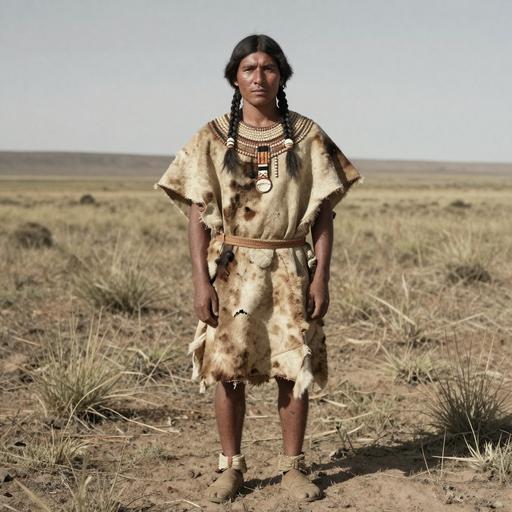
Portrait of ancient individual I8349 from Argentina, dated 4830 BCE
I8349
Argentina Argentina_LagunaChica_6800BP 4830 BCE Early Andean Civilization F - C1b
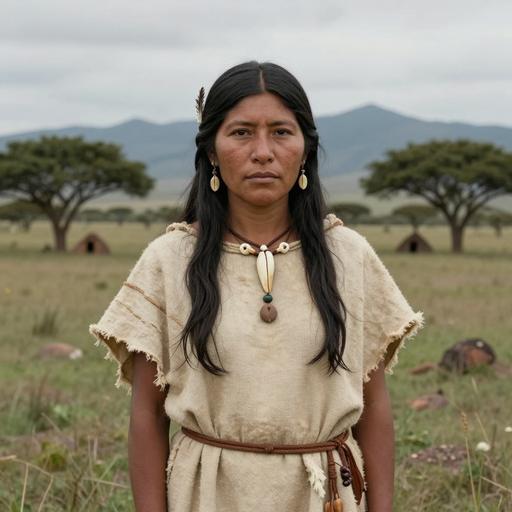
Portrait of ancient individual I8348 from Argentina, dated 5010 BCE
I8348
Argentina Argentina_LagunaChica_6800BP 5010 BCE Early Andean Civilization F - B2b
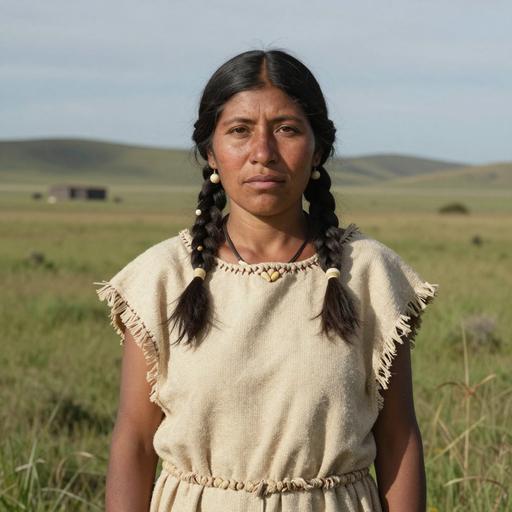
Portrait of ancient individual I8350 from Argentina, dated 7000 BCE
I8350
Argentina Argentina_LagunaChica_6800BP 7000 BCE Early Andean Civilization M Q-M3 A2
AI Powered

AI Assistant

Ask questions about the Laguna Chica: Pampas Foragers (~6800 BP) culture

AI Assistant by DNAGENICS

Unlock this feature
Ask questions about the Laguna Chica: Pampas Foragers (~6800 BP) culture. Our AI assistant can explain genetic findings, historical context, archaeological evidence, and modern connections.
Sample AI Analysis

The Laguna Chica: Pampas Foragers (~6800 BP) culture represents a fascinating chapter in human history...

Genetic analysis reveals connections to earlier populations while showing evidence of unique adaptations and cultural innovations. The ancient DNA samples provide insights into migration patterns, social structures, and the biological relationships between ancient populations.

This is a preview of the AI analysis. Unlock the full AI Assistant to explore detailed insights about:

  • Genetic composition and ancestry
  • Migration patterns and origins
  • Daily life and cultural practices
  • Modern genetic legacy
Use code for 30% off Expires May 20