Menu
Store
Blog
Argentina_LagunaChica_1600BP Pampas, Laguna Chica, Argentina

Laguna Chica — Pampas, 1600 Years Ago

A single ancient individual links Pampas archaeology to Native American maternal lineages.

250 CE - 3851600 CE
1 Ancient Samples
Scroll to begin
Chapter I

The Story

Understanding the Laguna Chica — Pampas, 1600 Years Ago culture

Archaeological remains from Laguna Chica (Pampas, Argentina) dated to 250–385 CE reveal one individual carrying mtDNA haplogroup D. Limited sampling makes conclusions preliminary, but the find connects regional archaeology with broader Native American maternal lineages.

Time Period

250–385 CE (≈1600 BP)

Region

Pampas, Laguna Chica, Argentina

Common Y-DNA

Common mtDNA

D (1)

Chapter II

Timeline

Key moments in the history of this culture

250 CE

Individual dated at Laguna Chica

Archaeological and chronological evidence places the recovered individual in the Laguna Chica basin at roughly 250–385 CE, providing a Late Holocene genetic snapshot.

Chapter III

Origins & Emergence

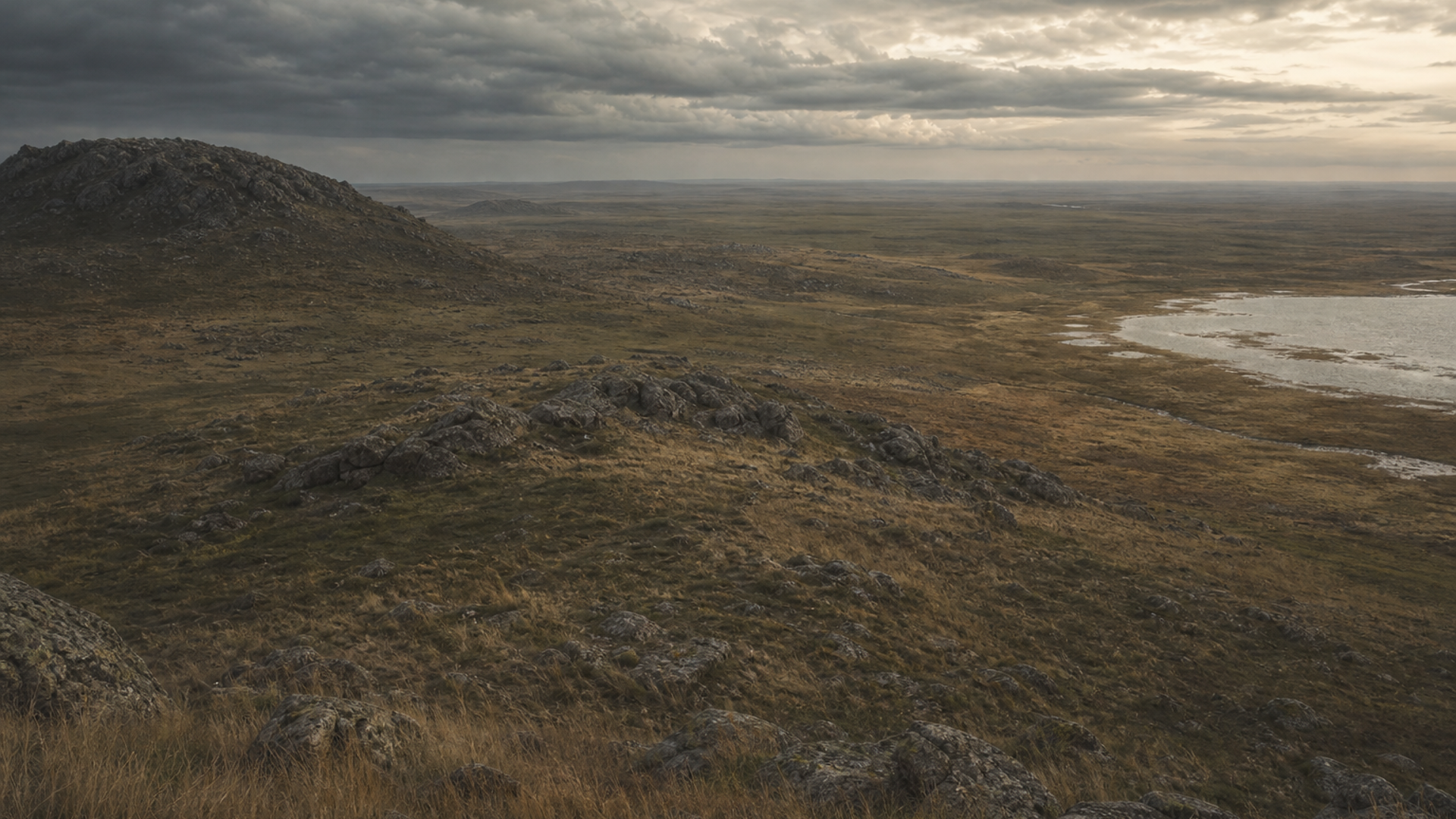
The Laguna Chica individual lived in the temperate grasslands of the Pampas during the Late Holocene, roughly between 250 and 385 CE. Archaeological data from the region indicates a long history of mobile lifeways adapting to a mosaic of wetlands, rivers, and open plains. Environmental reconstructions and regional surveys suggest communities exploited aquatic resources, small game, and wild plants, moving seasonally across a landscape of tall grasses and ephemeral wetlands.

The site of Laguna Chica itself occupies a low-lying basin where human activity often concentrates near water and rich ecological niches. While specific burial practices at Laguna Chica remain sparsely documented, the recovery of a human individual places this locus within broader Pampas occupation networks of the first millennium CE. Limited radiocarbon and stratigraphic control at nearby sites frame this era as one of continuity rather than abrupt population replacement.

Because only a single genetic sample is available, claims about population origins must remain cautious. This lone individual offers a tantalizing glimpse: archaeological context paints a story of mobility and local adaptation, and the genetic signal — while preliminary — ties that lifeway into continental-scale maternal lineages known across the Americas. Ongoing excavation and expanded sampling are required to test whether Laguna Chica reflects a localized community or part of a wider demographic pattern.

  • Occupation dated to 250–385 CE in the Pampas lowlands
  • Site near wetlands and water sources favored by mobile groups
  • Conclusions are preliminary due to a single sampled individual
Chapter IV

Daily Life & Society

Archaeological parallels across the Pampas suggest Laguna Chica's people lived a rhythm tuned to seasons and water: foraging along marsh edges, hunting small mammals and birds, and gathering tubers and reed plants. Open-air camps, temporary hearths, and dispersed artifact scatters characterize many contemporary sites, implying flexible settlement patterns rather than dense, sedentary villages.

Material culture in the region commonly includes chipped stone tools, bone implements, and organic technologies optimized for hunting, fishing, and plant processing. Social networks likely threaded across river valleys and lagoons, enabling exchange of raw materials, ideas, and perhaps marriage ties that linked disparate bands. The cinematic image is of people moving with the wind across tall grasses, tending intimate knowledge of microhabitats that sustained them through seasonal shifts.

Archaeological evidence specific to Laguna Chica remains limited; therefore, reconstructions of social organization or ritual must remain tentative. Ethnoarchaeological analogies and regional studies provide the backdrop for imagining daily life, but future discoveries at Laguna Chica will be needed to confirm whether local practices matched broader Pampas patterns or displayed unique traits.

  • Likely mobile, seasonally structured foraging economy
  • Regional material culture suggests stone, bone, and organic tool use
Chapter V

Genetic Profile

Genetic data from Laguna Chica are extremely limited: a single individual produced mitochondrial DNA classified as haplogroup D. Haplogroup D is one of the founding Native American maternal lineages and is broadly distributed across North and South America in prehistoric and modern populations. Its presence at Laguna Chica aligns the site with continental maternal lineages that arrived in the Americas during the Late Pleistocene and diversified regionally during the Holocene.

No Y-chromosome haplogroup is reported for the Laguna Chica sample, and genome-wide data are not available for much deeper population inference. Because n = 1, population-level conclusions about gene flow, continuity, or demographic shifts in the Pampas are speculative. However, the mtDNA result provides a critical anchor: it demonstrates continuity of Native American maternal ancestry in the Pampas by the first half of the first millennium CE and invites comparisons with other ancient and modern South American mtDNA datasets.
Future work that increases sample numbers and includes genome-wide sequencing would allow testing of hypotheses about local continuity versus regional mobility, admixture with neighboring groups, and how Laguna Chica fits into larger-scale population dynamics across the southern cone.

  • mtDNA haplogroup D found in the single sampled individual
  • Absence of Y-DNA and genome-wide data makes population inference preliminary
Chapter VI

Legacy & Modern Connections

The Laguna Chica individual forms a fragile but important bridge between present-day Argentines and deep-time histories of the Pampas. Maternal lineages like mtDNA D persist in many indigenous and mixed communities across South America, reminding us that genetic threads run through centuries of changing lifeways and landscapes. Archaeological continuity in settlement patterns and resource use suggests cultural resilience, while genetics anchors that resilience to ancient continental migrations.
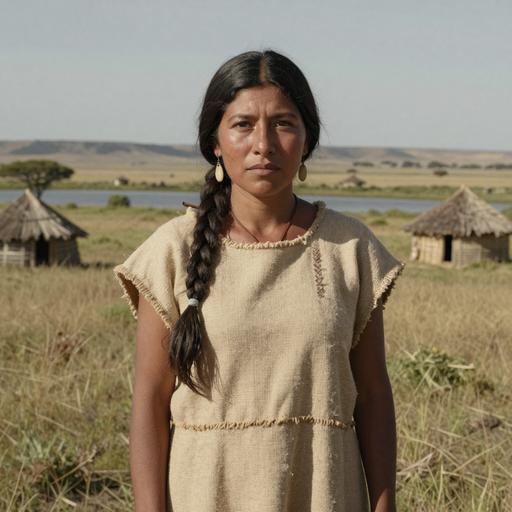

Because only one ancient genome is available from Laguna Chica, caution is essential: this single data point should be seen as a prompt for more research rather than a definitive portrait. Expanded sampling and collaboration with descendant communities can enrich interpretations, aligning biological data with oral histories, material culture, and landscape memory. Together, archaeology and genetics can illuminate how people of the Pampas lived, moved, and left traces that survive in both bone and song.

  • mtDNA ties to broader Native American maternal lineages
  • Emphasizes need for more samples and community-engaged research
Chapter VII

Sample Catalog

1 ancient DNA samples associated with the Laguna Chica — Pampas, 1600 Years Ago culture

Ancient DNA samples from this era, providing genetic insights into the people who lived during this period.

1 / 1 samples
Portrait Sample Country Era Date Culture Sex Y-DNA mtDNA
Portrait of ancient individual I8351 from Argentina, dated 250 CE
I8351
Argentina Argentina_LagunaChica_1600BP 250 CE Pre-Columbian Civilizations F - D1g-a
AI Powered

AI Assistant

Ask questions about the Laguna Chica — Pampas, 1600 Years Ago culture

AI Assistant by DNAGENICS

Unlock this feature
Ask questions about the Laguna Chica — Pampas, 1600 Years Ago culture. Our AI assistant can explain genetic findings, historical context, archaeological evidence, and modern connections.
Sample AI Analysis

The Laguna Chica — Pampas, 1600 Years Ago culture represents a fascinating chapter in human history...

Genetic analysis reveals connections to earlier populations while showing evidence of unique adaptations and cultural innovations. The ancient DNA samples provide insights into migration patterns, social structures, and the biological relationships between ancient populations.

This is a preview of the AI analysis. Unlock the full AI Assistant to explore detailed insights about:

  • Genetic composition and ancestry
  • Migration patterns and origins
  • Daily life and cultural practices
  • Modern genetic legacy
Use code for 30% off Expires May 20




