Menu
Store
Blog
Pampas, Argentina (Laguna Chica)

Laguna Chica — Pampas, c. 6800 BP

A lagoon horizon where early Pampas foragers left bones, tools and faint genetic echoes.

7000 CE - 45006800 BCE
Scroll to begin
Chapter I

The Story

Understanding the Laguna Chica — Pampas, c. 6800 BP culture

Archaeological and ancient DNA evidence from Laguna Chica (Pampas, Argentina) documents a small early Holocene forager presence (c. 7000–4500 BCE). Limited genetic data (3 samples) show Native American haplogroups, offering preliminary glimpses of population history in the Pampas.

Time Period

7000–4500 BCE (approx., 6800 BP focal)

Region

Pampas, Argentina (Laguna Chica)

Common Y-DNA

Q (observed in 1/3 samples)

Common mtDNA

B2b, C1b, A2 (each observed)

Chapter II

Timeline

Key moments in the history of this culture

4800 BCE

Laguna Chica occupation (~6800 BP)

Archaeological horizons at Laguna Chica record ephemeral forager camps around 6800 BP (≈4800 BCE), with hearths, lithics and faunal remains in lagoon-edge contexts.

Chapter III

Origins & Emergence

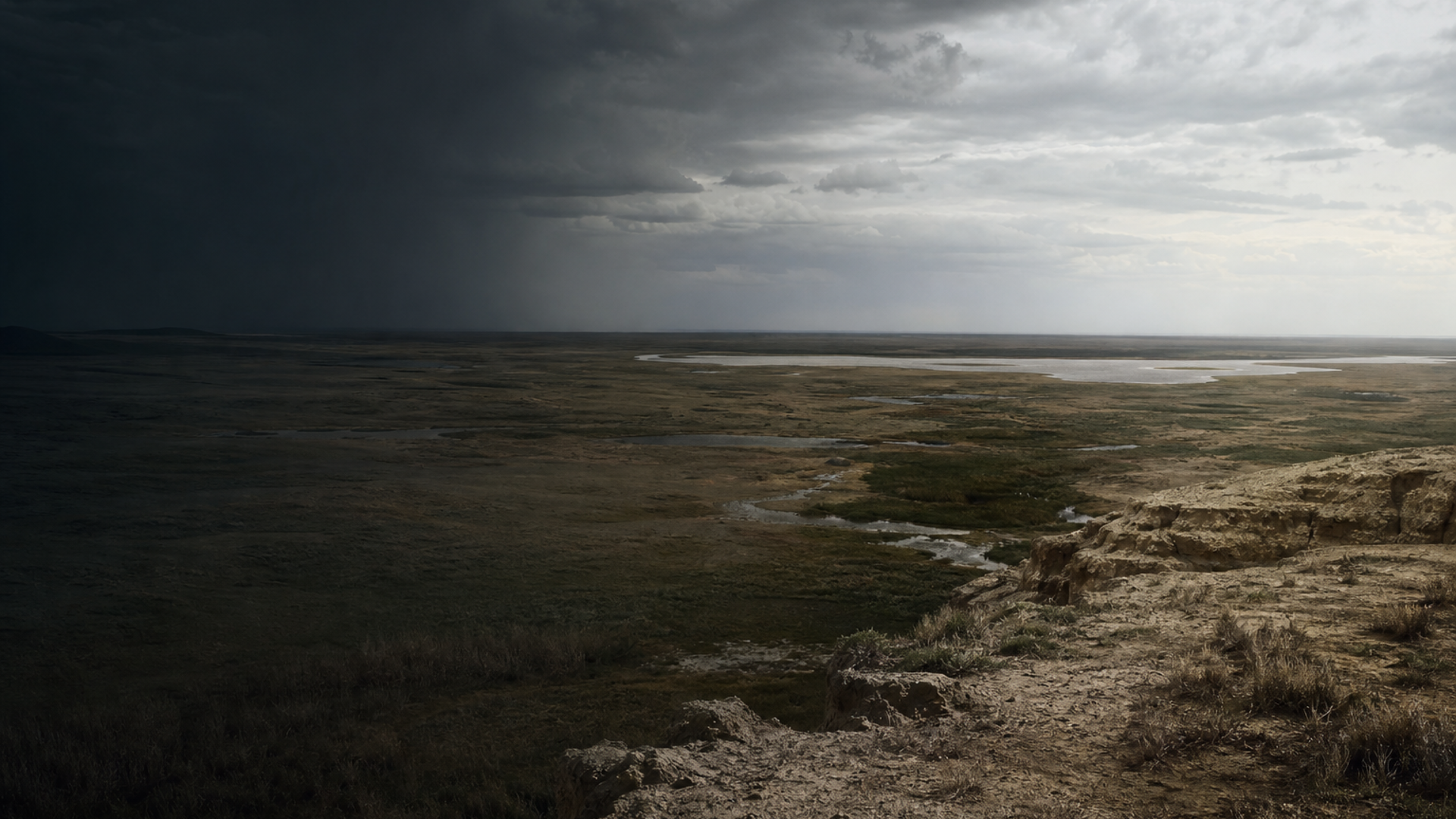
The Laguna Chica horizon sits in the rolling wetlands of the Pampas, where lagoon fringes and seasonal marshes framed the lives of early Holocene foragers. Radiocarbon-calibrated contexts and stratigraphic relationships place human activity across a broad interval (roughly 7000–4500 BCE), with a focal signal near 6800 BP recorded at the eponymous site. Archaeological data indicate repeated short-term occupations: hearth lenses, scattered lithics and faunal remains suggest mobile lifeways tuned to wetland resources.

Cinematic as the landscape feels — wind silvering shallow water, chipped stone glinting on peat — the archaeological record remains fragmentary. Limited evidence suggests the Laguna Chica people were part of a mosaic of early South American forager groups exploiting coastal and inland wetland ecotones. Regional comparisons show continuity in tool types and site placement across the Pampas, but the current sample size from Laguna Chica is very small. Interpretations of population history, migration, or cultural transmission must therefore remain cautious. Future excavations and secure radiocarbon dates are essential to refine the timing and the relationship of Laguna Chica occupations to broader Archaic-era developments in southern South America.

  • Local wetland/lagoon occupation in the Pampas around 7000–4500 BCE
  • Evidence for mobile forager subsistence from hearths, lithics, and fauna
  • Fragmentary record—caution required due to limited samples
Chapter IV

Daily Life & Society

Life at Laguna Chica likely unfolded in seasonal rhythms: fishing, waterfowl hunting, and gathering reed- and marsh-edge plants in spring and summer; terrestrial game and plant storage strategies in other seasons. Archaeological traces — small hearths, flaked stone debris and fragmented bone — evoke ephemeral camps rather than permanent villages. Objects were made for repair and reuse, reflecting mobility and tight logistical networks across the Pampas.

Socially, these were small-band groups with flexible affiliations. Material culture suggests knowledge exchange with nearby valleys and coastal areas, but there is little evidence for hierarchical organization or long-distance exchange of luxury goods at this time. Mortuary practices at Laguna Chica are not well documented; where burials occur in the Pampas more broadly, they often show localized treatment and diverse funerary gestures. Remember that the picture of daily life remains impressionistic: the archaeological assemblage is modest, and inferences about social structure and seasonality should be treated as provisional hypotheses pending more data.

  • Seasonal use of lagoon and wetland resources by mobile bands
  • Small ephemeral camps with reparable tools and hearth features
Chapter V

Genetic Profile

Ancient DNA from Laguna Chica currently includes three individuals. Genetic preservation at wetland sites can be variable, and the sample count is small; all conclusions are preliminary. The Y-chromosome evidence shows haplogroup Q in one male individual — a lineage broadly associated with Native American populations across the Americas. Mitochondrial results record three distinct maternal lineages across the three samples: B2b, C1b and A2, each observed once.

These mitochondrial haplogroups align with well-established indigenous maternal lineages found throughout South America, supporting continuity with early Native American genetic diversity. The presence of haplogroup Q on the paternal side is also consistent with continental-scale patterns of early colonization. However, with only three genomes the data cannot resolve finer-scale population structure, sex-biased mobility, or detailed affinities to neighboring groups. Limited evidence suggests genetic continuity with other Archaic-era individuals from southern South America, but broader sampling and comparative analyses are required to test hypotheses about migration routes, demographic shifts, or local persistence. In short: the genetics provide tantalizing echoes of ancient Pampas peoples, but each echo needs more voices to form a chorus.

  • Small dataset (n = 3): conclusions are preliminary
  • Y-DNA: Q (1); mtDNA: B2b, C1b, A2 (each 1) — consistent with Native American diversity
Chapter VI

Legacy & Modern Connections

The Laguna Chica people are part of the deep human tapestry of the Pampas. Their biological signatures — the maternal and paternal lineages present in these few samples — link them to the wider story of Native American settlement in South America. For modern descendants and researchers, these genetic markers are threads that connect present-day indigenous diversity to ancient lifeways along lagoons and marshes.


Culturally, the adaptive strategies employed at Laguna Chica — mobility, wetland resource use, and flexible social ties — resonate with ethnographic records of later Pampas groups. Archaeology and genetics together provide a measured glimpse of continuity amid change. Yet the small sample count demands humility: these connections are suggestive, not definitive. Expanded excavation, careful dating and richer ancient DNA sampling will be necessary to transform preliminary hints into a robust narrative of ancestry and cultural transmission in the Pampas.

  • Genetic lineages tie Laguna Chica to broader Native American diversity
  • Preliminary connections to later Pampas lifeways; more data needed
AI Powered

AI Assistant

Ask questions about the Laguna Chica — Pampas, c. 6800 BP culture

AI Assistant by DNAGENICS

Unlock this feature
Ask questions about the Laguna Chica — Pampas, c. 6800 BP culture. Our AI assistant can explain genetic findings, historical context, archaeological evidence, and modern connections.
Sample AI Analysis

The Laguna Chica — Pampas, c. 6800 BP culture represents a fascinating chapter in human history...

Genetic analysis reveals connections to earlier populations while showing evidence of unique adaptations and cultural innovations. The ancient DNA samples provide insights into migration patterns, social structures, and the biological relationships between ancient populations.

This is a preview of the AI analysis. Unlock the full AI Assistant to explore detailed insights about:

  • Genetic composition and ancestry
  • Migration patterns and origins
  • Daily life and cultural practices
  • Modern genetic legacy
Use code for 30% off Expires May 20