Menu
Store
Blog
Southwest of Buenos Aires, Argentina

Laguna Toro, 2400 Years Ago

A lone Late Holocene individual from the pampas edge near Buenos Aires.

740 CE - 2002400 BCE
Scroll to begin
Chapter I

The Story

Understanding the Laguna Toro, 2400 Years Ago culture

Archaeological remains from Laguna Toro (740–200 BCE) capture a moment on the southwestern margin of the Buenos Aires pampas. One sampled individual carries mtDNA haplogroup A. Limited genetic data highlights local continuity and the need for more samples.

Time Period

740–200 BCE (≈2400 BP)

Region

Southwest of Buenos Aires, Argentina

Common Y-DNA

Unknown (no Y–DNA reported)

Common mtDNA

A (1 sample)

Chapter II

Timeline

Key moments in the history of this culture

400 BCE

Occupation at Laguna Toro

Archaeological context and the sampled individual date to the Late Holocene occupation of Laguna Toro (c. 740–200 BCE), reflecting wetland-focused life on the pampas.

Chapter III

Origins & Emergence

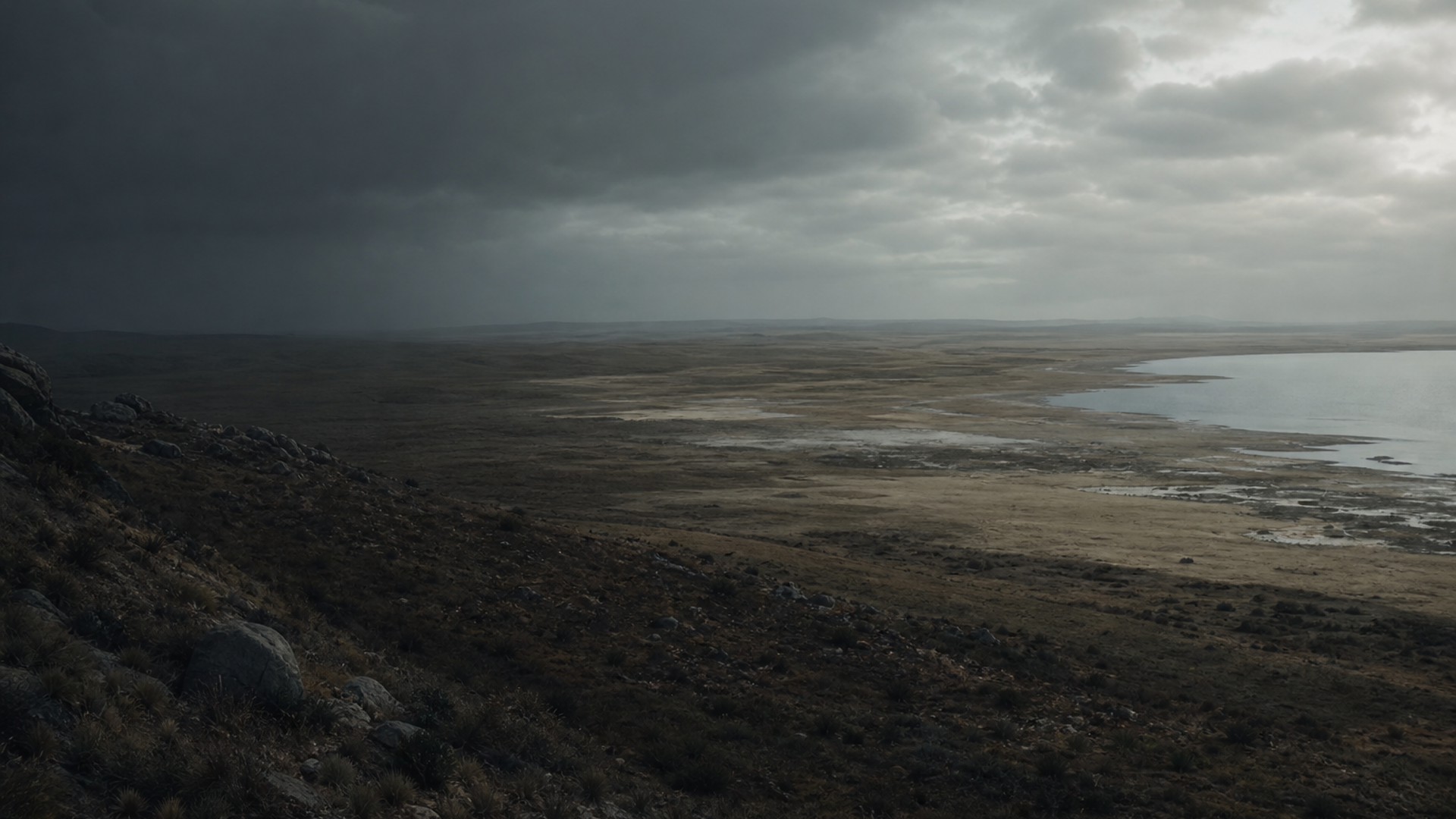
At the edge of the pampas, Laguna Toro sits as a quiet witness to Late Holocene lifeways. Archaeological data indicates human presence in this marshy landscape between roughly 740 and 200 BCE. The single genetically sampled individual derives from a time of regional mobility: the southern cone saw a mosaic of small hunter‑forager groups exploiting wetlands, river valleys and coastal shelves. Sedentism was limited and social networks likely ran along river corridors and seasonal resource patches.

The material traces from Laguna Toro—isolated burials, scattered lithics and occasional shell or bone tools at nearby sites—are suggestive rather than definitive. Limited evidence suggests these communities favored mixed foraging strategies tuned to grasses, small mammals, and aquatic resources. Environmental reconstructions of the pampas at this time indicate a dynamic landscape of floodplains and lagoons, which would have shaped settlement and movement.

Genetic continuity in the region is plausible but not yet demonstrable: one mitochondrial lineage (haplogroup A) fits broader patterns of Indigenous South American maternal diversity, yet the tiny sample size prevents strong claims about population origins, migrations, or interactions. Archaeological synthesis must therefore remain cautious, treating Laguna Toro as a valuable but solitary data point within a larger, still-incomplete Late Holocene tapestry.

  • Site: Laguna Toro, southwest of Buenos Aires, Argentina
  • Date range: ca. 740–200 BCE (≈2400 BP)
  • Evidence points to mobile forager groups exploiting wetlands
Chapter IV

Daily Life & Society

Archaeological traces paint an image of a life intimately tied to water and grassland. In the shadow of Laguna Toro's lagoon, people would have harvested aquatic plants, trapped small fish or crustaceans, and hunted pampas mammals seasonally. Stone tools recovered regionally—simple blades, scrapers and light projectile points—suggest tasks of hide processing, plant cutting, and butchery rather than large‑game specialization.

Social groups were likely small and fluid, with kin networks forming the backbone of cooperation. Burial practice at Laguna Toro appears modest; the presence of a single sampled individual could reflect a routine interment rather than an elaborate mortuary program. Craft production was probably household-level, focused on perishable technologies (basketry, cordage, wooden implements) that rarely survive archaeologically. Exchange networks, inferred from non‑local raw materials at other Late Holocene sites, imply contact over tens to perhaps hundreds of kilometers, knitting lagoons, rivers and coasts into seasonal rounds.

Archaeobotanical and zooarchaeological studies remain sparse for Laguna Toro specifically; archaeological interpretations therefore rely on regional analogies. This gap underlines how each new excavation and each ancient DNA sample can shift our understanding of daily life on the pampas.

  • Economy: mixed foraging—wetland and grassland resources
  • Society: small, mobile groups with seasonal movements
Chapter V

Genetic Profile

Genetic data from Laguna Toro currently rests on a single sampled individual. That individual carries mitochondrial haplogroup A, a common maternal lineage across the Americas that aligns with broader Late Holocene maternal diversity in southern South America. The presence of haplogroup A is consistent with regional continuity from earlier Holocene populations, but one sample cannot resolve population structure, admixture events, or precise migration histories.

No Y‑chromosome lineage is reported for this sample, leaving paternal affiliations unknown. With only one genome-scale or mitochondrial sample, conclusions about demographic processes—such as population continuity, replacement, or interaction with neighboring groups—must remain preliminary. If genomic data beyond mtDNA were available, comparisons could address affinities to other Late Holocene groups in the Pampas, Patagonia and the Atlantic coast, and test hypotheses about north–south gene flow or coastal versus inland networks.

Future sampling is essential: multiple genomes would allow formal tests (f-statistics, admixture models) to quantify relationships and detect subtle ancestries. For now, Laguna Toro offers a single genetic thread that echoes regional maternal patterns but leaves the broader genetic tapestry unresolved.

  • mtDNA haplogroup A detected in 1 individual
  • Preliminary: single sample limits demographic conclusions
Chapter VI

Legacy & Modern Connections

Laguna Toro's solitary genetic voice resonates with living Indigenous communities across Argentina in complex and sometimes indirect ways. Maternal lineages like haplogroup A are shared broadly across the Americas today, reflecting deep pre‑contact inheritance rather than direct, traceable ancestry to a single site. Archaeological continuity in burial practices and material culture across the pampas suggests long-standing local adaptations that contributed to cultural landscapes later observed by European colonizers.

Importantly, the scientific value of Laguna Toro is less about definitive answers and more about the questions it raises. Each archaeological layer and each DNA sample invites collaboration with descendant communities, integrated research that combines material, environmental and genetic evidence, and careful attention to the ethical dimensions of ancient DNA research. As more samples from the pampas are analyzed, the connections between ancient genomes and modern populations will become clearer and more meaningful.

  • Maternal lineage echoes broad Indigenous patterns across the Americas
  • Greater sampling and community collaboration needed for deeper links
AI Powered

AI Assistant

Ask questions about the Laguna Toro, 2400 Years Ago culture

AI Assistant by DNAGENICS

Unlock this feature
Ask questions about the Laguna Toro, 2400 Years Ago culture. Our AI assistant can explain genetic findings, historical context, archaeological evidence, and modern connections.
Sample AI Analysis

The Laguna Toro, 2400 Years Ago culture represents a fascinating chapter in human history...

Genetic analysis reveals connections to earlier populations while showing evidence of unique adaptations and cultural innovations. The ancient DNA samples provide insights into migration patterns, social structures, and the biological relationships between ancient populations.

This is a preview of the AI analysis. Unlock the full AI Assistant to explore detailed insights about:

  • Genetic composition and ancestry
  • Migration patterns and origins
  • Daily life and cultural practices
  • Modern genetic legacy
Use code for 35% off Expires May 20