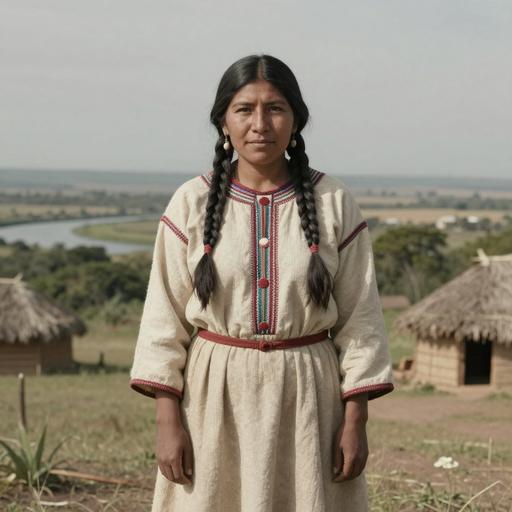
Archaeological indicators from Lagoons and small lake sites across the Pampas commonly show hearth traces, worked stone, and food debris consistent with mobile forager camps. At Laguna Toro, the depositional setting implies a life paced by water seasons: fishing, fowling, and exploiting reedland plants alongside terrestrial hunting. Organic preservation at such lakeshore localities is often uneven, so interpretations rely on fragmented lithics, shell concentrations, and occasional bone fragments.
Social groups were likely small and flexible, with networks of exchange linking lakes and upland hunting grounds. Craft specializations would have been limited but sophisticated—stone tool reduction, hide working and cordage are probable activities inferred from comparable sites in the region. Funerary treatment (if present in the single sampled context) can offer clues about social identity, but with only one individual from Laguna Toro we cannot generalize about rites, status differences, or kinship structures. Archaeological data indicates mobility, intimate knowledge of wetland ecologies, and adaptive strategies tuned to a dynamic Late Holocene environment.