Menu
Store
Blog
Armenia_LIA Armenia (Harjis cemetery; Sarukhan)

Late Iron Age Armenia — Voices from Harjis

Seven genomes from Harjis and Sarukhan illuminate maternal lines in Late Iron Age Armenia.

680 CE - 8 BCE
7 Ancient Samples
Scroll to begin
Chapter I

The Story

Understanding the Late Iron Age Armenia — Voices from Harjis culture

Genomes from seven Late Iron Age burials (680–8 BCE) at Harjis and Sarukhan, Armenia, show a mix of West Eurasian maternal haplogroups (H, H5, H2a, U, T1). Limited samples mean conclusions are preliminary but link archaeology and ancient DNA to regional continuity.

Time Period

680–8 BCE (Late Iron Age)

Region

Armenia (Harjis cemetery; Sarukhan)

Common Y-DNA

Unknown / not reported (limited data)

Common mtDNA

H5, H, U, T1, H2a (observed)

Chapter II

Timeline

Key moments in the history of this culture

680 BCE

Earliest dated burial

Earliest sampled burial from Harjis cemetery, beginning of the Late Iron Age interval represented by the dataset.

8 BCE

Latest dated burial

Most recent sample date in the series from Sarukhan, marking the end of the sampled timeframe.

Chapter III

Origins & Emergence

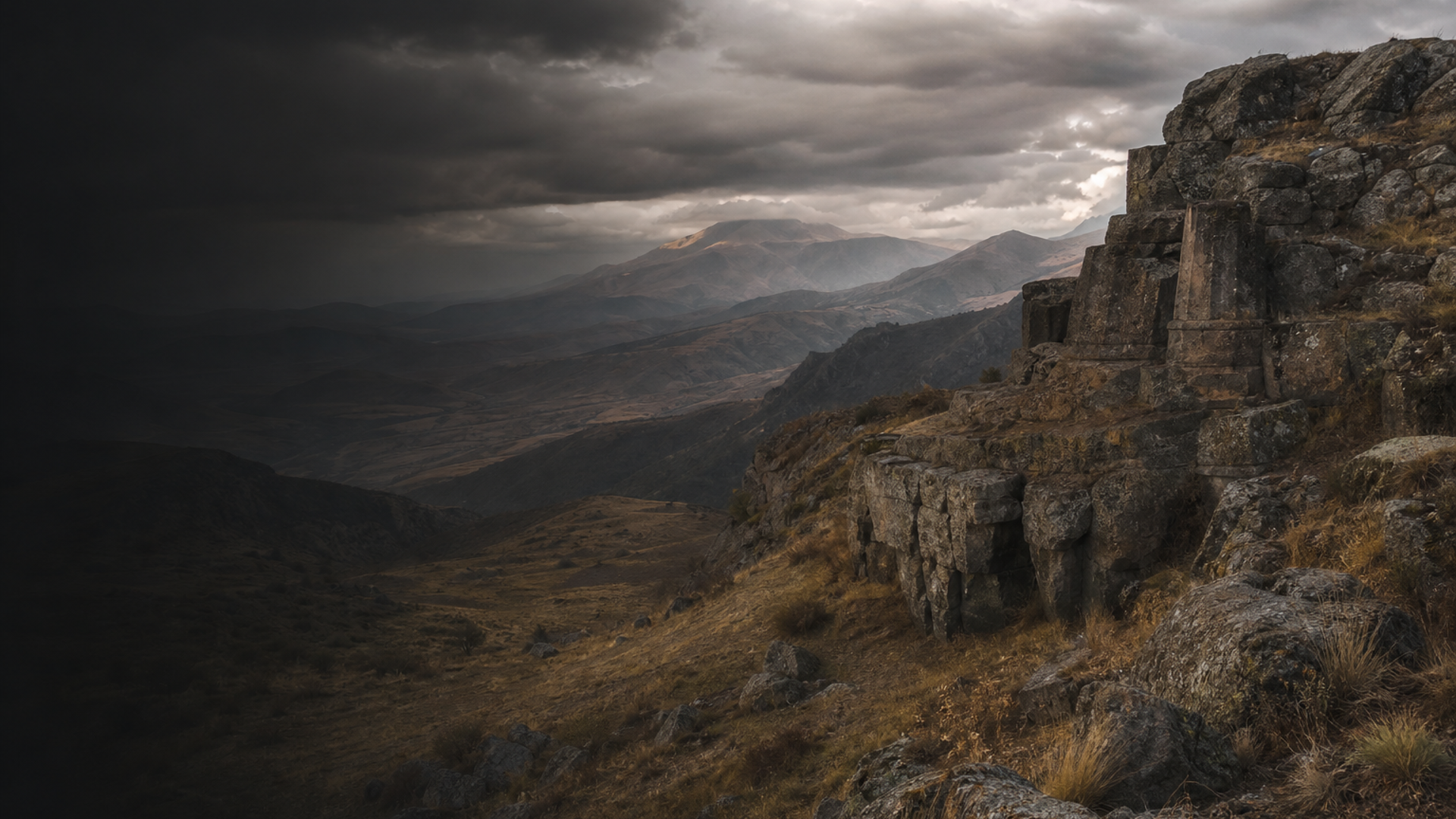
Archaeological data indicates these burials belong to the Late Iron Age landscapes of the Armenian Highlands, a region of high plateaus and river valleys that hosted complex networks of communities from the early first millennium BCE. The Harjis cemetery and the site at Sarukhan, dated between 680 and 8 BCE, occupy a time of political shifts: the legacy of Urartian institutions, contact with neighboring Anatolian and Iranian polities, and the encroaching influences of larger imperial formations.

Material traces at cemeteries in the region often reflect long-standing local traditions alongside imported objects and styles; however, the specific funerary inventories and settlement contexts for Harjis and Sarukhan remain incompletely published. Limited evidence suggests continuity in landscape use and burial choices through the Iron Age, but the archaeogenetic evidence from seven individuals offers a new line of inquiry into population composition and mobility across these centuries.

Where archaeology sketches the lived stage — cemeteries, fields, and village clusters — ancient DNA begins to reveal the actors who moved across it: maternal lineages that speak to connections with broader West Eurasian pools, and hints (but not conclusive proof) of links to earlier Bronze Age groups in the highlands.

  • Burials dated 680–8 BCE at Harjis and Sarukhan in Armenia
  • Region shaped by Urartian legacy and regional contacts
  • Archaeological picture is incomplete; genetic data provides complementary insight
Chapter IV

Daily Life & Society

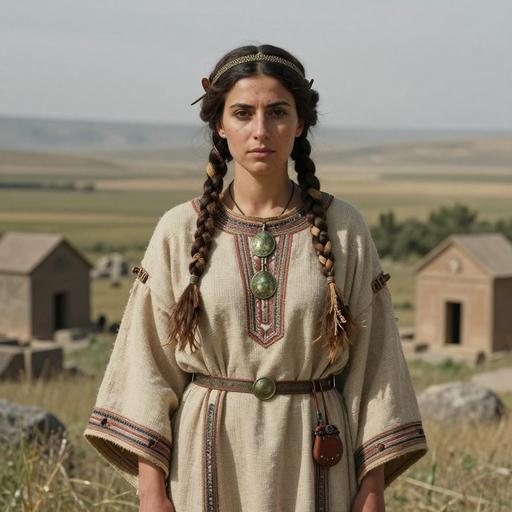
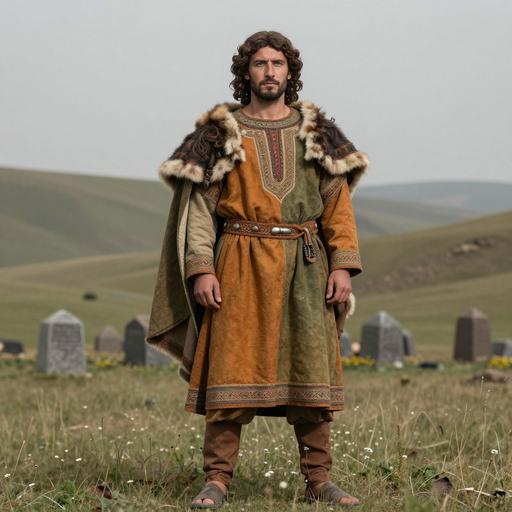
Archaeological interpretation of Late Iron Age Armenian communities evokes pastoral valleys, mixed agriculture, and craft production tied to local and regional exchange routes. Small cemeteries such as Harjis typically served nearby hamlets; grave placements and the occasional durable goods point to households embedded in long-term landscape use. Social life would have centered on seasonal herding cycles, cultivation of cereals and legumes in irrigable flats, and artisanal activities—metalworking, textile production, and ceramic manufacture—shared across villages.

Though direct household excavations for Harjis and Sarukhan are limited, the funerary record suggests communities with rooted ties to place and connections that reached outward. These are the ordinary lives against which genetic patterns are measured: maternal lineages inherited through generations, subtly reshaped by marriage practices, mobility of kin groups, and episodic migration.

In short, the archaeological stage is one of conservative local traditions intersecting with broader regional exchange—an environment where genetic signals of continuity and contact might both appear.

  • Economy likely mixed agriculture and pastoralism with local crafts
  • Cemeteries indicate rooted communities with regional connections
Chapter V

Genetic Profile

Seven individuals sampled from Harjis cemetery and Sarukhan (dated 680–8 BCE) provide a modest window into maternal ancestry in Late Iron Age Armenia. Observed mitochondrial haplogroups include H5 (1), H (1), U (1), T1 (1), and H2a (1); one additional H-lineage was also reported. These mtDNA lineages are characteristic of wide swaths of West Eurasia and are commonly found in ancient and modern populations across Europe and the Near East. Their presence here is consistent with a regional maternal gene pool that shares affinities with neighboring highland and lowland groups.

No dominant Y-DNA pattern is reported for these seven samples, and the small sample count (<10) limits robust conclusions about paternal ancestry or sex-biased movement. Because mitochondrial DNA traces only the direct maternal line, these results cannot by themselves resolve broader demographic events. However, when paired with archaeological context they suggest continuity of West Eurasian maternal lineages in the Armenian Highlands during the Late Iron Age.

Caution is essential: with just seven genomes the signal may be skewed by kin groups or cemetery-specific patterns. Larger, stratified sampling across settlements and time slices would be required to test hypotheses about population continuity, migration pulses, or shifting marriage networks in the region.

  • mtDNA diversity includes H5, H, U, T1, H2a across 7 samples
  • Low sample count (<10) — interpretations are preliminary and local
Chapter VI

Legacy & Modern Connections

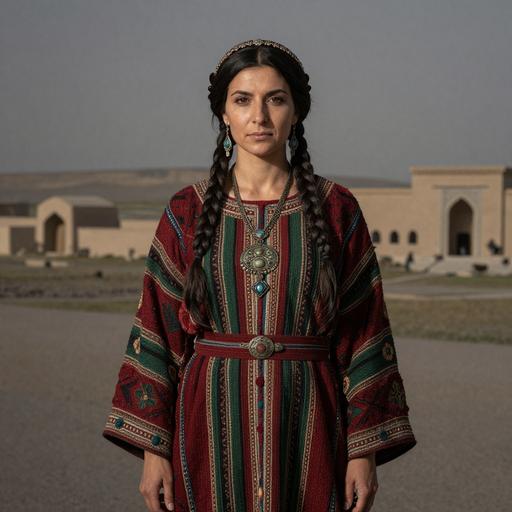
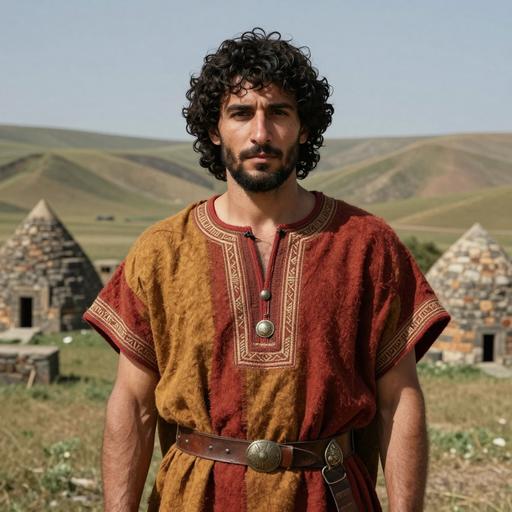
The mitochondrial lineages observed at Harjis and Sarukhan mirror haplogroups that persist in modern West Eurasian populations, suggesting potential threads of maternal continuity through millennia. Archaeological continuity in burial practice combined with shared mtDNA types is suggestive but not definitive evidence for genetic links to later inhabitants of the Armenian Highlands.

Any claim of direct continuity to modern Armenians or neighboring peoples must be cautious: seven samples cannot capture population-level change over two thousand years. Yet these genomes are cinematic fragments—intimate biological signatures that, when integrated with broader ancient DNA datasets and robust archaeological frameworks, will help trace the tapestry of ancestry, migration, and local resilience that shaped the region’s peoples.
  • Observed mtDNA types are consistent with wider West Eurasian maternal lineages
  • Small sample size prevents firm claims of direct continuity to modern populations
Chapter VII

Sample Catalog

7 ancient DNA samples associated with the Late Iron Age Armenia — Voices from Harjis culture

Ancient DNA samples from this era, providing genetic insights into the people who lived during this period.

7 / 7 samples
Portrait Sample Country Era Date Culture Sex Y-DNA mtDNA
Portrait of ancient individual I20438 from Armenia, dated 161 BCE
I20438
Armenia Armenia_LIA 161 BCE Ancient Near Eastern Civilization F - C5c+16234
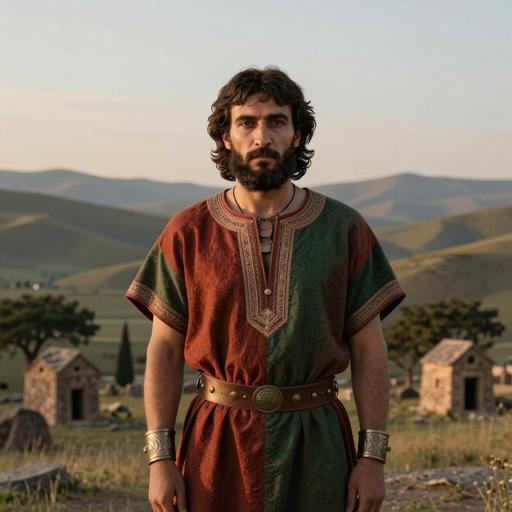
Portrait of ancient individual I18237 from Armenia, dated 680 BCE
I18237
Armenia Armenia_LIA 680 BCE Ancient Near Eastern Civilization M - H2a
Portrait of ancient individual I18238 from Armenia, dated 680 BCE
I18238
Armenia Armenia_LIA 680 BCE Ancient Near Eastern Civilization M - N1a1b1
Portrait of ancient individual I18236 from Armenia, dated 680 BCE
I18236
Armenia Armenia_LIA 680 BCE Ancient Near Eastern Civilization F - T1
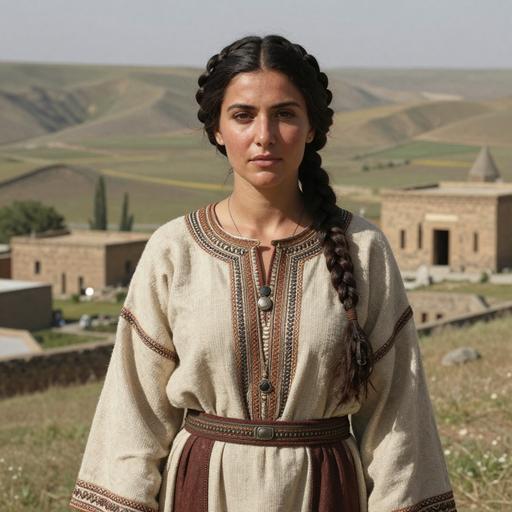
Portrait of ancient individual I18160 from Armenia, dated 680 BCE
I18160
Armenia Armenia_LIA 680 BCE Ancient Near Eastern Civilization F - H13a2b4
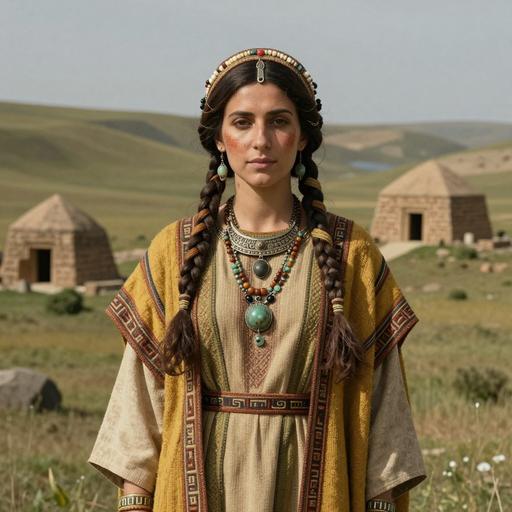
Portrait of ancient individual I18159 from Armenia, dated 680 BCE
I18159
Armenia Armenia_LIA 680 BCE Ancient Near Eastern Civilization F - H5
Portrait of ancient individual I18161 from Armenia, dated 680 BCE
I18161
Armenia Armenia_LIA 680 BCE Ancient Near Eastern Civilization M - U3b3
AI Powered

AI Assistant

Ask questions about the Late Iron Age Armenia — Voices from Harjis culture

AI Assistant by DNAGENICS

Unlock this feature
Ask questions about the Late Iron Age Armenia — Voices from Harjis culture. Our AI assistant can explain genetic findings, historical context, archaeological evidence, and modern connections.
Sample AI Analysis

The Late Iron Age Armenia — Voices from Harjis culture represents a fascinating chapter in human history...

Genetic analysis reveals connections to earlier populations while showing evidence of unique adaptations and cultural innovations. The ancient DNA samples provide insights into migration patterns, social structures, and the biological relationships between ancient populations.

This is a preview of the AI analysis. Unlock the full AI Assistant to explore detailed insights about:

  • Genetic composition and ancestry
  • Migration patterns and origins
  • Daily life and cultural practices
  • Modern genetic legacy
Use code for 35% off Expires May 21