Menu
Store
Blog
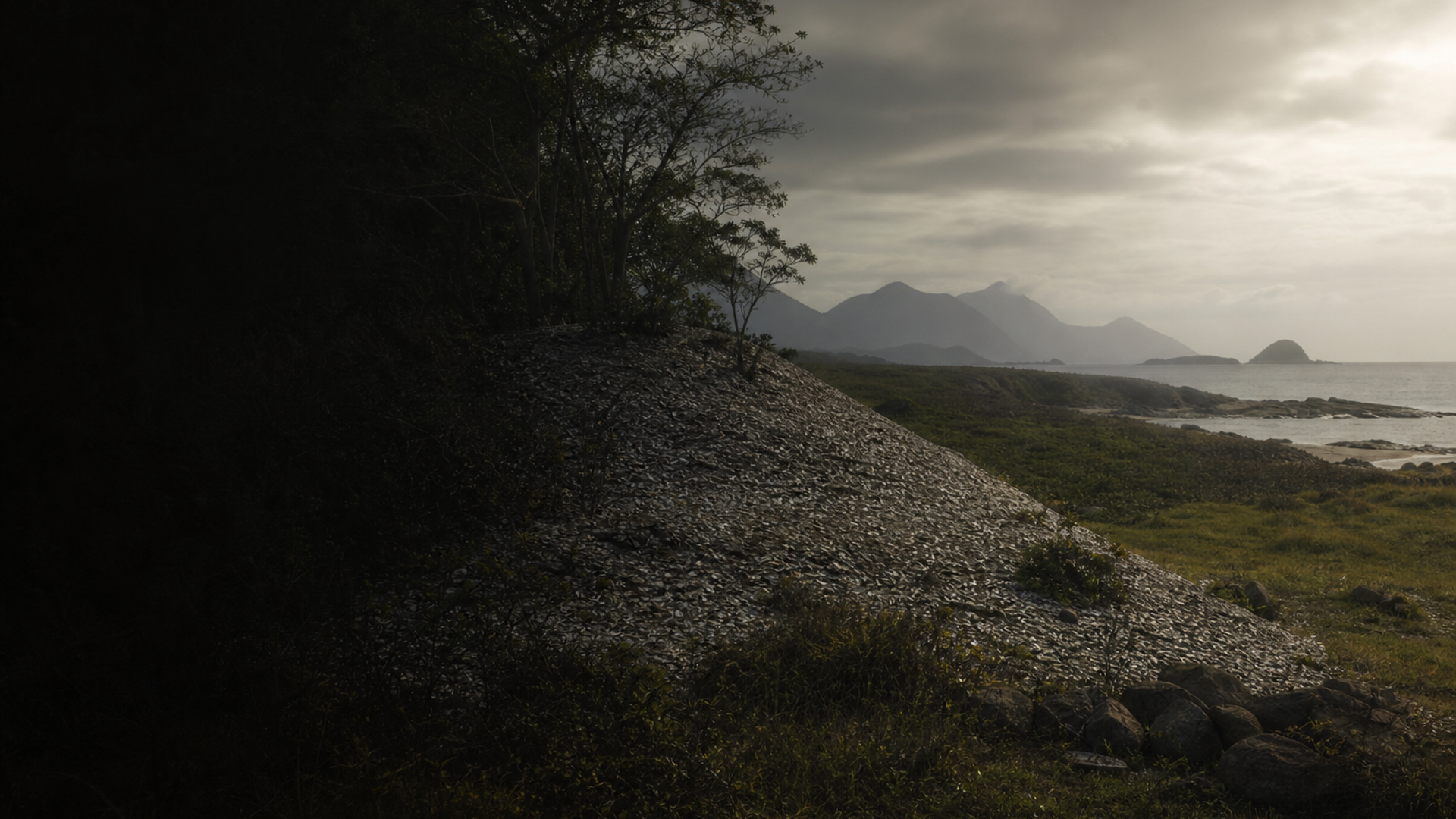
Sambaqui do Limão, Southeast Coast, Brazil

Limão Sambaqui: Coastal Mound People

Shell mounds and DNA from Sambaqui do Limão reveal a long coastal story

850 BCE - 1650 CE
Scroll to begin
Chapter I

The Story

Understanding the Limão Sambaqui: Coastal Mound People culture

Archaeological evidence from Sambaqui do Limão (southeast Brazil) and four ancient DNA samples (850 BCE–1650 CE) suggest coastal foraging lifeways and Indigenous American maternal lineages (A, D, C1b) with one Y-chromosome Q. Limited sample size makes conclusions preliminary.

Time Period

850 BCE – 1650 CE

Region

Sambaqui do Limão, Southeast Coast, Brazil

Common Y-DNA

Q (observed in 1 of 4)

Common mtDNA

A (2), D (1), C1b (1)

Chapter II

Timeline

Key moments in the history of this culture

2500 BCE

Early sambaqui mound-building begins

Shell-mound construction begins along parts of Brazil's coast, initiating long-term coastal occupations and communal midden-building traditions that later characterize sites like Sambaqui do Limão.

Chapter III

Origins & Emergence

Along the Southeast Brazilian shore at Sambaqui do Limão, the past rises in layers of shell and ash. Archaeological data indicates repeated, long-term deposition of shell middens — the hallmark of the broader Sambaqui tradition — that record generations of coastal use. The samples associated with Brazil_Limao_Sambaqui_1900BP date between ca. 850 BCE and 1650 CE, capturing a deep time of coastal adaptation and later pre-contact and early contact dynamics.

Sambaqui sites are visible as low mounds and stratified deposits where shells, fish bone, charcoal, and occasional human interments build a palimpsest of daily life. These mounds formed as people processed marine resources, discarded tools and food waste, and returned across seasons and centuries. Archaeological stratigraphy at Sambaqui do Limão suggests episodic accumulation and site re-use rather than a single continuous occupation.

Limited evidence suggests that mound construction and communal use may have begun millennia earlier along the Brazilian coast; regional comparisons show continuity in shell-accumulation practices but variability in artifact styles and site function. Given the small number of genetic samples (n=4) from Limão, archaeological interpretation must remain cautious and framed as part of an emerging, still-incomplete record.

  • Sambaqui do Limão: shell-midden site on Brazil's southeast coast
  • Occupation evidence spans 850 BCE–1650 CE; stratigraphy shows episodic use
  • Mound-building tradition fits broader coastal Sambaqui patterns
Chapter IV

Daily Life & Society

Archaeological traces from Sambaqui do Limão paint a cinematic shoreline of nets, hearths, and communal labor. Faunal remains dominated by fish, shellfish, and marine mammals indicate diets highly focused on coastal resources; botanical remains and crafted bone or shell tools suggest complementary activities such as plant processing and contact with inland resources. Hearth features and concentrated artifact loci within middens indicate repeated processing stations where food was cleaned, cooked, and consumed.

The physical bulk of shell middens implies not only subsistence activities but also social organization: construction and maintenance of mounds would have required coordinated labor and possibly ritualized practices around burial or feasting. Archaeological data indicates occasional human interments within or adjacent to midden deposits at some Sambaqui sites, hinting at complex mortuary behaviors that linked the living landscape to the dead.

Material culture from the region shows variability—decorated shell artifacts, bone points, and simple pottery appear in some layers but are not ubiquitous at Limão. This mosaic reflects shifting lifeways over more than a millennium, including adaptation to environmental change and, in later layers, potential impacts from broader historical processes. Given limitations of the material record at this single site, reconstructions of social hierarchy or long-distance exchange remain tentative.

  • Diet centered on fish, shellfish, and marine mammals
  • Middens imply coordinated labor, repeated use, and possible ritual or burial practices
Chapter V

Genetic Profile

The genetic snapshot from Brazil_Limao_Sambaqui_1900BP comes from four analyzed individuals recovered at Sambaqui do Limão. mtDNA lineages observed are A (two individuals), D (one), and C1b (one), while a single Y-chromosome sample carried haplogroup Q. These haplogroups are part of the well-established suite of founding and early Indigenous American maternal and paternal lineages, widely documented across South and Central America.

Archaeogenetic data here is powerful for linking biological ancestry to coastal lifeways, but it is also sparse. With n=4, any inferences about population structure, continuity, or migration must be framed as preliminary. The presence of A, D, and C1b matrilines suggests genetic continuity with broader Indigenous populations of South America, while Y-haplogroup Q aligns with widespread Native American paternal ancestry.

Because the dated interval extends into the post-contact era (up to ca. 1650 CE), observed genetic signatures could reflect both pre-contact continuity and later demographic processes, including contact-era population movements or admixture. Archaeological context and direct dating of skeletal remains are essential to tease apart temporal layers. Future targeted sampling and genome-wide data will be necessary to test questions of local continuity, kinship, and connections to contemporary Indigenous groups. Until then, conclusions remain cautious and provisional.

  • mtDNA: A (2), D (1), C1b (1) — consistent with Indigenous American matrilines
  • Y-DNA: Q (1) — aligns with widespread Native American paternal ancestry; sample size small
Chapter VI

Legacy & Modern Connections

The sambaqui landscapes, including Sambaqui do Limão, form both an archaeological archive and a living legacy for coastal Brazil. Material remains preserve stories of prolonged coastal stewardship, specialized marine knowledge, and social practices anchored in place. While genetic links suggest continuity with Indigenous American lineages, direct ancestry between archaeological individuals and specific modern communities cannot be assumed without broader comparative sampling and engagement with descendant communities.


Conversations about heritage, repatriation, and the protection of coastal sites are central to present-day stewardship. Archaeological and genetic research offers tools to illuminate the past, but it must proceed collaboratively, respecting Indigenous perspectives and legal frameworks. Ongoing and expanded ancient DNA sampling, integrated with careful stratigraphic excavation and radiocarbon dating, will sharpen our picture of how the people of Sambaqui do Limão contributed to the deep human story along Brazil's shoreline.

  • Material culture and middens reflect long-term coastal stewardship
  • Genetic continuity plausible but requires more sampling and community-engaged research
AI Powered

AI Assistant

Ask questions about the Limão Sambaqui: Coastal Mound People culture

AI Assistant by DNAGENICS

Unlock this feature
Ask questions about the Limão Sambaqui: Coastal Mound People culture. Our AI assistant can explain genetic findings, historical context, archaeological evidence, and modern connections.
Sample AI Analysis

The Limão Sambaqui: Coastal Mound People culture represents a fascinating chapter in human history...

Genetic analysis reveals connections to earlier populations while showing evidence of unique adaptations and cultural innovations. The ancient DNA samples provide insights into migration patterns, social structures, and the biological relationships between ancient populations.

This is a preview of the AI analysis. Unlock the full AI Assistant to explore detailed insights about:

  • Genetic composition and ancestry
  • Migration patterns and origins
  • Daily life and cultural practices
  • Modern genetic legacy
Use code for 30% off Expires May 17