Menu
Store
Blog
Sambaqui do Limão, Southeast Coast, Brazil

Limão Sambaqui: Coastal Threads

A single ancient voice from Sambaqui do Limão links shell-mound life to Indigenous maternal ancestry

1442 CE - 1616 CE
Scroll to begin
Chapter I

The Story

Understanding the Limão Sambaqui: Coastal Threads culture

Archaeological remains from Sambaqui do Limão (Southeast Brazil) dated 1442–1616 CE offer a rare genetic glimpse—one mtDNA B2 sample—into late Sambaqui coastal communities. Limited evidence suggests continuity with regional Indigenous maternal lineages; conclusions remain preliminary.

Time Period

1442–1616 CE (radiocarbon range)

Region

Sambaqui do Limão, Southeast Coast, Brazil

Common Y-DNA

Not recovered / not reported

Common mtDNA

B2 (1 sample)

Chapter II

Timeline

Key moments in the history of this culture

6000 BCE

Emergence of Sambaqui traditions

Regional shell-mound building traditions begin in the Holocene, initiating long-term coastal mound construction and estuarine economies.

1500 CE

Interment within Sambaqui do Limão

Radiocarbon-dated burial context places an individual in the shell-mound between 1442–1616 CE, offering the genetic sample assigned to mtDNA B2.

Chapter III

Origins & Emergence

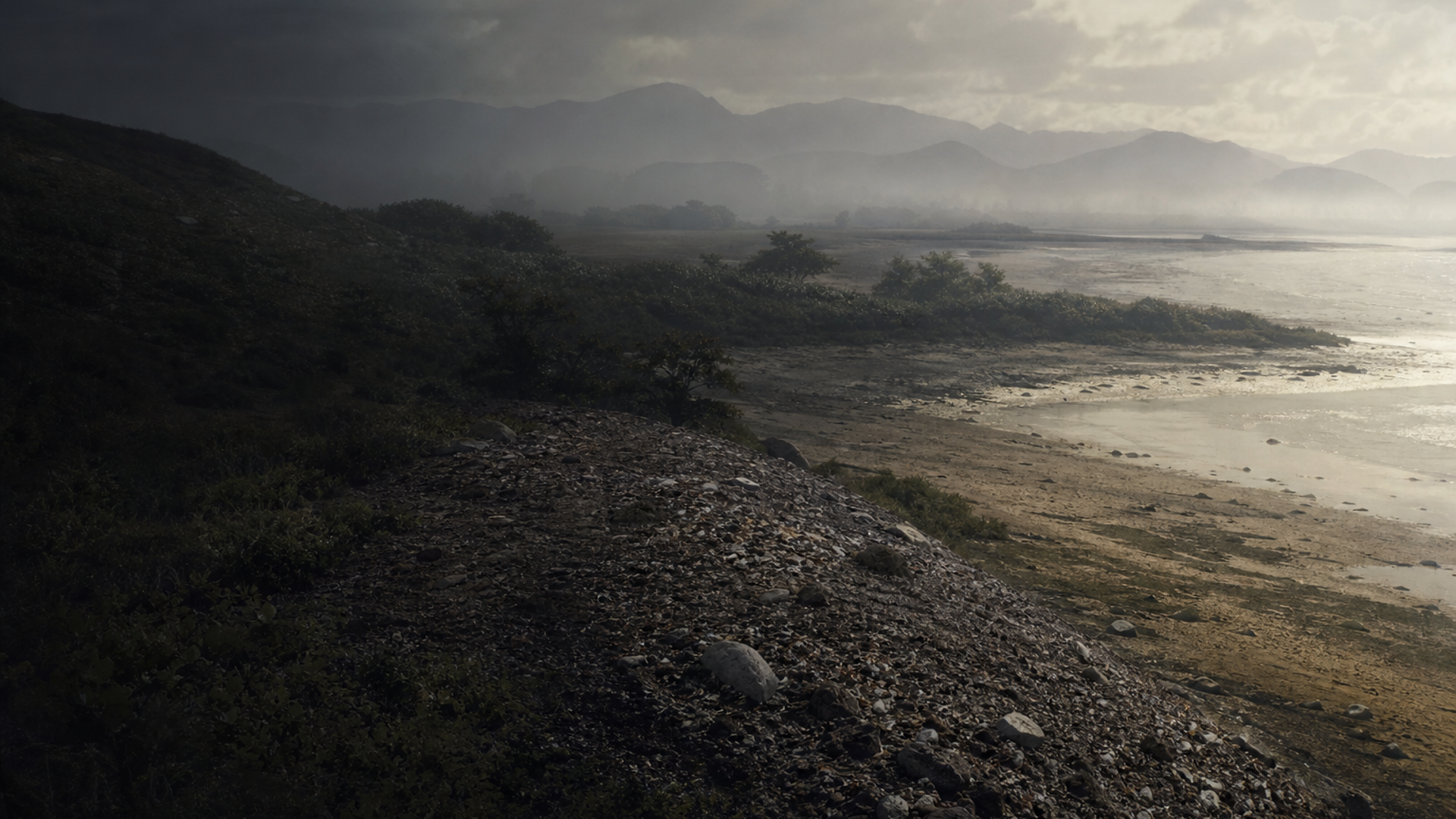
The Sambaqui do Limão site sits on the rocky curve of Brazil’s southeast coast where generations shaped the shoreline into living monuments of shell, bone and charcoal. Archaeological data indicates this location was used as a shell-midden and burial locus during the late pre-contact period; the dated interval for the recovered material spans roughly 1442–1616 CE. The broader Sambaqui phenomenon—coastal shell-mound building and complex estuarine economies—has deep roots in the Holocene and persisted in diverse forms into the second millennium CE.

Limited evidence from the Limão assemblage suggests an established coastal lifeway oriented around fishing, mollusc gathering and seasonal resource aggregation rather than large-scale agriculture. Midden stratigraphy and associated cultural debris reveal repetitive deposition events: meals, discard, and funerary placements woven into the mound’s growth. Radiocarbon dating anchors the individual(s) within the late pre-contact horizon, a period of intensified contact dynamics along the Atlantic littoral.

Because this dataset rests on a single sampled individual, ethnogenesis models and migration scenarios remain provisional. Archaeological context frames the Limão individual as part of the late Sambaqui cultural tapestry, but broader claims about population movements or cultural transmission require additional sites and samples for confirmation.

  • Shell-midden (sambaqui) at Sambaqui do Limão, Southeast Coast, Brazil
  • Dated context: 1442–1616 CE (late pre-contact period)
  • Interpretations are preliminary due to limited sampling
Chapter IV

Daily Life & Society

The life reconstructed from sambaqui deposits is cinematic: smoke drifting over tidal flats, fish drying on racks, and accumulations of clam, oyster and fish bone building rounded mounds that rise from the shoreline. Archaeological indicators at Limão—shell refuse layers, fragmented fish bone, and occasional worked shell—point to a mixed foraging strategy with an emphasis on rich nearshore resources. Shell middens also served social and ritual roles; funerary deposits within many sambaquis suggest these mounds were both refuse and memory banks where ancestors were interred and commemorated.

Spatial patterning at comparable sambaqui sites shows areas of hearths, tool production and burial. Grave goods are often modest—shell beads, ochre traces, simple ornaments—but their placement inside mounds confers long-term landscape presence. Craft traditions tied to shell and bone reflect skilled coastal adaptation rather than sedentary agriculture.

At Limão specifically, the archaeological record preserves a snapshot of lifeways on the eve of intensified colonial contact. The material culture implies resilient coastal economies and social practices centered on maritime cycles. Yet, with only one genetic sample analyzed, linking these cultural practices to specific lineages or kinship structures remains speculative.

  • Diet focused on marine resources—shellfish, fish, and estuarine species
  • Middens functioned as both refuse heaps and ritual/burial places
Chapter V

Genetic Profile

Ancient DNA recovered from Sambaqui do Limão currently comprises a single individual whose mitochondrial genome was assigned to haplogroup B2. Haplogroup B2 is a maternal lineage widely observed among Indigenous populations across South and Central America and is one of the founding Native American mtDNA branches traced back to the initial peopling of the Americas. The presence of B2 in this late pre-contact coastal individual aligns with expectations for regional Indigenous maternal ancestry and suggests continuity, at least maternally, with broader Native American genetic diversity.

However, no Y-chromosome data are reported for this sample, and genome-wide autosomal information is either not recovered or not available for public analysis. Because the sample count is one, population-level inferences—such as continuity, admixture with inland groups, or demographic shifts—are highly tentative. Limited evidence suggests the Limão individual contributed to the mosaic of coastal maternal lines but cannot alone resolve questions about migration corridors, kinship systems, or genetic links to contemporary groups.

Future sampling across nearby sambaqui sites and deeper genome-wide sequencing would be necessary to move from evocative suggestion to robust demographic models. Until then, the genetic signal at Limão remains a single luminous thread in a larger coastal tapestry.

  • mtDNA haplogroup B2 identified (1 individual)
  • No Y-DNA reported; autosomal data limited or unavailable
Chapter VI

Legacy & Modern Connections

The Limão individual provides a poignant biological link between the late Sambaqui world and the living Indigenous peoples of Brazil. Archaeological patterns and the B2 maternal lineage point toward long-standing coastal continuities, but establishing direct ancestry relationships requires many more samples and careful community-engaged research.

Sambaqui mounds remain visible on parts of the southeast coastline and carry cultural memory for descendant communities; they are both archaeological sites and landscapes of meaning. Genetic data, when combined respectfully with archaeology and oral histories, can illuminate threads of continuity and displacement without replacing local knowledge. For the Limão sample, the story is provisional: an evocative hint of maternal continuity and coastal resilience that invites expanded sampling, multidisciplinary analysis, and collaboration with Indigenous stakeholders to responsibly explore the past and its living connections.


  • Hints of maternal continuity with regional Indigenous lineages
  • Calls for more samples, community collaboration, and broader analyses
AI Powered

AI Assistant

Ask questions about the Limão Sambaqui: Coastal Threads culture

AI Assistant by DNAGENICS

Unlock this feature
Ask questions about the Limão Sambaqui: Coastal Threads culture. Our AI assistant can explain genetic findings, historical context, archaeological evidence, and modern connections.
Sample AI Analysis

The Limão Sambaqui: Coastal Threads culture represents a fascinating chapter in human history...

Genetic analysis reveals connections to earlier populations while showing evidence of unique adaptations and cultural innovations. The ancient DNA samples provide insights into migration patterns, social structures, and the biological relationships between ancient populations.

This is a preview of the AI analysis. Unlock the full AI Assistant to explore detailed insights about:

  • Genetic composition and ancestry
  • Migration patterns and origins
  • Daily life and cultural practices
  • Modern genetic legacy
Use code for 35% off Expires May 20