Menu
Store
Blog
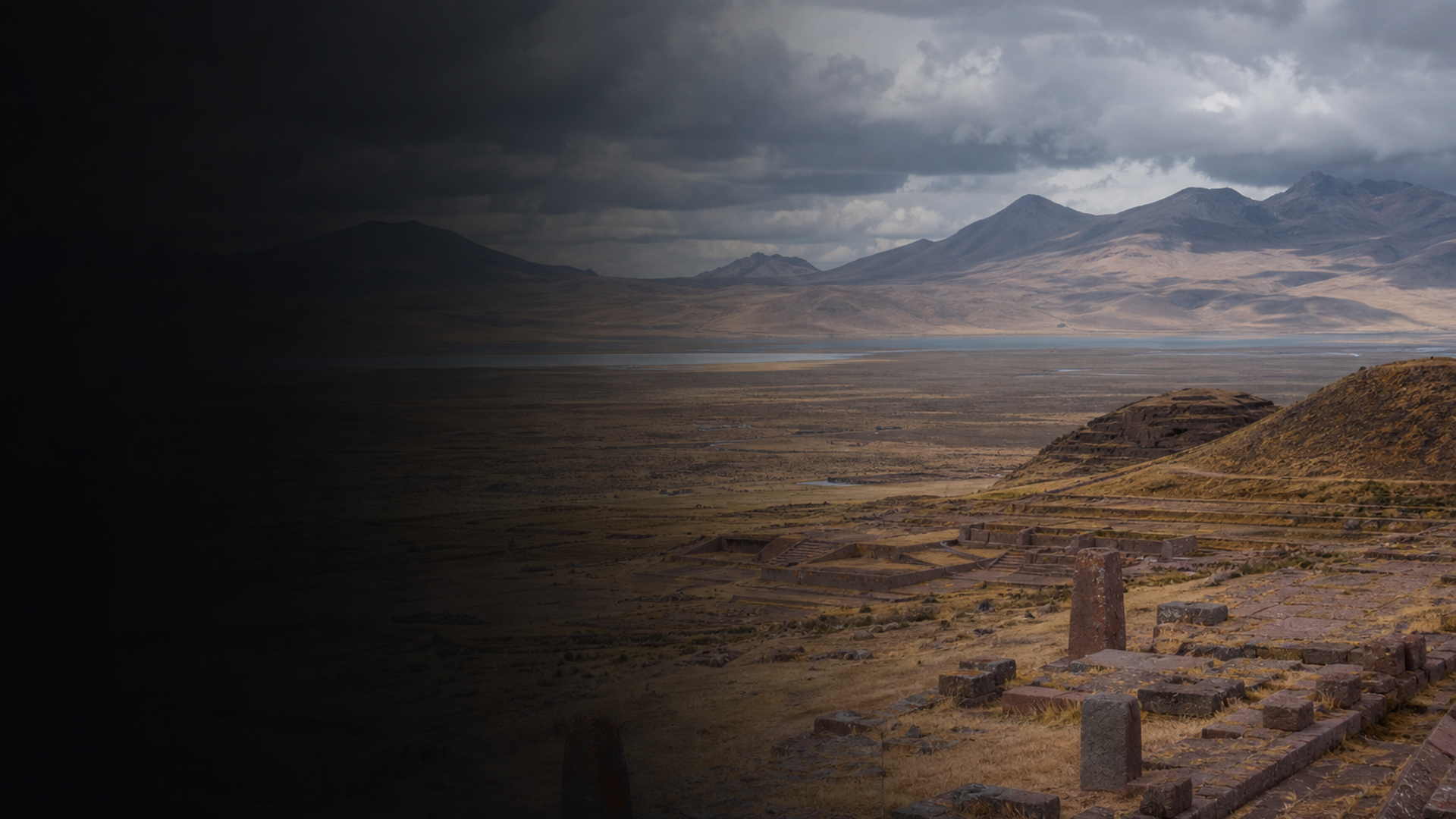
Lukurmata, Lake Titicaca basin, Bolivia

Lukurmata Voices: Tiwanaku on the Altiplano

A highland settlement where stones and genomes whisper long-lived traditions

211 CE - 1620 CE
Scroll to begin
Chapter I

The Story

Understanding the Lukurmata Voices: Tiwanaku on the Altiplano culture

Archaeological and genetic evidence from Lukurmata (Bolivia) links the Tiwanaku cultural horizon to persistent Andean lineages. Four ancient DNA samples (211–1620 CE) show mostly Native American uniparental markers, but the small sample size makes conclusions preliminary.

Time Period

211–1620 CE

Region

Lukurmata, Lake Titicaca basin, Bolivia

Common Y-DNA

Q (2 of 4 samples)

Common mtDNA

B2 (3), C1b (1)

Chapter II

Timeline

Key moments in the history of this culture

211 CE

Earliest sampled burial

One of the Lukurmata aDNA samples dates to this early interval within the site's long occupation.

300 CE

Emergence of Tiwanaku influence

Tiwanaku cultural styles and regional influence expand across the southern Lake Titicaca basin, shaping settlements like Lukurmata.

600 CE

Regional florescence

Monumental construction and intensified exchange networks mark a peak in Tiwanaku socio-political reach.

1538 CE

European contact

Spanish colonization introduces new dynamics; demographic and cultural shifts begin in the highlands.

1620 CE

Latest sampled burial

A later Lukurmata sample approaches the colonial era, capturing long-term continuity or change.

Chapter III

Origins & Emergence

Lukurmata sits on the windswept Bolivian altiplano, within the wider Tiwanaku sphere that reshaped the southern Lake Titicaca basin. Archaeological strata at Lukurmata reveal domestic compounds, finely made Tiwanaku-style ceramics, and agricultural terraces that hint at a community steeped in intensive highland farming. Radiocarbon-dated materials and associated artifacts place occupations that overlap the Tiwanaku Middle Horizon and later post-collapse centuries.

Archaeological data indicates Lukurmata participated in the ritual and economic networks centered on Tiwanaku city (near modern-day Tiwanaku, Bolivia). Stone architecture and pottery styles show cultural connections across decades, while botanical and faunal remains speak to a diet anchored in quinoa, potatoes, and camelid herding. Limited evidence suggests episodes of reorganization and continuity through periods of regional change.

Genetic sampling from Lukurmata spans 211–1620 CE and is temporally broad; this range encompasses pre- and post-Tiwanaku social landscapes. With only four ancient DNA samples, interpretations about population origins remain preliminary. Nonetheless, the convergence of material culture and genetic signals supports a picture of long-term local residence and interaction within the Andean highlands.

  • Lukurmata: highland farmstead within Tiwanaku influence
  • Material culture links to Tiwanaku city traditions
  • Occupation spans Middle Horizon into post-Tiwanaku centuries
Chapter IV

Daily Life & Society

Archaeology paints Lukurmata as a place of agricultural mastery and intimate craft. Fields cut into the Altiplano, irrigation features, and storage pits indicate organized food production oriented toward resilience at high elevation. Animal bones—primarily camelids—suggest llamas and alpacas were central for transport, wool, and meat. Pottery fragments and textile impressions hint at skilled makers whose motifs echoed wider Tiwanaku aesthetics.

Burial contexts at Lukurmata provide human-scale glimpses: grave goods vary from simple textile wrappings to ceramic vessels, suggesting social differentiation without extreme wealth disparities. Stable isotope studies elsewhere in the Lake Titicaca basin show diets heavy in highland crops and occasional lowland resources; similar patterns are plausible at Lukurmata but require more direct isotopic sampling at the site.

Social life likely combined household production with participation in supra-local ritual cycles tied to Tiwanaku ceremonial centers. Trade routes across the altiplano moved goods and ideas: obsidian, metals, and textile patterns traveled alongside people. Archaeological evidence indicates resilience and adaptation, while the genetic data from a small sample reinforces a narrative of long-term local lifeways rather than large-scale replacement.

  • Intensive high-altitude agriculture and camelid herding
  • Household crafts linked to broader Tiwanaku stylistic traditions
Chapter V

Genetic Profile

Four ancient DNA samples from Lukurmata (dates range 211–1620 CE) yield an initial snapshot of local ancestry. Uniparental markers show Y-chromosome haplogroup Q in two males and mitochondrial haplogroups B2 (three individuals) and C1b (one individual). These lineages are part of the established set of Native American founder and regional Andean maternal and paternal markers.

Haplogroup Q has deep roots across the Americas and its presence in Lukurmata aligns with widespread paternal continuity in the highlands. Maternal haplogroups B2 and C1b are common in South America and are frequently detected in ancient Andean and contemporary indigenous populations. Importantly, none of the four samples show obvious Eurasian uniparental lineages, even though the latest dates approach the colonial period.

Interpretation must be cautious. With only four genomes, statistical power is low and the temporal span is long; demographic events, mobility, and sex-biased processes could be masked. Preliminary patterns are consistent with genetic continuity between Tiwanaku-era communities and later Andean populations, but genome-wide data and larger sample sizes are needed to resolve admixture, kinship, and mobility at Lukurmata. Ancient DNA combined with isotopes and stratigraphic context offers the most robust path forward.

  • Y-DNA: Q in 2 of 4 samples; indicates deep Native American paternal lineages
  • mtDNA: B2 predominant (3) with one C1b; suggests regional Andean maternal continuity
Chapter VI

Legacy & Modern Connections

The stones and genomes of Lukurmata whisper continuity. Ceramic traditions, architectural echoes, and genetic markers link past inhabitants to the living peoples of the southern Lake Titicaca highlands. Ethnolinguistic groups such as Aymara and Quechua maintain cultural practices that archaeologists trace back to Tiwanaku social and ritual patterns, though linguistic and genetic histories are complex and not one-to-one.

Genetically, the uniparental markers from Lukurmata align with lineages still present among Andean communities, suggesting long-term regional persistence. However, the small ancient sample set (n=4) means any claim of direct ancestry must be framed as tentative. Future sampling, especially broader genome-wide analyses, will test whether Lukurmata represents a continuous local gene pool or a node in wider networks of movement and exchange. For museum audiences, Lukurmata offers a cinematic example of how archaeology and DNA together illuminate human stories of endurance on the high plains.

  • Material and genetic traces point to enduring Andean connections
  • Current conclusions are tentative pending more ancient DNA and contextual data
AI Powered

AI Assistant

Ask questions about the Lukurmata Voices: Tiwanaku on the Altiplano culture

AI Assistant by DNAGENICS

Unlock this feature
Ask questions about the Lukurmata Voices: Tiwanaku on the Altiplano culture. Our AI assistant can explain genetic findings, historical context, archaeological evidence, and modern connections.

Sample AI Analysis

The Lukurmata Voices: Tiwanaku on the Altiplano culture represents a fascinating chapter in human history...

Genetic analysis reveals connections to earlier populations while showing evidence of unique adaptations and cultural innovations. The ancient DNA samples provide insights into migration patterns, social structures, and the biological relationships between ancient populations.

This is a preview of the AI analysis. Unlock the full AI Assistant to explore detailed insights about:

  • Genetic composition and ancestry
  • Migration patterns and origins
  • Daily life and cultural practices
  • Modern genetic legacy
Use code for 35% off Expires May 21