
Menu
Store
Blog
Machu Picchu, Cusco region, Peru

Machu Picchu: Late Pre‑Columbian Lineages

Maternal genomes from a highland citadel reveal links across the Late Horizon Andes.

1420 CE - 1532 CE
Scroll to begin
Chapter I

The Story

Understanding the Machu Picchu: Late Pre‑Columbian Lineages culture

Ancient DNA from 21 individuals at Machu Picchu (c. 1420–1532 CE) shows predominantly Native American maternal lineages (A, B2, B2b, C, C1b). Archaeological context places these people in the Inca Late Horizon; genetic data suggest local Andean ancestry with site-specific diversity and limited male-line reporting.

Time Period

c. 1420–1532 CE (Late Horizon)

Region

Machu Picchu, Cusco region, Peru

Common Y-DNA

Not reported / limited male-line data

Common mtDNA

B2 (4), A (4), B2b (3), C (2), C1b (2)

Chapter II

Timeline

Key moments in the history of this culture

2500 BCE

Early highland settlement begins

Early Archaic and Formative period movements establish long-term highland adaptation and agricultural systems in the Central Andes.

Chapter III

Origins & Emergence

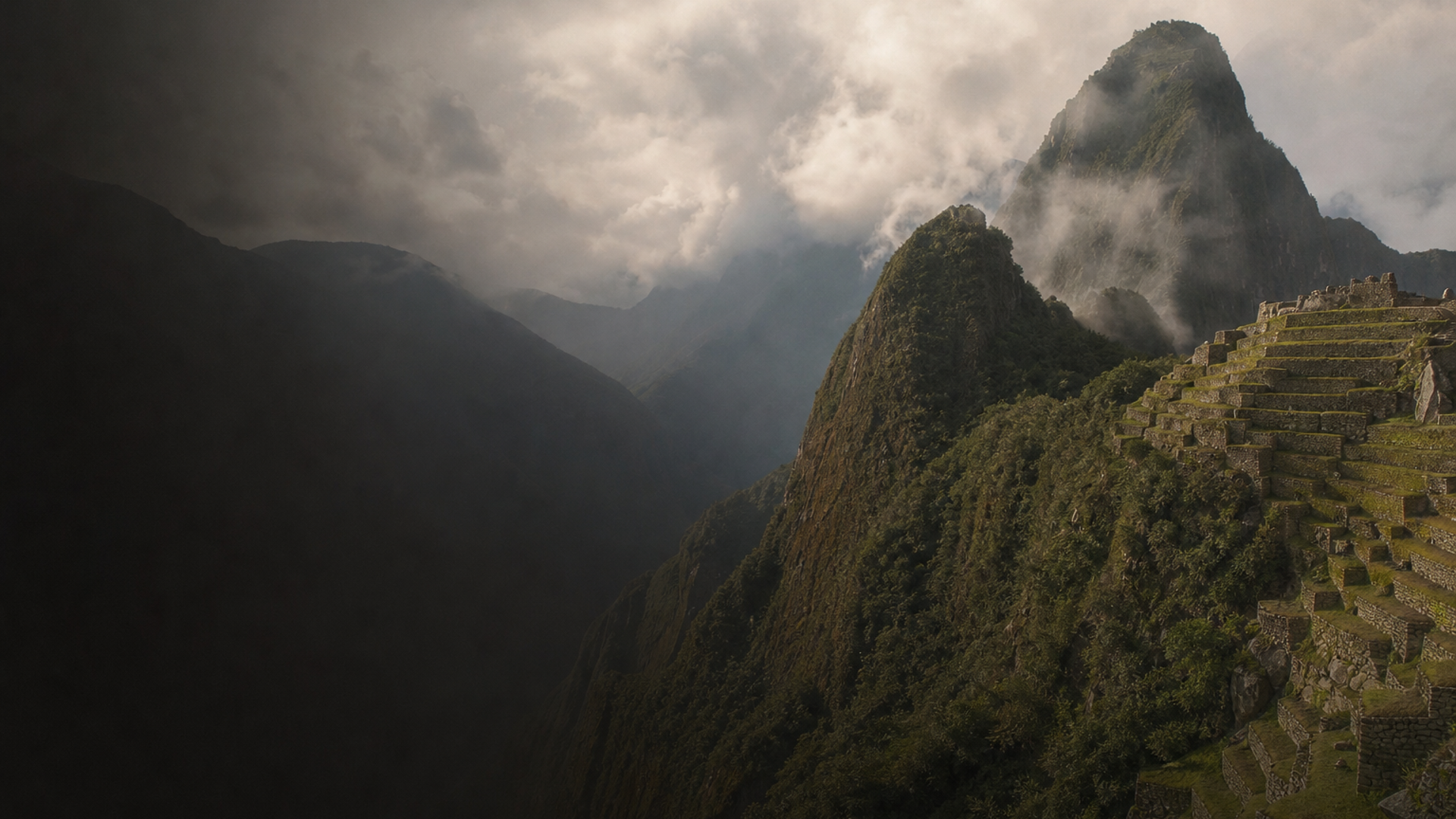
Perched on a serrated ridge above the Urubamba Valley, Machu Picchu speaks of imperial ambition carved from granite. Archaeological data indicates construction and peak use in the mid‑15th to early‑16th centuries, within the Inca Empire's Late Horizon (roughly c. 1420–1532 CE). Historical models link the site's foundation to expansionary policies centered at Cusco; limited evidence suggests elite planning, agricultural terraces, ritual spaces, and a mix of resident craftsmen and administrators.

From a regional perspective, the human story of the Andes extends deep into prehistory — millennia of highland adaptation, vertical complementarity with lowland communities, and episodic population movements. The Machu Picchu assemblage should be read as a snapshot: a high‑altitude community integrated into Inca state networks yet rooted in longer local traditions. Where archaeological phases are clear, genetic snapshots complement material culture to reveal who lived and moved through these stone corridors. However, caution is warranted: the genetic dataset is site‑bounded and cannot alone resolve broader demographic processes across the entire Andes.

  • Site occupied in the Late Horizon of the Inca Empire (c. 1420–1532 CE)
  • Machu Picchu combines administrative, agricultural, and ritual architecture
  • Genetic samples represent a local, site-specific window into population history
Chapter IV

Daily Life & Society

Stone plazas, finely cut masonry, and terraced fields frame a daily life shaped by altitude and state organization. Archaeological evidence from Machu Picchu includes domestic sectors, specialized craft areas, storage facilities, and ritual precincts — features that suggest a community of mixed roles: cultivators, artisans, religious specialists, and administrators. Diet reconstructions and botanical remains point to maize, tubers, quinoa, and highland tuber cultivation, supplemented by camelid herding and trade goods brought along Andean roads.

Social life likely reflected Inca administrative hierarchies but also local kin networks. Burials and mortuary treatment vary across the site, indicating differences in status or origin. Isotopic studies elsewhere in the region show mobility between ecological zones; at Machu Picchu, such mobility would have supplied foods, labor, and cultural exchange. Interpretations should remain tentative: preservation biases and the localized scope of excavations mean that everyday practices at Machu Picchu may not mirror all Andean settlements.

  • Mixed economy: terrace agriculture, camelid herding, and exchanged goods
  • Spatially organized sectors indicate specialized roles and possible social stratification
Chapter V

Genetic Profile

The genetic dataset from Machu Picchu comprises 21 individuals dated to c. 1420–1532 CE, offering a rare maternal-line window into a Late Horizon highland community. Maternal haplogroups are dominated by classic Native American lineages: A and B2 (including B2b) together account for the majority of mitochondrial genomes, with additional representation of C and C1b. These mtDNA lineages are widespread among ancient and modern Andean populations, consistent with regional continuity in maternal ancestry.

Notably, Y‑chromosome (male-line) data are not reported or are limited for this sample set, constraining inference about paternal ancestry, sex‑biased migration, or elite lineage movements. With 21 samples, statistical power is reasonable for site‑level statements but remains modest for reconstructing broader demographic events; population structure, gene flow from neighboring valleys, and intra‑imperial mobility all remain plausible and require broader comparative datasets. Where genomes overlap with other Late Horizon and pre‑Inca samples, emerging patterns suggest local continuity punctuated by movement along Inca administrative routes. Archaeogenetic interpretations should therefore emphasize concordance with archaeological context and acknowledge remaining uncertainties.

  • mtDNA dominated by Native American lineages A, B2 (including B2b), C, and C1b
  • Limited or absent Y‑DNA reporting restricts conclusions about male-line dynamics
Chapter VI

Legacy & Modern Connections

The maternal lineages found at Machu Picchu echo in the genomes of modern Andean communities, suggesting threads of biological continuity alongside cultural transformation since the Spanish contact era. Archaeological preservation of terraces, roads, and ritual spaces offers a tangible legacy that, when paired with ancient DNA, illuminates how people lived, moved, and were administratively organized under the Inca state.

For present-day descendants, these findings are a scientific lens — not a substitute for cultural memory. Genetic evidence complements oral histories and ethnography by revealing patterns of maternal ancestry and local diversity, but it must be integrated ethically and collaboratively with descendant communities. Overall, Machu Picchu's ancient genomes contribute to a growing picture: the Andes were populated by genetically diverse, locally rooted peoples connected by complex social and ecological networks.

  • mtDNA continuity aligns with maternal lineages in modern Andean groups
  • Genetic data should be integrated with descendant community knowledge and archaeology
AI Powered

AI Assistant

Ask questions about the Machu Picchu: Late Pre‑Columbian Lineages culture

AI Assistant by DNAGENICS

Unlock this feature
Ask questions about the Machu Picchu: Late Pre‑Columbian Lineages culture. Our AI assistant can explain genetic findings, historical context, archaeological evidence, and modern connections.
Sample AI Analysis

The Machu Picchu: Late Pre‑Columbian Lineages culture represents a fascinating chapter in human history...

Genetic analysis reveals connections to earlier populations while showing evidence of unique adaptations and cultural innovations. The ancient DNA samples provide insights into migration patterns, social structures, and the biological relationships between ancient populations.

This is a preview of the AI analysis. Unlock the full AI Assistant to explore detailed insights about:

  • Genetic composition and ancestry
  • Migration patterns and origins
  • Daily life and cultural practices
  • Modern genetic legacy
Use code for 35% off Expires May 20




