Menu
Store
Blog
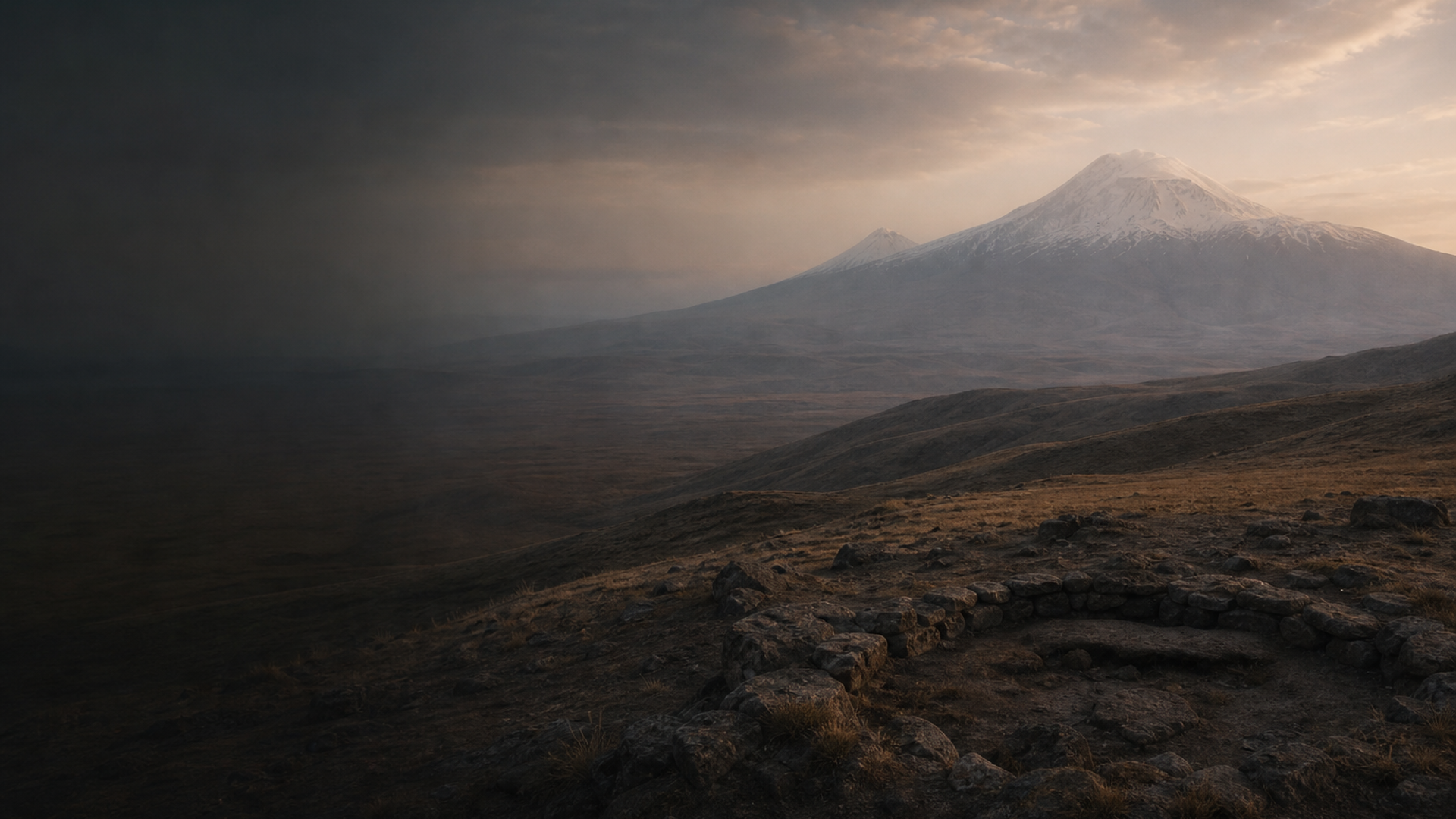
Masis Blur, Ararat plain, Armenia

Masis Blur Neolithic Echo

A single Neolithic voice from Masis Blur, Armenia (c.5633–5532 BCE)

5633 CE - 5532 BCE
Scroll to begin
Chapter I

The Story

Understanding the Masis Blur Neolithic Echo culture

Archaeological remains from Masis Blur (Armenia) provide a rare Neolithic snapshot. One sequenced individual (c.5633–5532 BCE) carries mtDNA haplogroup K. Limited sample size makes conclusions tentative, but material culture and genetics hint at local continuity within the South Caucasus Neolithic.

Time Period

c. 5633–5532 BCE (Neolithic)

Region

Masis Blur, Ararat plain, Armenia

Common Y-DNA

Unknown (no Y-chromosome data)

Common mtDNA

K (single sampled individual)

Chapter II

Timeline

Key moments in the history of this culture

5633 BCE

Burial dated at Masis Blur

A single human burial from Masis Blur is radiocarbon-dated to between 5633 and 5532 BCE and yielded mtDNA haplogroup K.

Chapter III

Origins & Emergence

Masis Blur sits on the lowlands of the Ararat plain, a landscape of volcanic cones and river terraces that funneled people, animals and ideas between the Armenian highlands and the Levant. Archaeological data indicates human occupation in this region throughout the early and mid-Neolithic; local settlements produced stone tools, food-processing implements and traces of early farming economies.

The single radiocarbon-dated individual attributed to Armenia_MasisBlur_N falls between 5633 and 5532 BCE, placing it firmly in the Neolithic horizon when domesticated plants and animals were established in portions of the South Caucasus. Limited evidence suggests communities here were neither isolated nor static: trade in obsidian and stylistic similarities in pottery link Masis Blur to neighboring highland and lowland sites across Armenia and into eastern Anatolia.

Because only one genome has been recovered to date from Masis Blur, narratives about origins must remain cautious. The genetic signal of this individual will help anchor regional chronologies but cannot yet resolve population continuity, migration directions, or the extent of contact with farming corridors to the south. Further excavation and sampling are required to transform this evocative single voice into a chorus illuminating the Neolithic emergence in the Ararat plain.

  • Site: Masis Blur on the Ararat plain, Armenia
  • Date: c. 5633–5532 BCE (Neolithic)
  • Evidence links Masis Blur to broader South Caucasus exchange networks
Chapter IV

Daily Life & Society

Archaeological impressions of daily life at Masis Blur derive from material remains common to Neolithic sites in the region: flaked stone tools, grinding stones, and pottery fragments that bear traces of use. These artifacts suggest subsistence strategies based on mixed farming—cereal processing and domestic animals—supplemented by foraging and hunting in nearby uplands. The Ararat plain's fertile soils and riverine resources would have supported seasonal cycles of planting, harvesting and herding.

Community size and social organization remain largely conjectural for Masis Blur. Settlement architecture in comparable Armenian Neolithic sites ranges from small hamlets to larger aggregated villages with shared storage and communal hearths. Funerary evidence is sparse at Masis Blur; the single sampled burial provides a personal glimpse but cannot reveal broader mortuary practices or social stratification. Cultural landscapes in this era often show long-term place attachment and patterned mobility—people negotiated a world of micro-environments, moving herds between lowland pastures and upland grazing.

Given the limited direct evidence from Masis Blur itself, interpretations emphasize plausible scenarios derived from regional analogies rather than firm site-specific reconstructions.

  • Subsistence: mixed farming, animal husbandry, and foraging
  • Social structure: small community patterns inferred from regional parallels
Chapter V

Genetic Profile

The genetic dataset for Armenia_MasisBlur_N is currently limited to a single individual dated to c.5633–5532 BCE. This individual carries mitochondrial DNA haplogroup K. Haplogroup K is widely observed across Neolithic Europe and the Near East and is often associated with early farmer populations, but its presence in a single Masis Blur sample should be treated as preliminary.

Archaeogenetic interpretation must emphasize sample size: with n=1, population-level inferences (such as ancestry proportions, sex-biased migration, or continuity with later Armenian groups) are not robust. Nevertheless, the occurrence of mtDNA K is consistent with genetic patterns seen in other Neolithic individuals in the Near East and parts of the South Caucasus, suggesting genetic links or shared maternal lineages across connected Neolithic networks.

No Y-chromosome data are available from this individual, so male-line affinities remain unknown. Future sampling at Masis Blur and surrounding sites will be essential to determine whether the mtDNA K signal reflects a broader maternal legacy, isolated lineage retention, or chance preservation. When integrated with material culture and isotopic data, even this single ancient genome helps anchor chronological and migratory hypotheses for the Neolithic South Caucasus.

  • mtDNA: Haplogroup K (single individual)
  • Y-DNA: No data available — conclusions are preliminary
Chapter VI

Legacy & Modern Connections

Masis Blur's single Neolithic genome contributes a cautious thread to the tapestry of human history in the Armenian highlands. While it cannot by itself map modern genetic landscapes, the presence of mtDNA K aligns with maternal lineages later observed across Europe and West Asia, hinting at long-term connections between Neolithic farmers of the Near East and broader continental populations.

For modern descendants and regional histories, the key takeaway is continuity of human occupation and the complex web of interaction in which ancestors of Armenians lived. Continued archaeological and genetic work may reveal whether Masis Blur represents a local tradition maintained over millennia or a node in shifting networks of migration and exchange.

  • Single-sample data underscore the need for more genomes from the region
  • mtDNA K links Masis Blur to wider Neolithic maternal lineages in West Eurasia
AI Powered

AI Assistant

Ask questions about the Masis Blur Neolithic Echo culture

AI Assistant by DNAGENICS

Unlock this feature
Ask questions about the Masis Blur Neolithic Echo culture. Our AI assistant can explain genetic findings, historical context, archaeological evidence, and modern connections.
Sample AI Analysis

The Masis Blur Neolithic Echo culture represents a fascinating chapter in human history...

Genetic analysis reveals connections to earlier populations while showing evidence of unique adaptations and cultural innovations. The ancient DNA samples provide insights into migration patterns, social structures, and the biological relationships between ancient populations.

This is a preview of the AI analysis. Unlock the full AI Assistant to explore detailed insights about:

  • Genetic composition and ancestry
  • Migration patterns and origins
  • Daily life and cultural practices
  • Modern genetic legacy
Use code for 35% off Expires May 20