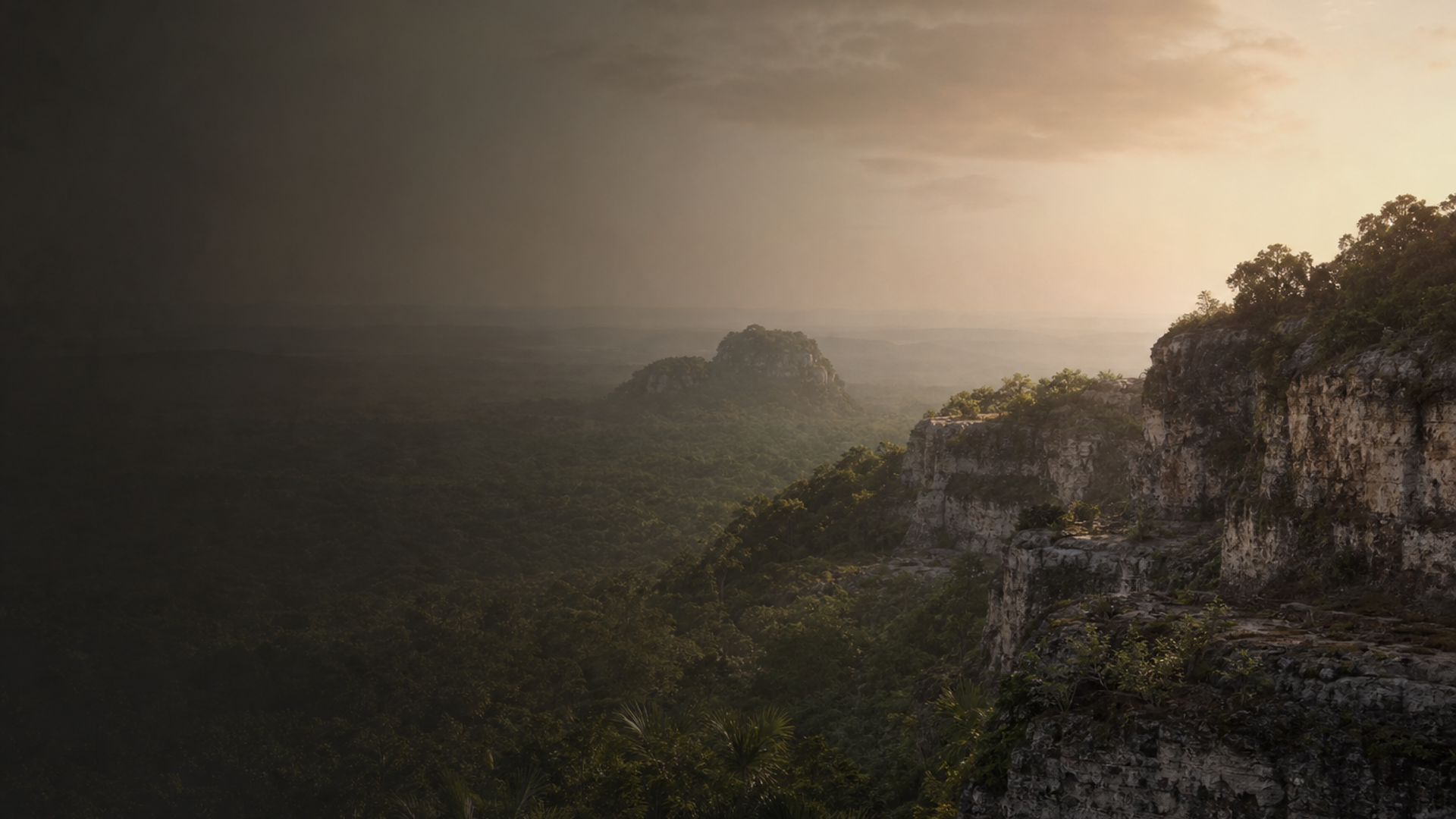
In the shadowed ridges of the Maya Mountains, archaeological data indicates human activity across the Archaic Period. The single ancient individual from Mayahak Cab Pek (located in the Bladen Nature Reserve, Toledo District) dates to 2561–2344 BCE, placing this person within a long era of mobile hunter‑forager and early horticultural adaptations in southern Belize. The landscape then was a mosaic of riverine corridors, seasonally flooded lowlands, and upland forest where wild plants and fauna supported small, mobile groups.
Limited evidence suggests a gradual intensification of plant management in the region during the late Archaic — an incipient trajectory toward the fuller agricultural economies that would shape later Maya societies. Stone tools, ephemeral hearths, and plant processing residues found across contemporaneous sites in southern Belize point to diverse subsistence strategies. The Mayahak Cab Pek individual now provides a rare biological anchor for this material sequence: a human life dated precisely within the Archaic horizon, offering a moment to connect skeletal remains, site taphonomy, and cultural change.
Because this dataset is built on a single sampled individual, any model of population origins or migration for the area must remain provisional. Future excavations and aDNA sampling are needed to trace demographic continuity, regional contacts, and the tempo of cultural transformation in the Maya Mountains.