Menu
Store
Blog
Belize_7000BP Belize (Mayahak Cab Pek)

Mayahak Cab Pek — Belize, 7,000 Years Ago

A single ancient individual (5250–4900 BCE) offers a cautious window into early Holocene Belize.

5250 CE - 4900 BCE
1 Ancient Samples
Scroll to begin
Chapter I

The Story

Understanding the Mayahak Cab Pek — Belize, 7,000 Years Ago culture

Archaeological and genetic data from a lone 7,000-year-old individual from Mayahak Cab Pek, Belize provide preliminary insight into early Holocene lifeways in southern Mesoamerica. Limited sample size demands cautious interpretation but suggests continuity with Indigenous Central American lineages.

Time Period

5250–4900 BCE

Region

Belize (Mayahak Cab Pek)

Common Y-DNA

Not reported / unknown

Common mtDNA

Not reported / unknown

Chapter II

Timeline

Key moments in the history of this culture

5250 BCE

Occupation at Mayahak Cab Pek

Radiocarbon-dated deposits indicate human use of Mayahak Cab Pek by small groups around 5250 BCE; evidence is intermittent and limited.

Chapter III

Origins & Emergence

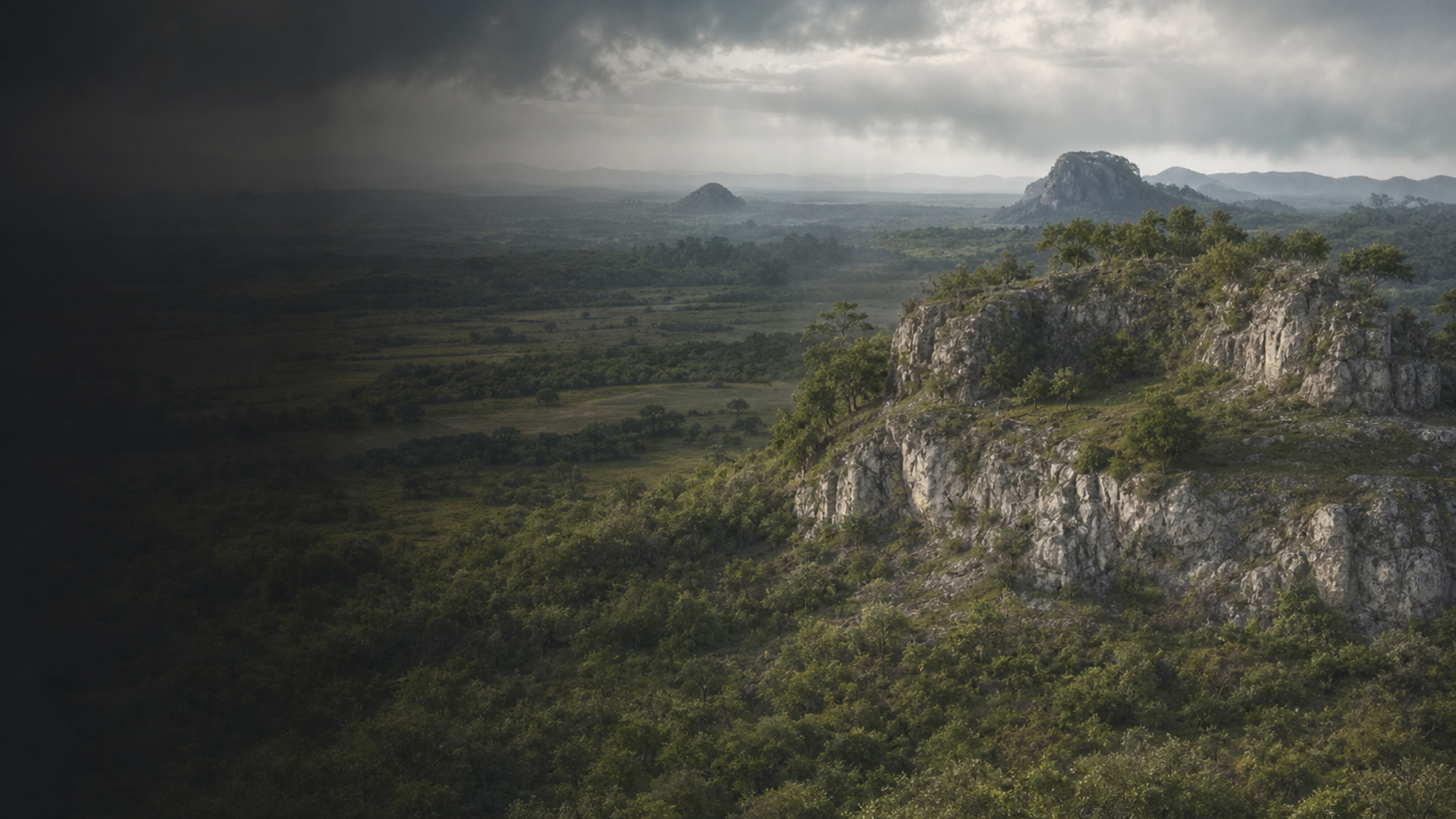
The archaeological horizon represented by the Belize_7000BP identifier sits in the early Holocene, roughly 5250–4900 BCE, a time when rising seas and maturing tropical forests reshaped coastal and inland resources. At Mayahak Cab Pek (Belize), fieldwork and stratigraphic data indicate intermittent human use of cave and nearby landscapes by small mobile groups.

Archaeological data indicates a sparse material record at this time compared with later sedentary villages; what survives—fragmentary stone tools, charcoal, and occasional faunal remains—speaks to resilient strategies of foraging, targeted plant use, and riverine or near-coastal exploitation. Limited evidence suggests these groups were adapted to a mosaic environment of lagoons, rivers, and forest edges rather than dense interior rainforest.

Cinematically, picture dusk in a limestone cave, embers throwing shadows on walls, and small bands moving along waterways. Scientifically, the picture is partial: sedimentary sequences and radiocarbon dates anchor occupations to the mid-6th millennium BCE, but low artifact density means interpretations remain provisional. The Mayahak Cab Pek record thus captures an emergent chapter of human settlement in southern Mesoamerica—one defined by mobility, environmental negotiation, and the long-term processes that would later shape regional cultural trajectories.

  • Early Holocene context: 5250–4900 BCE
  • Site: Mayahak Cab Pek, Belize; intermittent cave-related occupations
  • Material record is sparse — interpretations remain tentative
Chapter IV

Daily Life & Society

Daily life for the people represented at Belize_7000BP was likely organized around small, flexible social groups exploiting a rich, changing landscape. Archaeological indicators point to foraging economies that combined forest plants, small terrestrial fauna, and aquatic resources from rivers and lagoons. The archaeological footprint suggests seasonally mobile bands that moved between caves, riverbanks, and coastal wetlands to follow resources and microclimates.

Material culture in this era appears pragmatic and lightweight: flaked stone tools for cutting, scraping, and woodworking; hearths for cooking and plant processing; and organic technologies (made of wood, fiber, and plant material) that rarely survive, which creates an interpretive bias toward stone and charcoal. Social life would have emphasized kin networks and knowledge transmission—botanical expertise, navigation of water routes, and memory of seasonal resources.

Archaeological data indicates limited evidence for long-distance exchange or elaborate monumental architecture at this time; ceremonial life, if present, would be subtle and localized. Because the dataset from Mayahak Cab Pek is small, these reconstructions are cautious and framed as plausible scenarios rather than definitive descriptions.

  • Small, mobile bands exploiting forests, rivers, and lagoons
  • Lightweight toolkits and ephemeral organic technologies — archaeological visibility is low
Chapter V

Genetic Profile

Genetic data linked to Belize_7000BP derive from a single sampled individual from Mayahak Cab Pek. With an n of 1, conclusions must be explicitly tentative: single genomes are powerful but insufficient to describe population structure or diversity across space and time. No common Y-DNA or mtDNA haplogroups are reported in the available metadata, so haplogroup-based inferences are not possible for this dataset.

Where comparative analyses have been attempted, researchers place such early Holocene Central American genomes within the broader context of Indigenous American ancestry—ancestry components that trace deep connections to late Pleistocene and early Holocene populations derived ultimately from East Asian/Beringian source populations. Archaeological data indicates continuity in the region, and preliminary DNA comparisons suggest affinities with other ancient and contemporary Indigenous populations of Central America and southern Mesoamerica, but this pattern requires confirmation with additional samples.

Genetically, the most responsible framing is to treat the Belize_7000BP genome as a single, illuminating data point: it can anchor hypotheses about regional continuity, migration, and adaptation, but it cannot resolve them. Future ancient DNA sampling across Belize and neighboring regions is essential to move from evocative possibility to robust population history.

  • Single ancient genome (n=1) — interpretations are preliminary
  • No Y/mtDNA haplogroups reported; genetic affinities tentatively align with Indigenous Central American lineages
Chapter VI

Legacy & Modern Connections

The legacy of Belize_7000BP is both subtle and profound. Archaeological data indicates that small-scale, adaptive lifeways established in the early Holocene set ecological and social foundations for later regional developments. Genetically, the lone ancient individual hints at long-term continuity in the region, contributing a strand to the deep tapestry of Indigenous ancestry in southern Mesoamerica.

Caution is crucial: one genome does not equal direct ancestry to any single modern group. Nevertheless, these early people helped shape human relationships with tropical environments—knowledge of plants, waterways, and seasonal rhythms that would be inherited and transformed across millennia. Ethically and scientifically, connecting ancient genomes to living communities requires collaboration, transparency, and respect for descendant groups’ rights and perspectives. As more data accumulates, Belize_7000BP will be a key early chapter in a widening story of continuity, change, and resilience in the ancient Americas.

  • Contributes to a narrative of long-term regional continuity (tentative due to sample size)
  • Highlights need for collaborative research with descendant communities
Chapter VII

Sample Catalog

1 ancient DNA samples associated with the Mayahak Cab Pek — Belize, 7,000 Years Ago culture

Ancient DNA samples from this era, providing genetic insights into the people who lived during this period.

1 / 1 samples
Portrait Sample Country Era Date Culture Sex Y-DNA mtDNA
Portrait of ancient individual I20428 from Belize, dated 5250 BCE
I20428
Belize Belize_7000BP 5250 BCE Maya Civilization M - -
AI Powered

AI Assistant

Ask questions about the Mayahak Cab Pek — Belize, 7,000 Years Ago culture

AI Assistant by DNAGENICS

Unlock this feature
Ask questions about the Mayahak Cab Pek — Belize, 7,000 Years Ago culture. Our AI assistant can explain genetic findings, historical context, archaeological evidence, and modern connections.
Sample AI Analysis

The Mayahak Cab Pek — Belize, 7,000 Years Ago culture represents a fascinating chapter in human history...

Genetic analysis reveals connections to earlier populations while showing evidence of unique adaptations and cultural innovations. The ancient DNA samples provide insights into migration patterns, social structures, and the biological relationships between ancient populations.

This is a preview of the AI analysis. Unlock the full AI Assistant to explore detailed insights about:

  • Genetic composition and ancestry
  • Migration patterns and origins
  • Daily life and cultural practices
  • Modern genetic legacy
Use code for 35% off Expires May 20