Menu
Store
Blog
Titicaca Basin, Bolivia

Miraflores of the Titicaca Basin

Two Middle Horizon souls from 765–965 CE illuminate highland life and ancestry

765 CE - 965 CE
Scroll to begin
Chapter I

The Story

Understanding the Miraflores of the Titicaca Basin culture

Archaeological and genetic traces from Miraflores (Titicaca Basin, Bolivia) dated 765–965 CE link material culture to Andean lineages. Limited samples (n=2) show paternal haplogroup Q and maternal B2/B2b, offering preliminary insights into Middle Horizon population dynamics.

Time Period

c. 765–965 CE (Middle Horizon)

Region

Titicaca Basin, Bolivia

Common Y-DNA

Q (observed: 1)

Common mtDNA

B2b (1), B2 (1)

Chapter II

Timeline

Key moments in the history of this culture

765 CE

Earliest directly dated Miraflores individual

One of the two genomes is dated to c. 765 CE, placing it within the Middle Horizon phase in the Titicaca Basin.

900 CE

Middle Horizon regional florescence

Architectural, ceramic and ritual cues across the basin indicate active interaction networks and cultural expressions c. 800–1000 CE.

965 CE

Latest directly dated Miraflores individual

The second available genome dates to c. 965 CE, extending the Miraflores temporal range into the later Middle Horizon.

Chapter III

Origins & Emergence

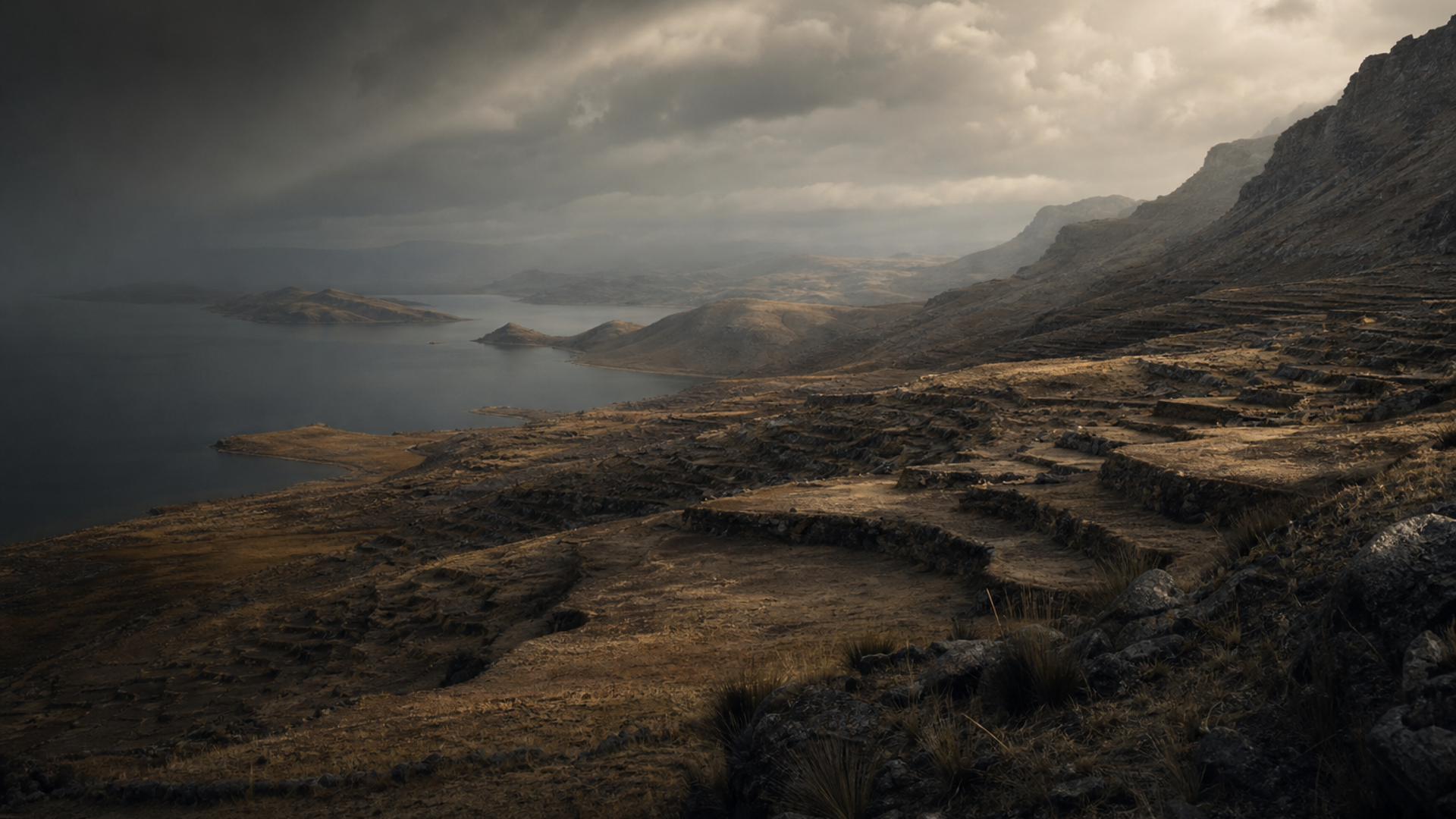
The Miraflores grouping within the Middle Horizon unfolds across the windswept altiplano of the Titicaca Basin, where human hands shaped stone, soil and social life beneath a vast sky. Archaeological data indicates the Miraflores identifier aligns chronologically with broader Middle Horizon phenomena (c. 600–1000 CE) that radiated influence from major hubs such as Tiwanaku. The two samples attributed to Bolivia_MH_Miraflores are directly dated to 765–965 CE and were recovered from highland contexts in the Lake Titicaca region. Material traces—ceramic motifs, architectural fragments and funerary treatment—suggest a local community negotiating regional networks of trade, ritual and agricultural exchange.

Limited evidence suggests Miraflores communities participated in the visual and economic languages of Middle Horizon polities while maintaining local traditions. The archaeological record in the Titicaca Basin preserves terraces, irrigated fields and multi-room structures that speak to settled, organized lifeways adapted to thin air and seasonal extremes. In cinematic contrast, the same landscape that demanded engineering also framed belief: plazas, ritual deposits and curated offerings document a cosmology anchored in mountains and water.

Because only two genetic samples are currently available, interpretations about origins and population continuity remain provisional. Nonetheless, the combined archaeological and genetic snapshot offers a rare, human-scale glimpse of life at the margins and centers of Middle Horizon world-making.

  • Samples dated 765–965 CE from the Titicaca Basin
  • Material culture shows regional Middle Horizon connections
  • Evidence is limited; broader patterns remain provisional
Chapter IV

Daily Life & Society

Life in the Miraflores sphere would have been shaped by altitude, seasonality and the choreography of labor across fields, pastures and workshops. Archaeological data indicates intensive highland agriculture—terracing, tuber horticulture and raised-field systems on the lakeshore—sustained populations and produced surplus for exchange. Camelid herds (llama and alpaca) provided wool, transport and meat, and their movement knitted together upland pastures and lowland corridors.

Craftspeople worked clay, textiles and metal with techniques traceable across the Lake Titicaca basin; ceramic forms and painted motifs found in Miraflores contexts echo Middle Horizon aesthetics while retaining local variants. Households likely combined domestic production with communal labor on irrigation and storage infrastructure. Mortuary deposits, where preserved, reveal social differentiation: some burials include offerings and multiple interments, suggesting family ties and ritualized remembrance. Archaeological data indicates ritual performance—plaza gatherings, offerings to water and mountain deities—played a role in social cohesion.

The cinematic silhouette of Miraflores life is one of shifting light across stone terraces and textile workshops, where seasonal cycles governed exchange and ceremony. Yet many everyday practices—dietary habits, kinship structures, craft specialization—remain incompletely known, and ongoing excavation and biomolecular study are needed to fill those gaps.

  • Agriculture: terraces, tubers, raised fields near Lake Titicaca
  • Crafts and ritual life tied to Middle Horizon exchange networks
Chapter V

Genetic Profile

The genetic evidence for Bolivia_MH_Miraflores is extremely limited: two samples from the Titicaca Basin dated 765–965 CE. Both samples yield signals consistent with highland Andean ancestry, but small sample size (n=2) makes population-level inference preliminary. Observed uniparental markers include a Y-chromosome haplogroup Q (1 individual) and mitochondrial haplogroups B2b (1) and B2 (1). Haplogroup Q is widely documented as a predominant Native American paternal lineage; its presence here aligns with broader patterns across Andean and other Native American populations.

Mitochondrial lineages B2 and its subclade B2b are common maternal haplogroups in the Americas and are frequently observed in Andean contexts, suggesting matrilineal continuity with regional populations. Archaeogenetic comparisons with contemporaneous Middle Horizon genomes (e.g., from Tiwanaku-associated contexts) tentatively place Miraflores individuals within the highland Andean genetic spectrum, characterized by adaptations to hypoxic environments and long-term demographic continuity in the region.

Caveats: with only two genomes, signals of admixture, migration, or social structure cannot be resolved confidently. Future sampling across the Miraflores horizon and surrounding sites in the Titicaca Basin will be essential to test hypotheses about local continuity, gene flow with lowland groups, and the demographic impact of Middle Horizon political economies.

  • Y-DNA: haplogroup Q observed (1 individual)
  • mtDNA: B2 and B2b observed; results are preliminary (n=2)
Chapter VI

Legacy & Modern Connections

The human story captured by Miraflores fragments resonates in modern highland Bolivia. Archaeological continuities—agricultural engineering, textile traditions and ritual landscapes—echo in cultural practices of contemporary Aymara and Quechua-speaking communities, though direct lines of descent must be inferred cautiously. The genetic markers observed (Q, B2/B2b) are shared widely across Indigenous populations of the Andes and Americas, indicating broad continuity in paternal and maternal lineages, but the tiny sample size prevents definitive statements about lineage survival or replacement.

The legacy of Miraflores is both material and mnemonic: terraces and canals persist on the land, and ceramics and motifs survive as touchstones for cultural identity. In combining molecules and material, archaeogenetics opens a cinematic window onto ancestors whose lives were written into soil and bone, while reminding us that more voices—more samples—are needed to complete the picture. As researchers expand sampling in the Titicaca Basin, the preliminary Miraflores genomes will serve as early anchors for understanding how Middle Horizon communities contributed to the tapestry of modern Andean peoples.

  • Material and genetic signals suggest continuity with highland Andean populations
  • Interpretations remain cautious; more sampling needed to confirm links
AI Powered

AI Assistant

Ask questions about the Miraflores of the Titicaca Basin culture

AI Assistant by DNAGENICS

Unlock this feature
Ask questions about the Miraflores of the Titicaca Basin culture. Our AI assistant can explain genetic findings, historical context, archaeological evidence, and modern connections.
Sample AI Analysis

The Miraflores of the Titicaca Basin culture represents a fascinating chapter in human history...

Genetic analysis reveals connections to earlier populations while showing evidence of unique adaptations and cultural innovations. The ancient DNA samples provide insights into migration patterns, social structures, and the biological relationships between ancient populations.

This is a preview of the AI analysis. Unlock the full AI Assistant to explore detailed insights about:

  • Genetic composition and ancestry
  • Migration patterns and origins
  • Daily life and cultural practices
  • Modern genetic legacy
Use code for 35% off Expires May 21