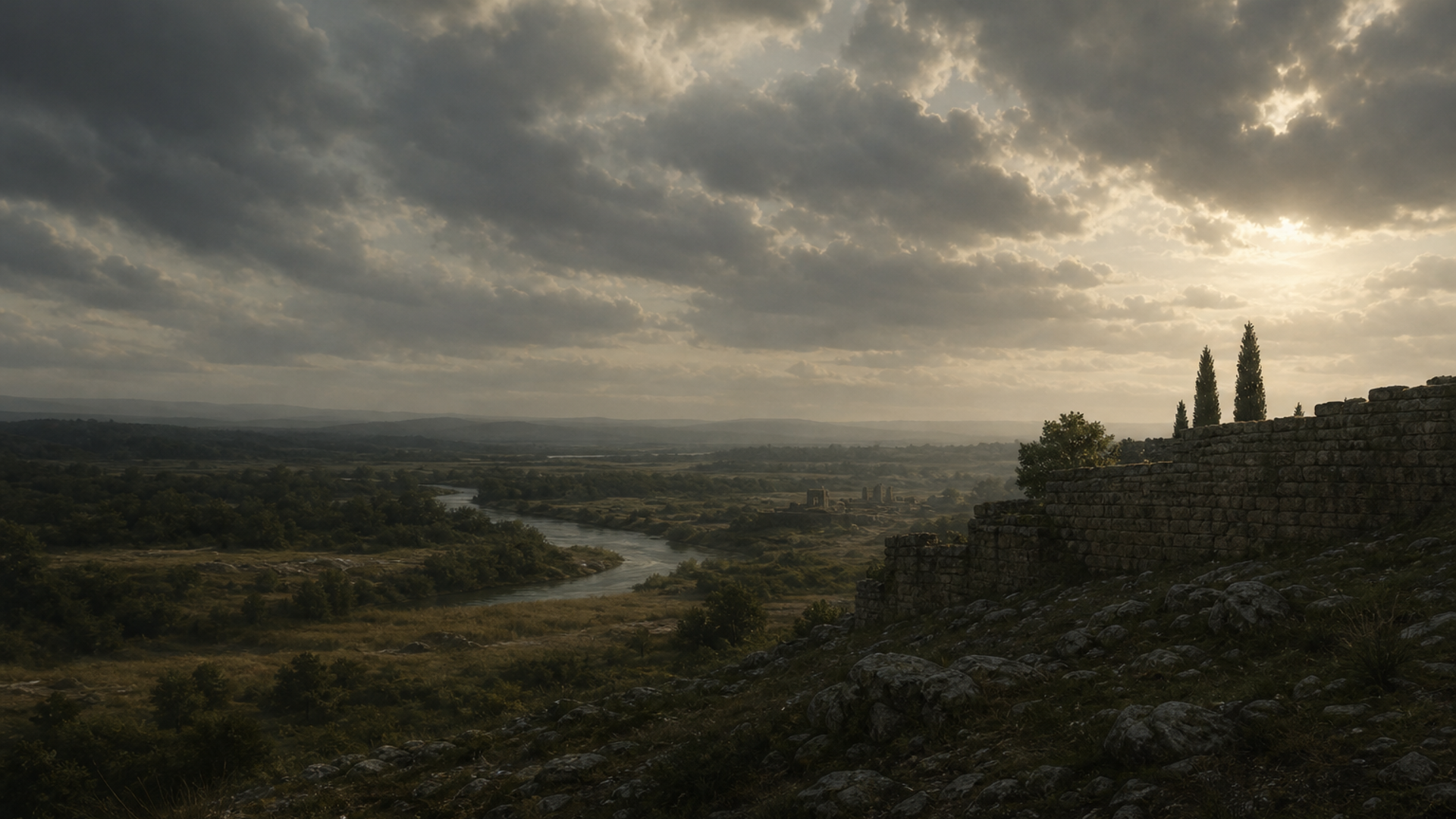
Walking through Ovilava would have meant encountering a compact town where commerce, craft and the rhythms of provincial life converged. Archaeological finds point to a mix of household pottery, imported tableware and locally made goods—evidence of everyday trade and a population accustomed to material diversity. Public buildings, workshops and burial grounds outline a community organized around municipal needs and ties to the wider Roman economy.
Social life in Ovilava was likely shaped by mobility: soldiers, traders, artisans and local families shared streets and markets. Funerary evidence indicates a range of burial practices, suggesting social differentiation and enduring local customs. Environmental data (pollen, seeds) from comparable sites in Upper Austria suggest agricultural hinterlands that supplied towns with grain, livestock and raw materials. The archaeological record thus paints a cinematic scene: smoke from hearths, the rhythm of cart wheels, inscriptions scratched on stone, and the steady turnover of imported goods that linked Ovilava to the Mediterranean and beyond.
Archaeological data indicates that by the later centuries, the town adapted to the transformations of Late Antiquity—changes in craft production, shifting settlement patterns, and new political realities as imperial structures weakened.