Menu
Store
Blog
Palmeiras-Xingu, Southeast Amazonia, Brazil

Palmeiras-Xingu Sambaqui: 500 BP Individual

Single pre-contact individual linking shell-mound lifeways and Native American lineages

1426 CE - 1485500 CE
Scroll to begin
Chapter I

The Story

Understanding the Palmeiras-Xingu Sambaqui: 500 BP Individual culture

A single ancient DNA sample (1426–1485 CE) from Palmeiras-Xingu, Southeast Amazonia, associated with sambaqui traditions, shows Y-haplogroup Q and mtDNA B. Archaeological and genetic data hint at regional continuity; conclusions are preliminary given one sample.

Time Period

1426–1485 CE (≈500 BP)

Region

Palmeiras-Xingu, Southeast Amazonia, Brazil

Common Y-DNA

Q (observed in 1 sample)

Common mtDNA

B (observed in 1 sample)

Chapter II

Timeline

Key moments in the history of this culture

1426 CE

Palmeiras-Xingu individual dated

Directly dated human remains from Palmeiras-Xingu place the individual between 1426–1485 CE; ancient DNA yielded Y-haplogroup Q and mtDNA B.

Chapter III

Origins & Emergence

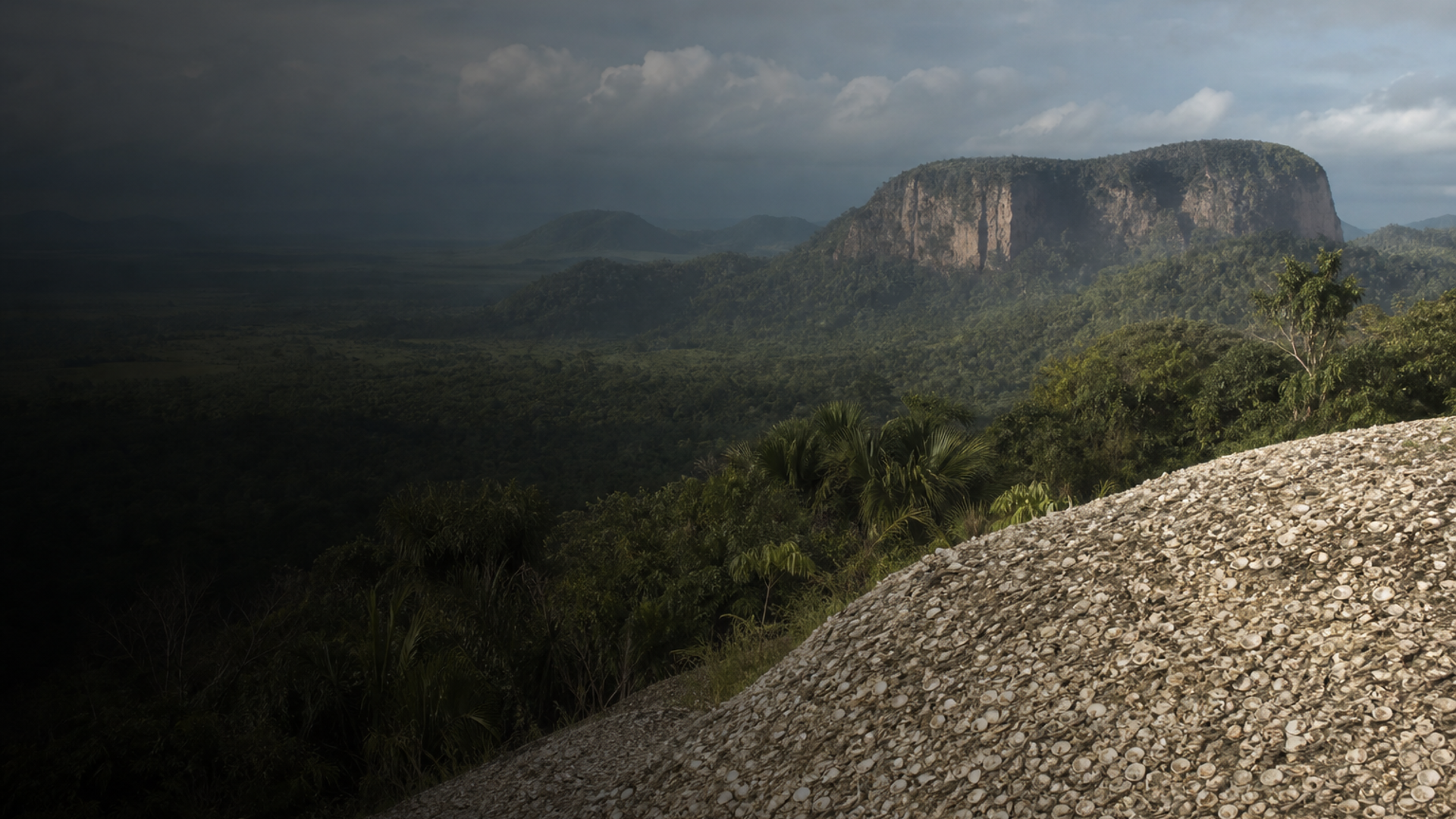
The Palmeiras-Xingu individual comes from the late pre-contact horizon in Southeast Amazonia, a landscape of winding rivers, seasonally flooded forests, and human communities whose material traces include shell middens and earthworks. Archaeological data indicates cultural affinities with broader sambaqui (shell-mound) traditions that are best known from Brazil’s Atlantic coast, though inland expressions in riverine Amazonia show local adaptation. Radiocarbon-based modeling places this individual between 1426 and 1485 CE — roughly 500 years before present — a time when Indigenous lifeways across Amazonia were complex and regionally diverse.

Limited evidence suggests that sambaqui-associated communities in riverine environments combined intensive fishing and mollusc gathering with horticulture and terrestrial foraging. At Palmeiras-Xingu, the archaeological record is fragmentary: shell deposits, burned features, and a modest assemblage of ceramics and stone tools point to repeated occupation and mound-building behaviors. The poetic silhouette of shell mounds rising from forested floodplains evokes long-term place-making, but caution is required: site taphonomy and looting have reduced available context in some localities.

Genetic data from a single individual cannot by itself map the origins of entire communities, but when paired with stratigraphic and material evidence it offers a new axis for exploring regional emergence, mobility, and kinship practices in late pre-contact Amazonia.

  • Sample dated to 1426–1485 CE, Palmeiras-Xingu (Southeast Amazonia)
  • Archaeological context links to sambaqui-like shell deposits and riverine occupation
  • Evidence suggests local adaptation of coastal-derived mound-building traditions
Chapter IV

Daily Life & Society

Archaeological traces at Palmeiras-Xingu suggest a lifeway oriented to rivers and seasonal wetlands. Shell middens preserve the memory of repeated meals — fish, mollusks, and other aquatic resources — stacked over generations into low mounds that served both practical and social functions. Ceramic fragments, often tempered and decorated in ways consistent with regional pottery traditions, point to household manufacture, storage, and food preparation. Organic artifacts rarely survive in humid tropical soils, so the silhouette of daily life must be inferred from middens, hearths, and toolkits.

Communal labor to construct and maintain shell mounds would have fostered social ties and territorial anchoring. Burial practices associated with sambaqui societies elsewhere sometimes include interments within or adjacent to mounds; at Palmeiras-Xingu the mortuary context for the sampled individual is limited, making behavioral inferences tentative. Seasonal mobility tied to flood pulse cycles likely structured subsistence: fishing in high water, gleaning in low water, and opportunistic cultivation of manioc and other root crops on higher ground.

Material culture reflects both continuity and regional innovation — pottery forms and tool types show affinities to broader Amazonian traditions while responding to local environments. Archaeological data indicates a community highly attuned to aquatic landscapes, where social identity was shaped by shared foodways, mound maintenance, and kin networks that left visible traces in shell and soil.

  • Diet dominated by riverine and estuarine resources recorded in shell middens
  • Ceramics and tools indicate household production and seasonal settlement patterns
Chapter V

Genetic Profile

Ancient DNA from the Palmeiras-Xingu individual presents a compact but informative genetic signal: the male-associated Y-chromosome lineage is haplogroup Q, and the mitochondrial lineage is haplogroup B. Both haplogroups are widespread across Indigenous populations of the Americas — Q is a common paternal lineage among many Native American groups, and mtDNA B is one of the principal maternal founding lineages (alongside A, C, and D).

These genetic markers align broadly with expectations for pre-contact South American populations, suggesting continuity of pan-American founding lineages in Southeast Amazonia. However, this result derives from a single genetic sample. With a sample count of one, any population-level interpretation is necessarily preliminary. Archaeological data indicates local cultural distinctiveness (sambaqui-related mound-building and riverine lifeways), but whether the observed genetic profile reflects long-term regional continuity, recent gene flow, patrilocal or matrilocal residence patterns, or other demographic factors cannot be resolved without additional samples.

Where genetics can be most powerful is in complementing archaeology: future comparative ancient genomes from neighboring sambaqui sites, coastal shell mounds, and inland Amazonian locales could reveal patterns of kinship, sex-biased migration, and regional connectivity. For now, the Palmeiras-Xingu individual provides a cinematic glimpse — a single thread that, when woven into a larger dataset, may illuminate the human tapestry of late pre-contact Amazonia.

  • Y-DNA haplogroup Q and mtDNA B match major Indigenous American lineages
  • Single-sample result is preliminary; broader sampling needed to infer population history
Chapter VI

Legacy & Modern Connections

The Palmeiras-Xingu sample helps bridge material traces of sambaqui lifeways with the living genetic heritage of Indigenous Brazil. Archaeological landscapes of shell mounds and riverine settlements are part of a cultural memory that persists in the practices, place-names, and stewardship of descendant communities. Genetic data, handled respectfully and in collaboration with local stakeholders, can affirm long-term regional connections and support cultural heritage claims.

Importantly, interpretations must remain humble: one genetic profile cannot define continuity for entire regions. Nevertheless, when combined with archaeological continuity, ethnographic information, and broader aDNA datasets, individuals like the Palmeiras-Xingu sample can contribute to narratives of resilience and adaptation. Protecting sites, expanding controlled excavations, and increasing representative sampling — with community partnership — are essential next steps to transform preliminary insights into robust stories of human history in Southeast Amazonia.

  • Connects archaeological sambaqui signatures to principal Native American genetic lineages
  • Highlights need for community engagement and expanded sampling to strengthen conclusions
AI Powered

AI Assistant

Ask questions about the Palmeiras-Xingu Sambaqui: 500 BP Individual culture

AI Assistant by DNAGENICS

Unlock this feature
Ask questions about the Palmeiras-Xingu Sambaqui: 500 BP Individual culture. Our AI assistant can explain genetic findings, historical context, archaeological evidence, and modern connections.

Sample AI Analysis

The Palmeiras-Xingu Sambaqui: 500 BP Individual culture represents a fascinating chapter in human history...

Genetic analysis reveals connections to earlier populations while showing evidence of unique adaptations and cultural innovations. The ancient DNA samples provide insights into migration patterns, social structures, and the biological relationships between ancient populations.

This is a preview of the AI analysis. Unlock the full AI Assistant to explore detailed insights about:

  • Genetic composition and ancestry
  • Migration patterns and origins
  • Daily life and cultural practices
  • Modern genetic legacy
Use code for 35% off Expires May 21