Menu
Store
Blog
Albania_EN Podgorie, Korça Basin, Albania

Podgorie: Albania's Early Neolithic

A lone Early Neolithic genome from the Korça Basin hints at the arrival of farming in Albania.

6223 CE - 6067 BCE
1 Ancient Samples
Scroll to begin
Chapter I

The Story

Understanding the Podgorie: Albania's Early Neolithic culture

Single Early Neolithic (6223–6067 BCE) sample from Podgorie, Korça Basin, Albania. Archaeological context suggests early farming; limited aDNA (mtDNA N) offers preliminary insight into Neolithic migrations into the western Balkans.

Time Period

6223–6067 BCE

Region

Podgorie, Korça Basin, Albania

Common Y-DNA

No data (sample count 1)

Common mtDNA

N (1)

Chapter II

Timeline

Key moments in the history of this culture

6223 BCE

Early Neolithic occupation at Podgorie (sample date)

Radiocarbon dates place an individual from Podgorie in the early 7th millennium BCE, indicating an early farming presence in the Korça Basin.

Chapter III

Origins & Emergence

At the dawn of the Neolithic in the western Balkans, small farming settlements spread into upland basins and river valleys. The Podgorie site, situated in the southeastern Korça Basin of Albania, preserves material traces dated to 6223–6067 BCE. Archaeological data indicates domesticates and pottery styles that resemble broader Early Neolithic assemblages of the central Balkans and Aegean fringe, suggesting cultural connections across the region.\n\nLimited evidence from Podgorie means we must be cautious: one radiocarbon cluster and associated artifacts can point to a local farming presence, but cannot define the full diversity of Neolithic lifeways in Albania. The broader picture across the Balkans shows pulses of demographic movement and cultural transmission beginning in the seventh millennium BCE, often interpreted as the expansion of farming communities originating to the southeast in Anatolia and moving northwest along coastal and inland corridors.\n\nArchaeological remains at nearby sites and stylistic parallels hint at exchange networks—of pottery techniques, crop packages and domestic animals—that formed the backbone of early agrarian lifeways here. However, the precise routes and the degree of interaction between incoming farmers and local forager groups remain active questions in regional research.

  • Podgorie site dated 6223–6067 BCE in Korça Basin, SE Albania
  • Material culture aligns with Balkan Early Neolithic traditions
  • Limited sample size; regional patterns inferred cautiously
Chapter IV

Daily Life & Society

Imagine terraces and riverine meadows reshaped by spade and sickle: early farmers at Podgorie likely cultivated cereals and managed domesticated animals, while pottery vessels and simple hearth structures anchored domestic routines. Archaeological indicators from the Korça Basin and comparable Balkan sites suggest houses with post-built architecture, hearth-focused cooking, and storage for harvested grain.\n\nSubsistence would have combined planted crops—such as emmer and einkorn relatives familiar to early Mediterranean farmers—with foraging and seasonal hunting. Toolkits of polished stone axes and flaked implements would have been used to clear land, process wood, and harvest. Pottery served both practical and social functions: cooking, storage, and visible markers of group identity or exchange.\n\nSocial organization at this early date was likely community-centered, with households cooperating in planting and storage cycles. Burial evidence in the broader region indicates variable mortuary practice, suggesting diverse beliefs and possibly ranked or kin-based social ties. Yet, for Podgorie itself the sparse record means these reconstructions are provisional; local variability and adaptation to upland environments were probable.

  • Mixed farming economy: cereals, domestic animals, with continued foraging
  • Households organized around hearths, pottery, and communal labor
Chapter V

Genetic Profile

The genetic window into Podgorie is narrow but evocative: a single individual dated 6223–6067 BCE carries mitochondrial haplogroup N. Haplogroup N is an ancient Eurasian maternal lineage that sits near the root of many downstream haplogroups common across Eurasia today. Archaeogenetic studies across the Balkans and central Europe have repeatedly shown that Early Neolithic individuals often carry genetic ancestry derived largely from Anatolian farmers, sometimes mixed to varying degrees with local European hunter-gatherer ancestries.\n\nWith only one sample from Podgorie, conclusions are necessarily preliminary. The presence of mtDNA N is compatible with an Anatolian-derived farmer component but does not on its own prove a specific migration route or demographic magnitude. Crucially, no Y-chromosome data are available from this single individual, so male-lineage patterns remain unknown.\n\nFuture sampling from Podgorie and neighboring sites would allow testing of whether the Korça Basin farmers reflect a direct continuation of Anatolian farmer gene flow, show early admixture with local foragers, or host distinct local genetic signatures. For now, the Podgorie genome is a solitary beacon: it aligns with the broad pattern of Neolithic expansion into the Balkans but is insufficient to map the detailed genetic landscape of early Albanian prehistory.

  • mtDNA: N in one individual—supports link to early Eurasian maternal lineages
  • Single-sample evidence; broader genetic patterns remain tentative
Chapter VI

Legacy & Modern Connections

The human echo from Podgorie reaches forward in two ways: archaeologically, as part of the mosaic of early farming that transformed Balkan landscapes; genetically, as a preliminary data point in the story of how Neolithic ancestries spread into Europe. Over millennia, the demographic and cultural processes set in motion during this period contributed to the genetic and cultural substratum of later populations in the western Balkans.\n\nHowever, direct lines from a single Early Neolithic individual to modern Albanian genomes cannot be asserted. Long-term admixture, population movements, and the arrival of later peoples reshaped the region many times. What Podgorie offers is a tangible connection to the first long-term experiments with farming in this basin and a reminder that expanding datasets are needed to clarify continuity and change.

  • Contributes to the baseline of Neolithic ancestry in the western Balkans
  • Single early genome—encourages further sampling for continuity studies
Chapter VII

Sample Catalog

1 ancient DNA samples associated with the Podgorie: Albania's Early Neolithic culture

Ancient DNA samples from this era, providing genetic insights into the people who lived during this period.

1 / 1 samples
Portrait Sample Country Era Date Culture Sex Y-DNA mtDNA
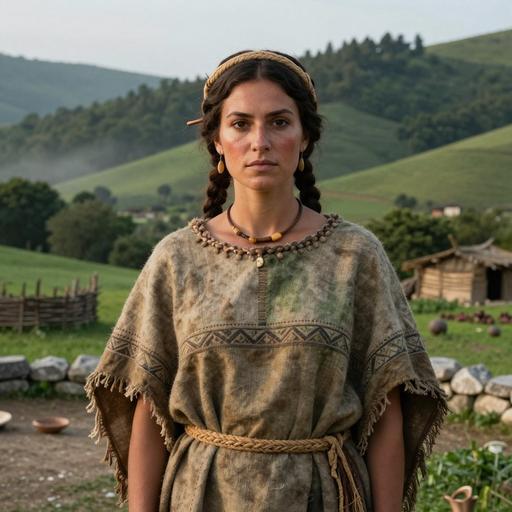
Portrait of ancient individual I15705 from Albania, dated 6223 BCE
I15705
Albania Albania_EN 6223 BCE Neolithic European F - N1a1a1
AI Powered

AI Assistant

Ask questions about the Podgorie: Albania's Early Neolithic culture

AI Assistant by DNAGENICS

Unlock this feature
Ask questions about the Podgorie: Albania's Early Neolithic culture. Our AI assistant can explain genetic findings, historical context, archaeological evidence, and modern connections.
Sample AI Analysis

The Podgorie: Albania's Early Neolithic culture represents a fascinating chapter in human history...

Genetic analysis reveals connections to earlier populations while showing evidence of unique adaptations and cultural innovations. The ancient DNA samples provide insights into migration patterns, social structures, and the biological relationships between ancient populations.

This is a preview of the AI analysis. Unlock the full AI Assistant to explore detailed insights about:

  • Genetic composition and ancestry
  • Migration patterns and origins
  • Daily life and cultural practices
  • Modern genetic legacy
Use code for 35% off Expires May 20