Menu
Store
Blog
Atacama Desert, Precordillera (Chile)

Pukara of the Precordillera

A single Late Intermediate Period individual from the Atacama precordillera, 1301–1396 CE

1301 CE - 1396 CE
Scroll to begin
Chapter I

The Story

Understanding the Pukara of the Precordillera culture

Archaeological evidence from Pukara sites in the Atacama precordillera (1301–1396 CE) ties material culture to a single ancient DNA sample carrying Y-haplogroup Q and mtDNA C1b. Limited sample size makes conclusions tentative, but genetics reinforce Indigenous Andean ancestry patterns.

Time Period

1301–1396 CE

Region

Atacama Desert, Precordillera (Chile)

Common Y-DNA

Q

Common mtDNA

C1b

Chapter II

Timeline

Key moments in the history of this culture

1301 CE

Sample dated to LIP

Radiocarbon and archaeological context place the individual between 1301 and 1396 CE within a Precordillera pukará setting.

Chapter III

Origins & Emergence

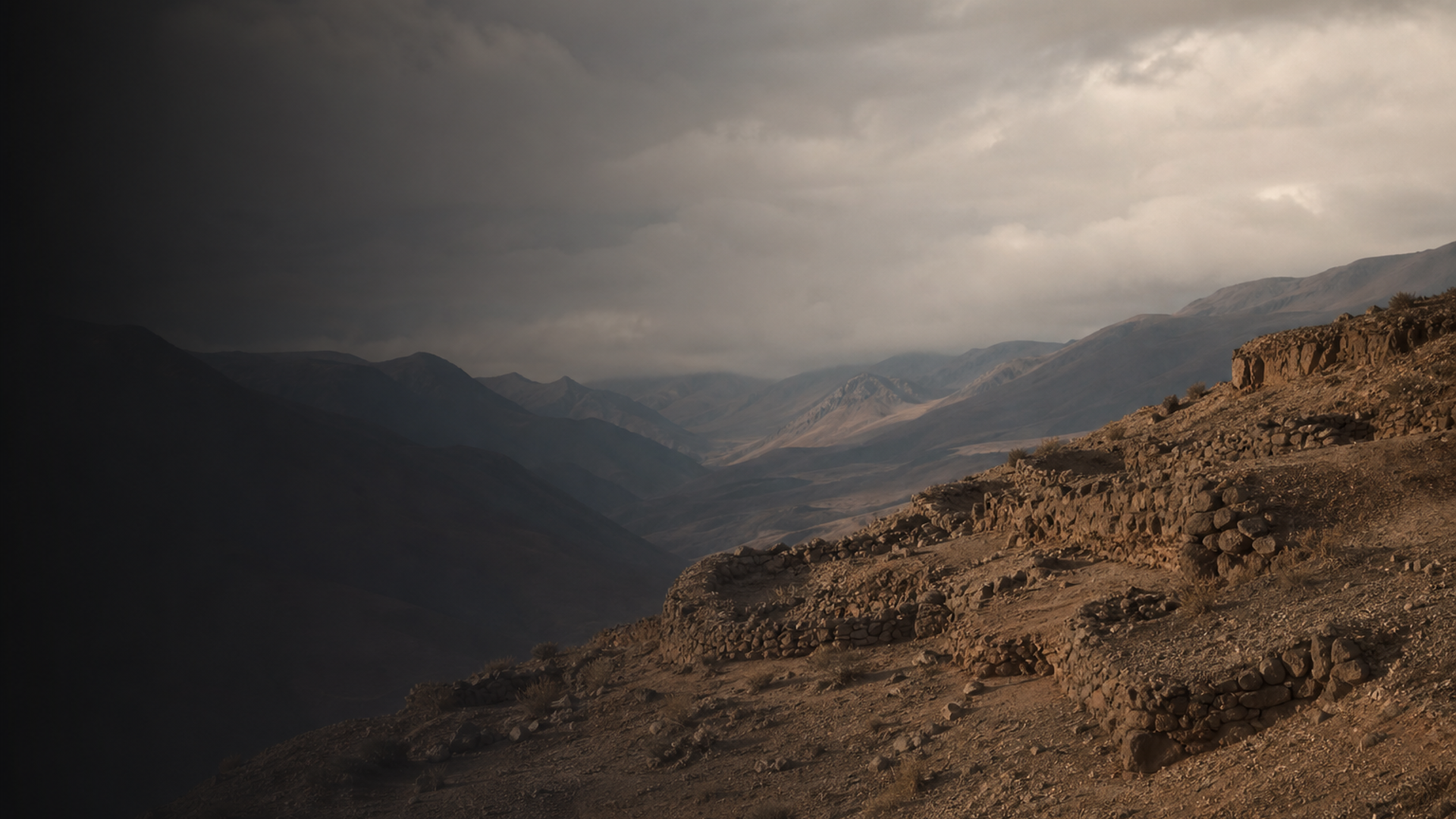
The Late Intermediate Period (LIP) in northern Chile was a time of regional reorganisation after the decline of earlier highland polities. Archaeological data indicates small fortified hilltop sites—often called pukarás—occupied precordillera slopes overlooking the Atacama Desert. Material traces from these sites include undecorated and painted ceramic types, lithic toolkits adapted for pastoralism, and ephemeral agricultural terraces where moisture capture permitted limited cultivation.

The individual represented by the sample dated 1301–1396 CE comes from that pukara landscape. Limited evidence suggests this person lived within a network of highland-lowland exchange: camelid caravans, salt and mineral trade, and seasonal transhumance likely connected irrigated valleys to the arid plains below. While regional ceramic and architectural traits point to local cultural continuities, population movements across Andean ecotones were common in the LIP, complicating neat cultural labels.

Because only a single genetic sample is currently available, interpretations of population history remain preliminary. Archaeological context anchors the individual firmly in a Pukara-associated setting, but broader demographic patterns require more samples to confirm continuity, admixture, or mobility trends across the precordillera.

  • Late Intermediate Period pukarás occupied precordillera slopes
  • Material culture suggests pastoralism and highland-lowland exchange
  • Single-sample evidence means origins remain preliminary
Chapter IV

Daily Life & Society

Life in the Atacama precordillera was framed by an extreme landscape: sharp elevations, scarce rainfall, and strong diurnal temperature swings. Archaeological remains from pukará sites record compact household compounds, storage features for dried foods, and middens with camelid bone fragments—evidence of pastoral herding and meat-processing. Terraced plots and small irrigation works indicate careful management of precious water for tubers and grains where microclimates allowed.

Social organization in the LIP appears locally focused but interconnected. Pukará settlements often functioned as seasonal hubs where kin groups coordinated grazing schedules, exchanged goods, and defended access to springs and caravan routes. Portable material culture—textiles, small ornaments, and stone tools—would have accompanied families across vertical ecotones. Craft specialization at larger aggregation points likely produced pottery styles that help archaeologists link sites across valleys.

Burial practices at regional cemeteries show variability, with both primary interments and secondary deposits; mortuary variability may reflect social differentiation and mobility. The single genetic sample derives from this living world of pastoral rhythms and negotiated territorial control, but the archaeological record cautions that a fuller picture of daily life requires more human remains and contextual study.

  • Pastoralism (camelids) and small-scale agriculture shaped subsistence
  • Pukarás served as seasonal hubs for exchange, storage, and defense
Chapter V

Genetic Profile

Ancient DNA from the Pukara precordillera individual provides a rare molecular glimpse into LIP populations of northern Chile. The single male-associated sample carries Y-chromosome haplogroup Q and mitochondrial haplogroup C1b—both lineages widespread among Indigenous peoples of the Americas. Haplogroup Q on the paternal line is consistent with deep Native American ancestry linked to early peopling events, while mtDNA C1b aligns with maternal lineages common in South America.

These assignments resonate with archaeological expectations: continuity of Indigenous Andean genetic ancestry across the highlands and desert margins. However, with only one genome available (sample count = 1), any inference about population structure, sex-biased migration, or admixture during the Late Intermediate Period must be treated as provisional. Low sample size prevents robust statements about haplogroup frequencies, local diversity, or the extent of gene flow between highland and coastal groups.

Future sampling across multiple pukará and valley cemeteries could test whether Q and C1b were dominant locally, reveal microregional differences, and clarify demographic processes such as mobility, marriage networks, and elite lineage transmission. For now, genetics corroborate Indigenous Andean roots but stop short of defining population dynamics in the precordillera definitively.

  • Y-haplogroup Q and mtDNA C1b found — consistent with Native American lineages
  • Single-sample limits conclusions; broader sampling needed to assess population structure
Chapter VI

Legacy & Modern Connections

The genetic and archaeological imprint of Pukara-era communities persists in the cultural landscapes of northern Chile. Contemporary Indigenous groups in the Andes retain oral traditions, place names, and livelihoods tied to highland pastoralism and valley agriculture—practices that echo LIP lifeways. The presence of lineage markers like haplogroup Q and mtDNA C1b in ancient remains aligns with a deep continuum of Indigenous ancestry in the region.

Archaeological stewardship in the Atacama precordillera is crucial: expanding aDNA sampling, carefully documented excavations, and collaboration with descendant communities will enrich interpretations and ensure ethical study of human remains. As new genomes are sequenced, they will refine links between past and present, revealing how mobility, trade, and social networks shaped both ancient pukará inhabitants and modern populations.

  • Genetic markers support long-term Indigenous ancestry in the region
  • More sampling and community collaboration needed to clarify links to modern groups
AI Powered

AI Assistant

Ask questions about the Pukara of the Precordillera culture

AI Assistant by DNAGENICS

Unlock this feature
Ask questions about the Pukara of the Precordillera culture. Our AI assistant can explain genetic findings, historical context, archaeological evidence, and modern connections.
Sample AI Analysis

The Pukara of the Precordillera culture represents a fascinating chapter in human history...

Genetic analysis reveals connections to earlier populations while showing evidence of unique adaptations and cultural innovations. The ancient DNA samples provide insights into migration patterns, social structures, and the biological relationships between ancient populations.

This is a preview of the AI analysis. Unlock the full AI Assistant to explore detailed insights about:

  • Genetic composition and ancestry
  • Migration patterns and origins
  • Daily life and cultural practices
  • Modern genetic legacy
Use code for 30% off Expires Apr 05