Menu
Store
Blog
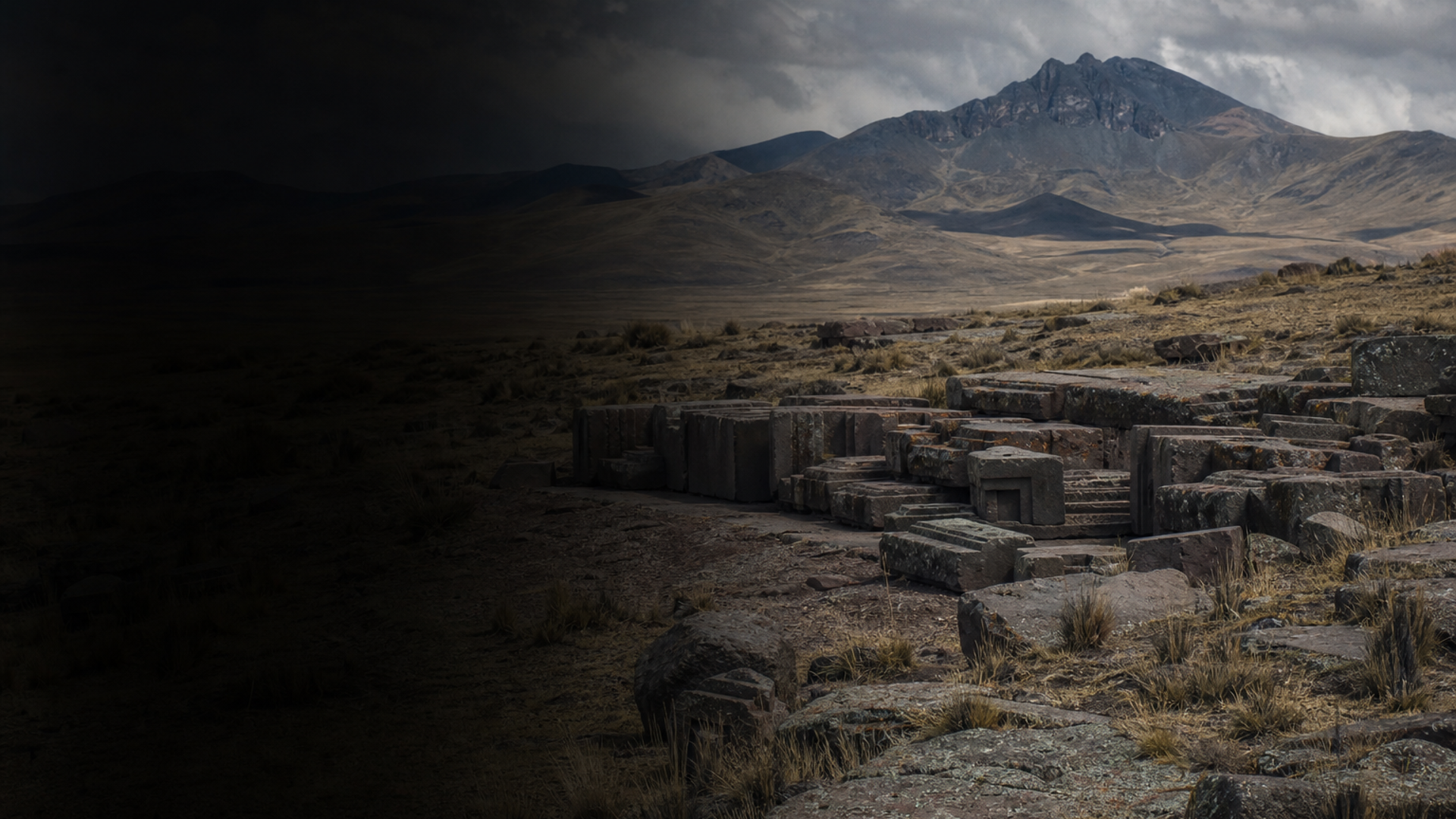
Bolivia_Pumapunku_Tiwanaku Pumapunku, Tiwanaku site, Lake Titicaca basin, Bolivia

Pumapunku Echoes

A single ancient genome from Pumapunku illuminates Tiwanaku's human landscape, cautiously and vividly.

670 CE - 774300 CE
1 Ancient Samples
Scroll to begin
Chapter I

The Story

Understanding the Pumapunku Echoes culture

Archaeological and genetic snapshot from Pumapunku (Bolivia): one individual dated 670–774 CE with mitochondrial haplogroup B2. Material culture speaks of monumental stonework and highland networks; the lone genome aligns with indigenous Andean ancestry but conclusions are preliminary.

Time Period

c. 670–774 CE (sample); Tiwanaku ca. 300–1000 CE

Region

Pumapunku, Tiwanaku site, Lake Titicaca basin, Bolivia

Common Y-DNA

No Y-DNA recovered from this sample

Common mtDNA

B2 (1 sample)

Chapter II

Timeline

Key moments in the history of this culture

300 CE

Tiwanaku urbanization begins

Early village-to-urban transformation in the Lake Titicaca basin marks the rise of Tiwanaku institutions and monumental architecture.

700 CE

Pumapunku monumentality

Major stone-working and plaza construction at Pumapunku reflect Tiwanaku's regional power and ritual centrality.

1000 CE

Regional reorganization

Decline in centralized construction and changing settlement patterns lead to cultural reconfiguration across the altiplano.

Chapter III

Origins & Emergence

Pumapunku sits as an architectural island within the greater Tiwanaku polis on the southwestern shores of Lake Titicaca. Archaeological data indicates large-scale stone-working, finely dressed sandstone and andesite blocks, and planned plaza complexes—features that place Pumapunku at the heart of Tiwanaku's ritual and civic emergence. Radiocarbon and stratigraphic frameworks for Tiwanaku point to a cultural trajectory rising from the middle centuries CE into a florescence between roughly 500 and 900 CE; the single genetic sample from Pumapunku falls squarely inside that window (670–774 CE).

Material culture—megalithic masonry, tiahuanaco-style iconography, and canalized water features—speaks to a polity capable of regional coordination, craft specialization, and long-distance exchange across the southern Andean altiplano. Archaeological evidence indicates that Pumapunku functioned as both a monumental platform complex and a locus for ritual display, perhaps housing visiting elites or pilgrims from across the basin. Limited evidence suggests cosmological and hydraulic planning informed urban layouts, and trade in commodities such as camelid products, quinoa, and obsidian likely knit the highland communities together.

While stonework and platform architecture provide a cinematic record of Tiwanaku's rise, the human story is only beginning to be read from DNA. The origins narrative must therefore weave stones, soils, and genomes together—carefully, and with explicit recognition of gaps in the record.

  • Pumapunku: monumental stone complex within Tiwanaku, Lake Titicaca basin
  • Tiwanaku cultural florescence roughly 500–900 CE; sample dated 670–774 CE
  • Archaeology shows craft specialization, regional exchange, and ritual architecture
Chapter IV

Daily Life & Society

Archaeological remains around Pumapunku reveal a society balanced between agrarian lifeways and specialized urban functions. Raised fields (suka kollus) and irrigated terraces in the Titicaca basin supported intensive agriculture—potatoes, quinoa, and camelids—feeding both local populations and urban centers. At Pumapunku itself, the absence of extensive domestic debris in some sectors suggests zones of ceremonial use, while nearby habitation areas contain hearths, textiles impressions, and pottery sherds that indicate everyday domestic rhythms.

Social organization likely combined kin-based households with institutions that coordinated labor for monumental construction and irrigation maintenance. Craft production—stone masonry, metalworking, and textile weaving—was visible in workshop debris and tool assemblages. The visual program carved into monoliths and stelae conveys shared cosmologies and social identities; public ritual performance and procession may have reinforced hierarchical ties across the basin.

Mobility was part of daily life: botanical remains and exotic raw materials attest to exchange networks reaching highland valleys and puna grasslands. Burial practices around Tiwanaku vary, from simple interments to more complex mortuary offerings, suggesting social differentiation. Archaeological data indicates a vibrant urban ritual center embedded in a broader landscape of farms, roads, and exchange.

  • Intensive agriculture (raised fields, terraces) supported urban populations
  • Craft specialization and monumental labor coexisted with household economies
Chapter V

Genetic Profile

The genetic evidence from Pumapunku is tantalizing but extremely limited: one individual dated to 670–774 CE yielded mitochondrial haplogroup B2, a lineage widespread among Indigenous peoples of the Andes and other parts of the Americas. MtDNA B2 is consistent with local maternal ancestry and does not contradict expectations from archaeological context. No Y-chromosome data were recovered from this specimen, so paternal lineages remain unknown for this individual.

Because sample count is one, any population-level interpretation would be premature. Limited evidence suggests this person carried maternal ancestry commonly found in the highlands, but this single data point cannot resolve questions about migration, social status, or demographic change at Pumapunku or across Tiwanaku. Broader ancient DNA research in the Andean region has shown both local continuity and episodes of mobility at various times, but specific patterns vary by site and period; therefore, archaeological signals of trade and pilgrimage at Tiwanaku should be seen as potential avenues for gene flow rather than proof of widespread admixture.

Future sampling across burial contexts, habitation layers, and associated sites would allow population genomic methods to test models of continuity versus influx, social stratification, and kinship practices. For now, the genetic voice from Pumapunku is singular and must be heard as a cautious note within a larger archaeological symphony.

  • mtDNA B2 detected — aligns with Indigenous Andean maternal ancestry
  • Only one sample: conclusions about population structure are preliminary
Chapter VI

Legacy & Modern Connections

Pumapunku's carved stones and disciplined plazas continue to shape the cultural imagination of the Lake Titicaca basin. Archaeological continuity in settlement patterns and traditional agricultural practices—especially raised-field farming and camelid herding—links modern Andean communities to the long-term rhythms of Tiwanaku-era peoples. The mitochondrial signal (B2) in the Pumapunku individual resonates with mitochondrial lineages observed today among Indigenous populations of the central Andes, suggesting threads of maternal continuity, albeit based on a single sample.

Cinematic ruins and aDNA together invite a nuanced legacy: monuments speak of communal projects and ritual power, while genetics can illuminate ancestry and mobility if multiple, well-contextualized samples are recovered. For descendant communities and researchers alike, the combined archaeological-genetic approach offers a way to recover human stories that respect both stone and blood, and to acknowledge where silence still persists in the record.

  • Material culture and agriculture link modern Andean lifeways to Tiwanaku traditions
  • Single mtDNA match hints at maternal continuity but requires more data
Chapter VII

Sample Catalog

1 ancient DNA samples associated with the Pumapunku Echoes culture

Ancient DNA samples from this era, providing genetic insights into the people who lived during this period.

1 / 1 samples
Portrait Sample Country Era Date Culture Sex Y-DNA mtDNA
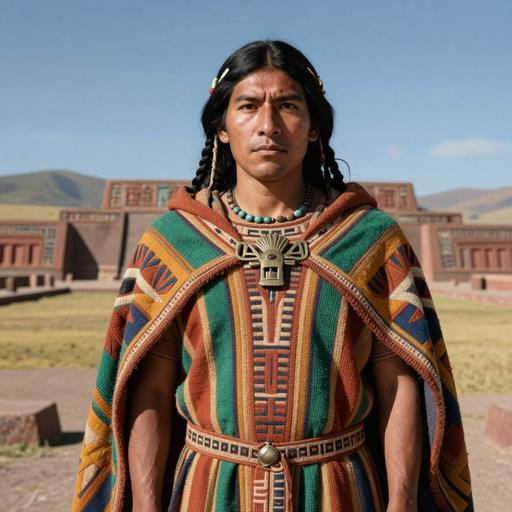
Portrait of ancient individual TW059 from Bolivia, dated 670 CE
TW059
Bolivia Bolivia_Pumapunku_Tiwanaku 670 CE Andean Civilizations M - B2
AI Powered

AI Assistant

Ask questions about the Pumapunku Echoes culture

AI Assistant by DNAGENICS

Unlock this feature
Ask questions about the Pumapunku Echoes culture. Our AI assistant can explain genetic findings, historical context, archaeological evidence, and modern connections.
Sample AI Analysis

The Pumapunku Echoes culture represents a fascinating chapter in human history...

Genetic analysis reveals connections to earlier populations while showing evidence of unique adaptations and cultural innovations. The ancient DNA samples provide insights into migration patterns, social structures, and the biological relationships between ancient populations.

This is a preview of the AI analysis. Unlock the full AI Assistant to explore detailed insights about:

  • Genetic composition and ancestry
  • Migration patterns and origins
  • Daily life and cultural practices
  • Modern genetic legacy
Use code for 35% off Expires May 21