Menu
Store
Blog
Bolivia_Putuni_Tiwanaku Putuni, Lake Titicaca basin, Bolivia

Putuni Echoes of Tiwanaku

A single maternal lineage illuminates a lakeshore cityscape of ritual, trade, and cultivation

675 CE - 831 CE
1 Ancient Samples
Scroll to begin
Chapter I

The Story

Understanding the Putuni Echoes of Tiwanaku culture

Archaeological remains from Putuni, Bolivia (675–831 CE) link Tiwanaku urban life on the southern Lake Titicaca rim with a single ancient mtDNA C1c sample. Limited evidence suggests maternal continuity with Andean populations, but conclusions remain preliminary due to n=1.

Time Period

675–831 CE

Region

Putuni, Lake Titicaca basin, Bolivia

Common Y-DNA

Not reported (no Y data)

Common mtDNA

C1c (1 sample)

Chapter II

Timeline

Key moments in the history of this culture

700 CE

Putuni individual dated

A human burial from Putuni is dated to 675–831 CE, placing it within the Late Tiwanaku period; the individual yielded mtDNA haplogroup C1c.

Chapter III

Origins & Emergence

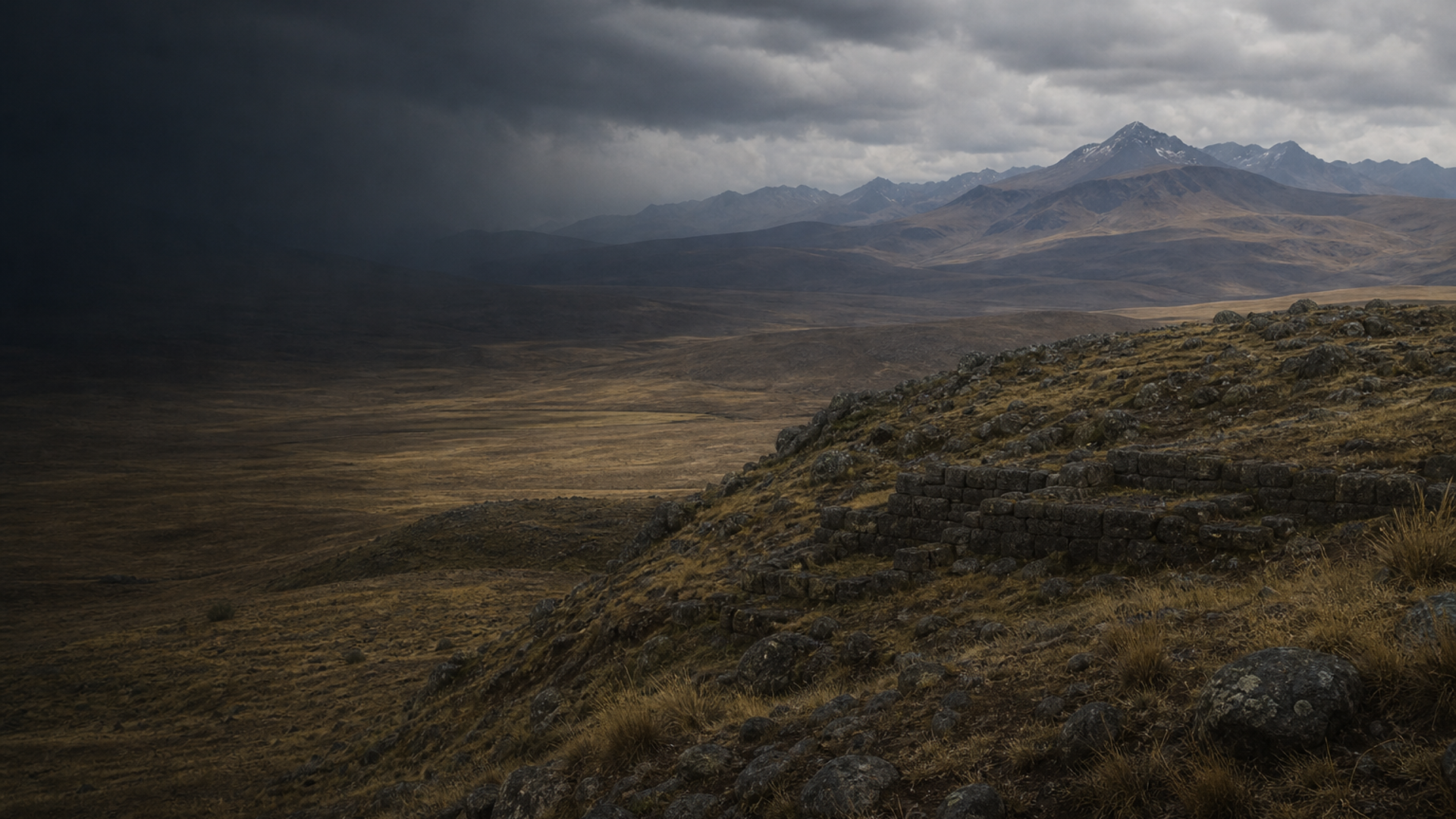
Perched on the southern shores of Lake Titicaca, the Putuni locality belonged to the broader Tiwanaku cultural sphere that dominated the high Andean plateau in the first millennium CE. Archaeological data indicates occupation phases here during the Late Intermediate centuries of Tiwanaku expansion; the dated sample (675–831 CE) places this individual within a period of intensifying urbanization and interregional exchange. Stone architecture, characteristic ceramics, and ritual deposits found across Tiwanaku sites evoke a polity that blended agricultural innovation with ceremonial centralization.

The cinematic sweep of the high plains — wind across raised fields and monumental stone — is matched in the material record by long-distance materials and stylistic motifs, suggesting networks that reached beyond the altiplano. However, for Putuni specifically the direct archaeological sequence remains patchy: excavations have recovered funerary contexts and domestic features but are limited in scale. Limited evidence suggests that Putuni functioned as a local node in Tiwanaku’s economic and ritual geography rather than a primary capital.

Because the genetic dataset from Putuni currently comprises a single sample, any narrative of population movement, replacement, or admixture must be treated as provisional. Archaeological indicators of regional continuity combined with this solitary maternal lineage point toward local Andean roots, but larger samples are necessary to test models of migration and cosmopolitanism.

  • Putuni sits on the southern Lake Titicaca basin, within Tiwanaku influence
  • Dated context: 675–831 CE, a period of urban and ritual activity
  • Archaeological record at Putuni is limited; interpretation remains provisional
Chapter IV

Daily Life & Society

The life-world of Putuni’s inhabitants would have been defined by the interplay of high-altitude agriculture, herding, and ritual performance. Archaeological data from the Tiwanaku region documents intensive use of raised-field agriculture (suka kollu) and irrigation that sustained dense populations across the altiplano; households combined cultivation of tubers and grains with camelid pastoralism. At Putuni, domestic architecture and tool assemblages recovered in limited excavations reflect craft activities — pottery production, textile working, and stone tool maintenance — embedded in a communal landscape dominated by ritual plazas and ceremonial architecture elsewhere in the Tiwanaku world.

Ceremony and social differentiation likely structured daily rhythms. Offerings, human and animal interments, and iconographic motifs from nearby Tiwanaku centers point to a society where elite ritual could articulate regional identities and redistribute agricultural surplus. Material culture suggests both local craft traditions and stylistic borrowings, implying mobility of goods, ideas, and possibly people.

Yet, for Putuni we must be cautious: the sample is on the order of a single individual, and broader inferences about household composition, kinship structures, or social hierarchy require more complete excavation and contextualized finds. Archaeology indicates complex, interconnected lifeways, but the details at Putuni await fuller recovery.

  • Economy centered on raised-field agriculture and camelid pastoralism
  • Crafts, ritual, and regional exchange shaped daily social life
Chapter V

Genetic Profile

Ancient DNA recovered from Putuni yields a single mitochondrial genome assigned to haplogroup C1c. Haplogroup C1c is one of several maternal lineages widespread among indigenous peoples of the Americas and is well-documented in Andean populations. This maternal signal aligns with archaeological expectations of regional continuity: the matrilineal ancestry of this individual appears consistent with long-established highland lineages rather than pointing to a recent founding from a distant continental source.

Crucially, no Y-chromosome data were reported for the Putuni sample, and the overall sample count is n=1. With such sparse sampling, genetic conclusions are necessarily tentative. Population-level interpretations — for example, the degree of admixture, the presence of non-local individuals, or demographic shifts tied to Tiwanaku imperial dynamics — cannot be robustly inferred from a lone maternal lineage. Other archaeogenetic studies across the Tiwanaku horizon have documented predominantly Andean ancestries with occasional genetic outliers, reflecting the polity’s role as a networked center; Putuni’s single C1c result is compatible with this broader pattern but neither confirms nor refutes it.

As more samples from Putuni and surrounding sites are analyzed, researchers will be able to test whether the C1c lineage represents common local matrilines, a mobile individual integrated into Tiwanaku networks, or another scenario. For now, the genetic evidence illuminates a maternal thread in a tapestry that remains largely incomplete.

  • mtDNA C1c found in one individual, suggesting maternal ties to Andean lineages
  • No Y-DNA reported; n=1 means conclusions about population history are preliminary
Chapter VI

Legacy & Modern Connections

The material and genetic echoes from Putuni reverberate in living Andean communities. Cultural continuities — agricultural techniques, textile traditions, ritual imagery rooted in Tiwanaku cosmology — persist among descendants in the altiplano. The single C1c maternal lineage found at Putuni is consistent with continuity between ancient altiplano populations and many modern indigenous groups of the Lake Titicaca region, but that continuity should be qualified: a single match cannot capture the full demographic history of the area.

Archaeogenetics paired with careful archaeology offers a cinematic way to trace threads from stone plazas and raised fields to contemporary lakeshore villages. As sampling expands, museum-quality reconstructions will refine how people at Putuni related to neighboring populations, how mobility shaped identities, and how traditions were transmitted across generations. For now, Putuni provides a poignant, if fragile, genetic and archaeological snapshot of life at the margins of Tiwanaku influence.

  • Material culture and agricultural practices link ancient Putuni to modern Andean traditions
  • Genetic continuity is plausible but unproven given the single sample; further study needed
Chapter VII

Sample Catalog

1 ancient DNA samples associated with the Putuni Echoes of Tiwanaku culture

Ancient DNA samples from this era, providing genetic insights into the people who lived during this period.

1 / 1 samples
Portrait Sample Country Era Date Culture Sex Y-DNA mtDNA
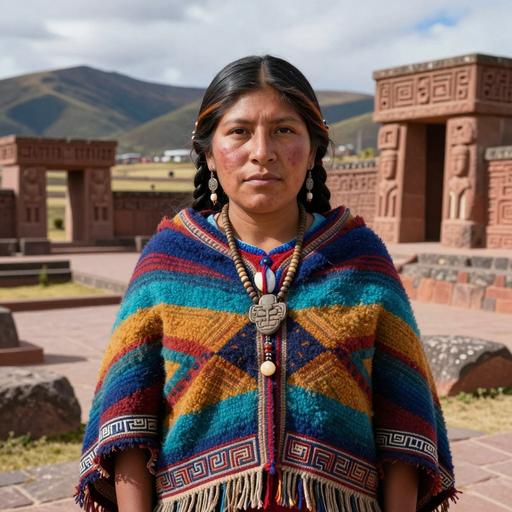
Portrait of ancient individual TW063 from Bolivia, dated 675 CE
TW063
Bolivia Bolivia_Putuni_Tiwanaku 675 CE Andean Civilizations F - C1c
AI Powered

AI Assistant

Ask questions about the Putuni Echoes of Tiwanaku culture

AI Assistant by DNAGENICS

Unlock this feature
Ask questions about the Putuni Echoes of Tiwanaku culture. Our AI assistant can explain genetic findings, historical context, archaeological evidence, and modern connections.
Sample AI Analysis

The Putuni Echoes of Tiwanaku culture represents a fascinating chapter in human history...

Genetic analysis reveals connections to earlier populations while showing evidence of unique adaptations and cultural innovations. The ancient DNA samples provide insights into migration patterns, social structures, and the biological relationships between ancient populations.

This is a preview of the AI analysis. Unlock the full AI Assistant to explore detailed insights about:

  • Genetic composition and ancestry
  • Migration patterns and origins
  • Daily life and cultural practices
  • Modern genetic legacy
Use code for 35% off Expires May 21