Menu
Store
Blog
Shamakhi, Azerbaijan (Caucasus)

Shamakhi Antiquity: Threads of Late Antiquity

A single ancient genome illuminates life on the shores and highlands of eastern Caucasus.

205 CE - 346 CE
Scroll to begin
Chapter I

The Story

Understanding the Shamakhi Antiquity: Threads of Late Antiquity culture

Archaeological data from Shamakhi, Azerbaijan (205–346 CE) paired with one ancient genome suggests links to Near Eastern and Caucasian lineages. Limited evidence indicates local continuity with broader Late Antique networks; conclusions are preliminary due to a single sample.

Time Period

205–346 CE (Late Antiquity)

Region

Shamakhi, Azerbaijan (Caucasus)

Common Y-DNA

J (observed: 1)

Common mtDNA

K (observed: 1)

Chapter II

Timeline

Key moments in the history of this culture

2500 BCE

Deep regional roots

Archaeological layers in the eastern Caucasus indicate cultural development from early Bronze Age communities that later shaped Late Antique societies.

Chapter III

Origins & Emergence

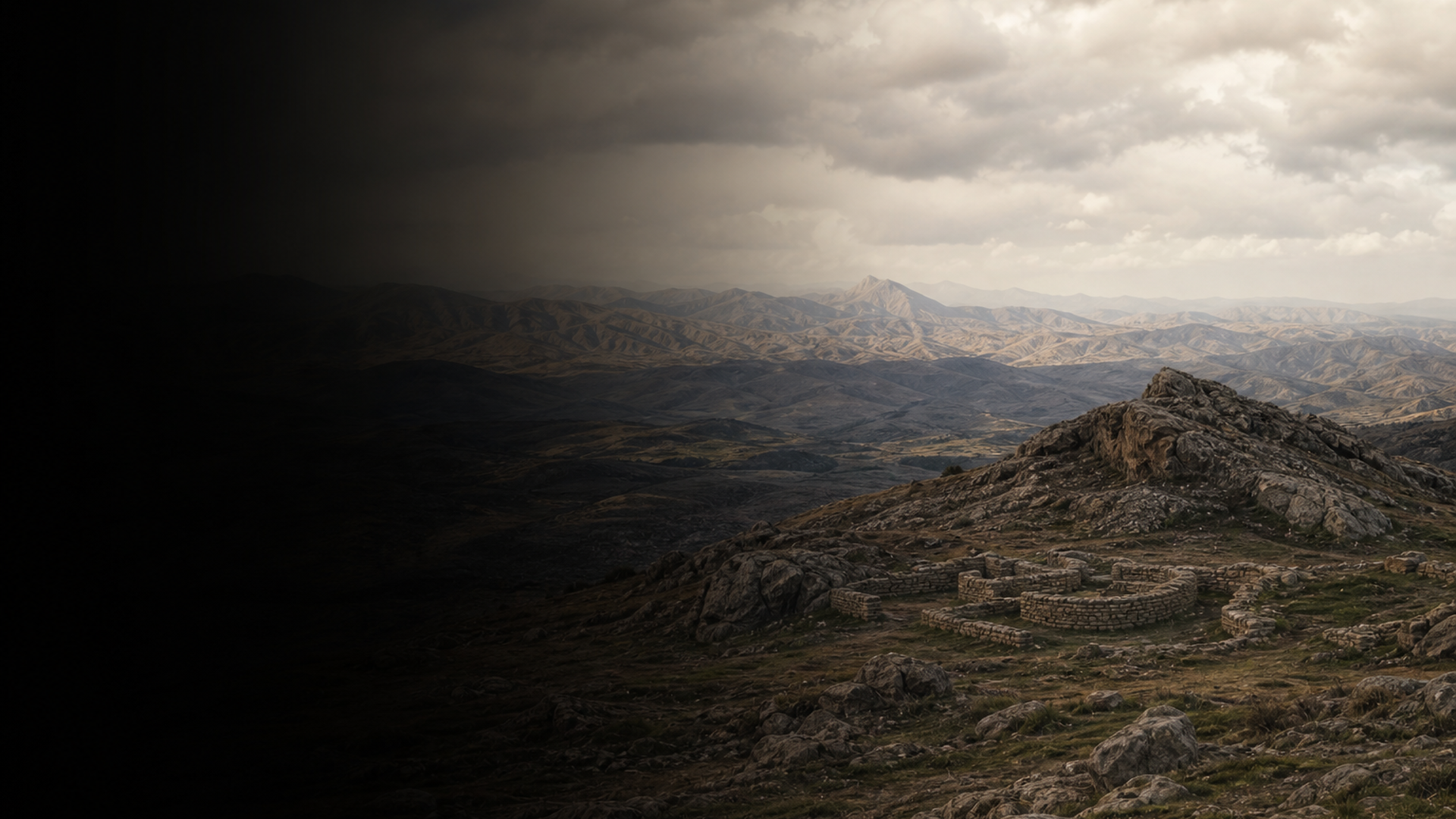
Shamakhi sits at a geographic hinge where Caspian littoral plains meet the rising Caucasus — a place that, in Late Antiquity, carried the imprint of long regional histories. Archaeological data from the Shamakhi area indicate occupation layers and funerary contexts dating to the 3rd–4th centuries CE (205–346 CE). Material traces — ceramics, metal finds, and burial patterns documented in nearby sites of the Shirvan plain — suggest communities adapted to both riverine and upland lifeways and engaged in long-distance contacts across the Caspian corridor.

Limited evidence suggests continuities with earlier Bronze and Iron Age populations of the eastern Caucasus, but the archaeological record is patchy. Trade networks in Late Antiquity funneled goods and ideas across the region; Shamakhi’s archaeological horizon likely reflects both local traditions and external influences from the Iranian plateau, the steppe fringes, and coastal maritime routes. Because the current genetic dataset for this cultural label is based on a single sample, any model of origin must remain provisional: the emerging portrait is evocative but incomplete, requiring broader sampling to test hypotheses of continuity and migration.

  • Located where Caspian plains meet the Caucasus highlands
  • Occupation dated to 205–346 CE based on archaeological contexts
  • Evidence suggests local traditions shaped by wider Late Antique exchanges
Chapter IV

Daily Life & Society

Everyday life in the Shamakhi region during the 3rd and 4th centuries CE unfolded against dramatic landscapes — irrigated fields in lowlands, pastures on slopes, and caravan routes threading between them. Archaeological indicators from the broader Shamakhi/Shirvan area point toward mixed agro-pastoral economies: cereal cultivation in riverine terraces, seasonal herding in upland pastures, and craft specialization such as metalworking and pottery production. Grave assemblages in nearby cemeteries show varied funerary practices, implying social differentiation and embedded regional identities.

Shamakhi’s position connected local communities to wider commercial and cultural circuits. Objects of non-local manufacture and stylistic affinities suggest exchange with Sasanian-controlled territories to the south and with Black Sea and Caspian maritime routes. Languages, religious practices, and daily material culture likely reflected a mosaic of influences rather than a single monoculture. Yet archaeological sampling is uneven: many inferences rely on regional analogies, and direct excavation data specifically from Shamakhi remain limited compared with better-documented Caucasus centers.

  • Mixed agriculture and pastoralism with craft specialization
  • Material culture reflects both local traditions and long-distance contacts
Chapter V

Genetic Profile

The genetic evidence currently attributed to the Azerbaijan_Shamakhi_Antiquity cultural label is extremely limited: one ancient individual dated between 205 and 346 CE. That single genome carries Y-chromosome haplogroup J and mitochondrial haplogroup K. Haplogroup J is widespread today across the Near East and Caucasus and has been recurrently observed in ancient samples from West Asia and the Levant — a signal compatible with regional continuity or gene flow from southern neighbors. mtDNA K has deep associations with Neolithic and later West Eurasian maternal lineages, appearing across Europe and West Asia.

With a sample count of one, any population-level claims are preliminary. The observed J/K pairing illustrates possible admixture between local Caucasian groups and broader Near Eastern ancestries, but it cannot resolve the timing, direction, or demographic magnitude of such interactions. Preservation biases, burial selection, and kin-based sampling (for example, a single cemetery family) can skew interpretations. Future, larger aDNA series from Shamakhi and neighboring sites are essential to test models of continuity, migration, and social structure. For now, genetics offers a tantalizing, individual-level window that complements — rather than replaces — the archaeological narrative.

  • Single ancient sample: Y-DNA J, mtDNA K (preliminary)
  • J suggests Near Eastern/Caucasus affinities; K aligns with West Eurasian maternal lineages
Chapter VI

Legacy & Modern Connections

Shamakhi’s archaeological and genetic whisper is part of a much longer regional conversation. Present-day populations of Azerbaijan reflect a tapestry of ancestries shaped by millennia of local continuity, migrations, and cultural exchange. The single Late Antique genome from Shamakhi hints at connections with Near Eastern lineages that are consistent with historical evidence of interaction across the Caspian gateway.

However, caution is paramount: a single sample cannot map the diversity of ancient Shamakhi or prove direct ancestry to any modern group. What it does provide is a biological thread that, when woven together with further archaeological excavation and additional aDNA sampling, promises to illuminate how communities in the eastern Caucasus navigated the transformations of Late Antiquity. Continued interdisciplinary work will be necessary to turn this evocative glimpse into a robust historical narrative.

  • Modern Azerbaijani ancestry is complex; continuity is plausible but unproven
  • More ancient genomes and archaeological data are needed to clarify connections
AI Powered

AI Assistant

Ask questions about the Shamakhi Antiquity: Threads of Late Antiquity culture

AI Assistant by DNAGENICS

Unlock this feature
Ask questions about the Shamakhi Antiquity: Threads of Late Antiquity culture. Our AI assistant can explain genetic findings, historical context, archaeological evidence, and modern connections.


Sample AI Analysis

The Shamakhi Antiquity: Threads of Late Antiquity culture represents a fascinating chapter in human history...

Genetic analysis reveals connections to earlier populations while showing evidence of unique adaptations and cultural innovations. The ancient DNA samples provide insights into migration patterns, social structures, and the biological relationships between ancient populations.

This is a preview of the AI analysis. Unlock the full AI Assistant to explore detailed insights about:

  • Genetic composition and ancestry
  • Migration patterns and origins
  • Daily life and cultural practices
  • Modern genetic legacy
Use code for 35% off Expires May 20