Menu
Store
Blog
Algeria_NumidoRoman_Berber Sitifis (modern Sétif), Algeria

Sitifis: Numido‑Roman Berber Echoes

Fragments of life and lineage from Sitifis’ Necropole Orientale (40 BCE–210 CE)

40 BCE - 210 CE
3 Ancient Samples
Scroll to begin
Chapter I

The Story

Understanding the Sitifis: Numido‑Roman Berber Echoes culture

Archaeological and preliminary aDNA evidence from Sitifis (modern Sétif, Algeria) reveals a Numido‑Roman Berber community shaped by indigenous Amazigh roots and Mediterranean connections. Only three genome samples limit strong conclusions; patterns hint at local continuity and regional mobility.

Time Period

40 BCE – 210 CE

Region

Sitifis (modern Sétif), Algeria

Common Y-DNA

Undetermined (3 samples)

Common mtDNA

Undetermined (3 samples)

Chapter II

Timeline

Key moments in the history of this culture

2500 BCE

Neolithic pastoral and agricultural systems in the Maghreb

Widespread adoption of agropastoralism in the central Maghreb sets long-term subsistence foundations for later Numidian and Roman communities.

Chapter III

Origins & Emergence

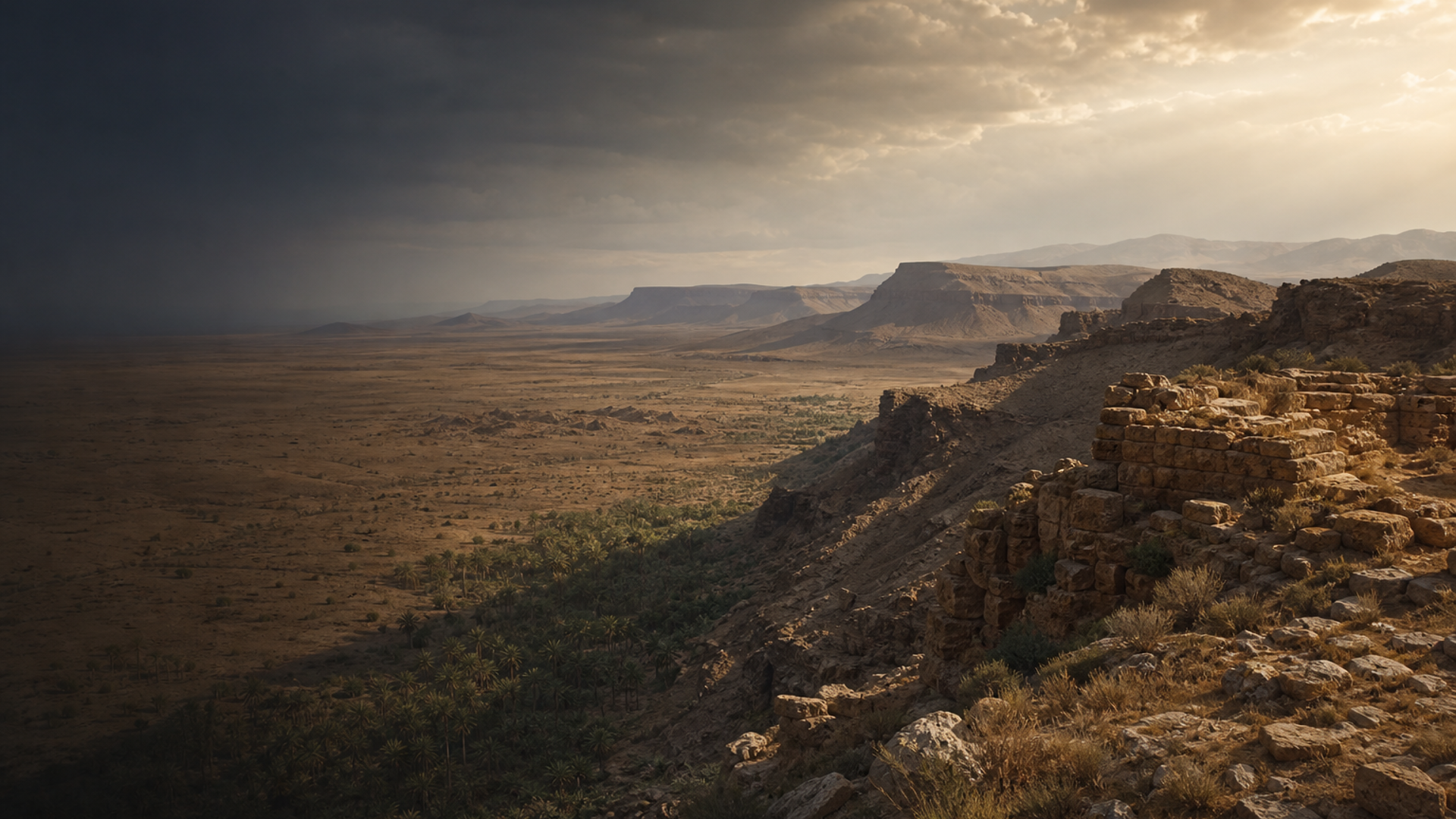
Beneath the ochre dust of the high plateau where modern Sétif now sits, Sitifis was a place of layered identities. Archaeological data indicates the town rose in prominence during the late Republic and early Empire, when Numidian polities and Roman administration overlapped. Grave architecture and funerary goods recovered from the Necropole Orientale reflect a convergence: local Amazigh funerary traditions entwined with Roman pottery types, Latin inscriptions, and Mediterranean imports.

The cultural horizon here is neither purely 'Numidian' nor wholly Roman; it is a palimpsest. Epigraphic traces and urban remains point to civic Roman institutions — roads, baths, and inscriptions — superimposed on a landscape shaped by long‑standing pastoral and agrarian practices of indigenous communities. Limited evidence suggests that local elites adopted Roman material culture while maintaining kinship networks and local rites.

Genetic sampling at Sitifis is extremely limited (three individuals). Archaeological context makes it plausible that inhabitants were primarily descended from local North African populations with varying degrees of interaction — trade, marriage, military recruitment — with Mediterranean and sub‑Saharan groups. These hypotheses remain provisional: small sample sizes mean interpretations about origins and population dynamics must be cautious, and further excavation and aDNA work are needed to test emerging models.

  • Sitifis shows a blend of Amazigh and Roman material culture
  • Necropole Orientale yields funerary evidence linking local rites and Mediterranean imports
  • Genetic inference is preliminary due to only three ancient genomes
Chapter IV

Daily Life & Society

Life in Sitifis would have felt intimate and cosmopolitan at once: a market where amphorae from the Mediterranean lined stalls beside local wares, where Latin and Afro‑Asiatic languages might have been heard across a single forum. Archaeological assemblages from the region — domestic pottery, loom weights, olive presses, and agricultural terraces — indicate an economy built on mixed farming, olive oil production, textile manufacture, and long‑distance trade.

Funerary practice provides a cinematic window into social values: the Necropole Orientale contains inhumations with personal adornments, ceramic offerings, and sometimes reused Roman building stone. These burials suggest family‑focused commemoration and a social landscape in which Roman civic identity coexisted with kinship bonds rooted in Amazigh tradition. Military and mercantile networks of the Roman world likely brought new goods and people, creating a pace of cultural exchange that is visible archaeologically but only faintly registered genetically so far.

Archaeological data indicates that gendered crafts and household production were central to daily survival, while public architecture signaled allegiance to Roman civic life. Mobility—seasonal herding, trade caravans, soldiers—would have been a normal part of existence, knitting Sitifis to a wider Mediterranean and African world.

  • Economy: mixed farming, olive oil, textiles, Mediterranean trade
  • Burials at Necropole Orientale show personal and civic blending of traditions
Chapter V

Genetic Profile

The genetic story from Sitifis is whisper‑quiet: three ancient genomes have been obtained from the Necropole Orientale spanning roughly 40 BCE to 210 CE. With such a small sample count (<10), any population‑level claim would be premature. Archaeogenetic data should therefore be treated as preliminary signals rather than definitive patterns.

What the samples do offer is directional insight. Preliminary analyses align with broader North African archaeogenetic research that identifies a deep indigenous Maghrebi component alongside evidence for gene flow linked to Mediterranean and, in some contexts, sub‑Saharan connections. At Sitifis, archaeological indicators of Roman and Mediterranean integration make admixture plausible, but the limited number of genomes prevents clear attribution of timing, sex‑biased admixture, or specific source populations.

Importantly, the current dataset does not present a consistent Y‑chromosome or mitochondrial haplogroup profile for the community — values are listed as undetermined because the sample size and preservation do not yield robust, representative frequencies. Future work should increase skeleton sampling, incorporate radiogenic strontium and oxygen isotope analyses to map mobility, and compare Sitifis genomes to contemporaneous coastal and inland North African assemblages to resolve local continuity versus incoming gene flow.

  • Only three genomes available — conclusions are highly preliminary
  • Signals suggest indigenous North African ancestry with possible Mediterranean admixture
Chapter VI

Legacy & Modern Connections

The echoes of Sitifis reach into the present in subtle ways. Modern Amazigh (Berber) communities across Algeria carry cultural practices, place names, and possibly genetic traces that connect back to ancient North African populations; however, direct lineage from Sitifis individuals to living populations cannot be asserted from three samples. Archaeological continuity in settlement patterns, agricultural terraces, and toponymy suggests durable human occupation and adaptation of the landscape.

Roman urban planning left durable marks — roads, ruins, and civic concepts that shaped later town formation. Genetically, later populations in the Maghreb reflect a long history of layered contacts: pre‑Neolithic North African ancestry, Neolithic farmer inflows, Sahelian connections, and Mediterranean exchanges. The Sitifis samples add a fragile but valuable chapter to this mosaic, underscoring the need for expanded sampling to clarify how Roman-era networks influenced the genetic and cultural makeup of North Africa.

  • Cultural continuity and Roman influence shaped modern settlement patterns
  • Direct genetic continuity to modern groups is unproven given limited ancient samples
Chapter VII

Sample Catalog

3 ancient DNA samples associated with the Sitifis: Numido‑Roman Berber Echoes culture

Ancient DNA samples from this era, providing genetic insights into the people who lived during this period.
3 / 3 samples
Portrait Sample Country Era Date Culture Sex Y-DNA mtDNA
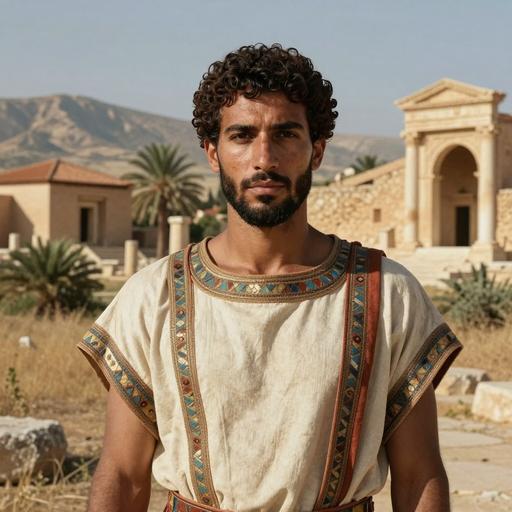
Portrait of ancient individual R10760 from Algeria, dated 40 BCE
R10760
Algeria Algeria_NumidoRoman_Berber 40 BCE Roman Empire F - -
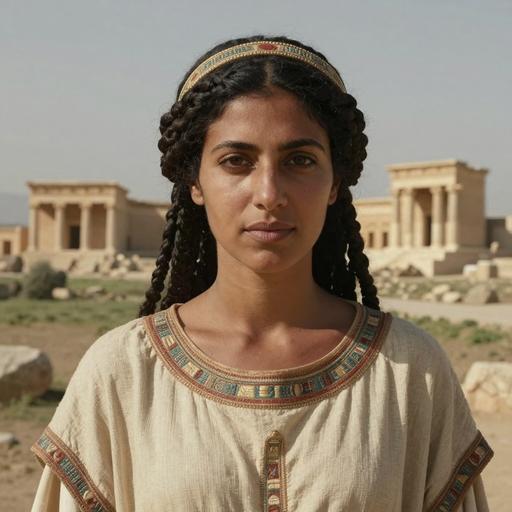
Portrait of ancient individual R10766 from Algeria, dated 63 CE
R10766
Algeria Algeria_NumidoRoman_Berber 63 CE Roman Empire M - -
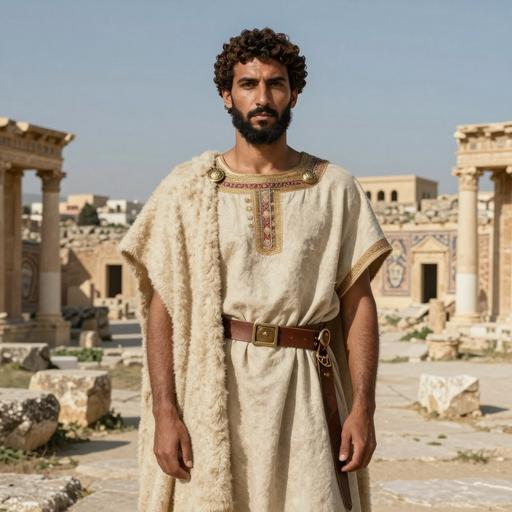
Portrait of ancient individual R10770 from Algeria, dated 81 CE
R10770
Algeria Algeria_NumidoRoman_Berber 81 CE Roman Empire M - -
AI Powered

AI Assistant

Ask questions about the Sitifis: Numido‑Roman Berber Echoes culture

AI Assistant by DNAGENICS

Unlock this feature
Ask questions about the Sitifis: Numido‑Roman Berber Echoes culture. Our AI assistant can explain genetic findings, historical context, archaeological evidence, and modern connections.
Sample AI Analysis

The Sitifis: Numido‑Roman Berber Echoes culture represents a fascinating chapter in human history...

Genetic analysis reveals connections to earlier populations while showing evidence of unique adaptations and cultural innovations. The ancient DNA samples provide insights into migration patterns, social structures, and the biological relationships between ancient populations.

This is a preview of the AI analysis. Unlock the full AI Assistant to explore detailed insights about:

  • Genetic composition and ancestry
  • Migration patterns and origins
  • Daily life and cultural practices
  • Modern genetic legacy
Use code for 35% off Expires May 20