Menu
Store
Blog
Bolivia_MH_Tiwanaku Tiwanaku, Lake Titicaca basin, Bolivia

Tiwanaku Heartland (650–1200 CE)

Lake‑Titicaca metropolis whose stones and genomes whisper Andean stories

650 CE - 1200 CE
4 Ancient Samples
Scroll to begin
Chapter I

The Story

Understanding the Tiwanaku Heartland (650–1200 CE) culture

Archaeological and aDNA evidence from Tiwanaku (La Paz, Bolivia) — 4 samples dated 650–1200 CE — point to Indigenous Andean lineages (Y‑Q; mtDNA B2, C1c). Limited sample size makes conclusions preliminary, but findings align with regional archaeological signals.

Time Period

650–1200 CE

Region

Tiwanaku, Lake Titicaca basin, Bolivia

Common Y-DNA

Q (3 of 4)

Common mtDNA

B2 (3), C1c (1)

Chapter II

Timeline

Key moments in the history of this culture

500 CE

Early Monumental Construction

Kalasasaya and Early Akapana phases show major stone construction and the rise of Tiwanaku as a ritual center.

700 CE

Urban Apex

Tiwanaku reaches regional prominence with dense occupation, monumentalism, and expanded agricultural systems.

1000 CE

Regional Transformation

Signs of demographic and political shifts appear across the basin; urban decline begins in some sectors.

1200 CE

Late Horizon Abandonment

By the 12th–13th centuries major centers show reduced monumental construction and changing settlement patterns.

Chapter III

Origins & Emergence

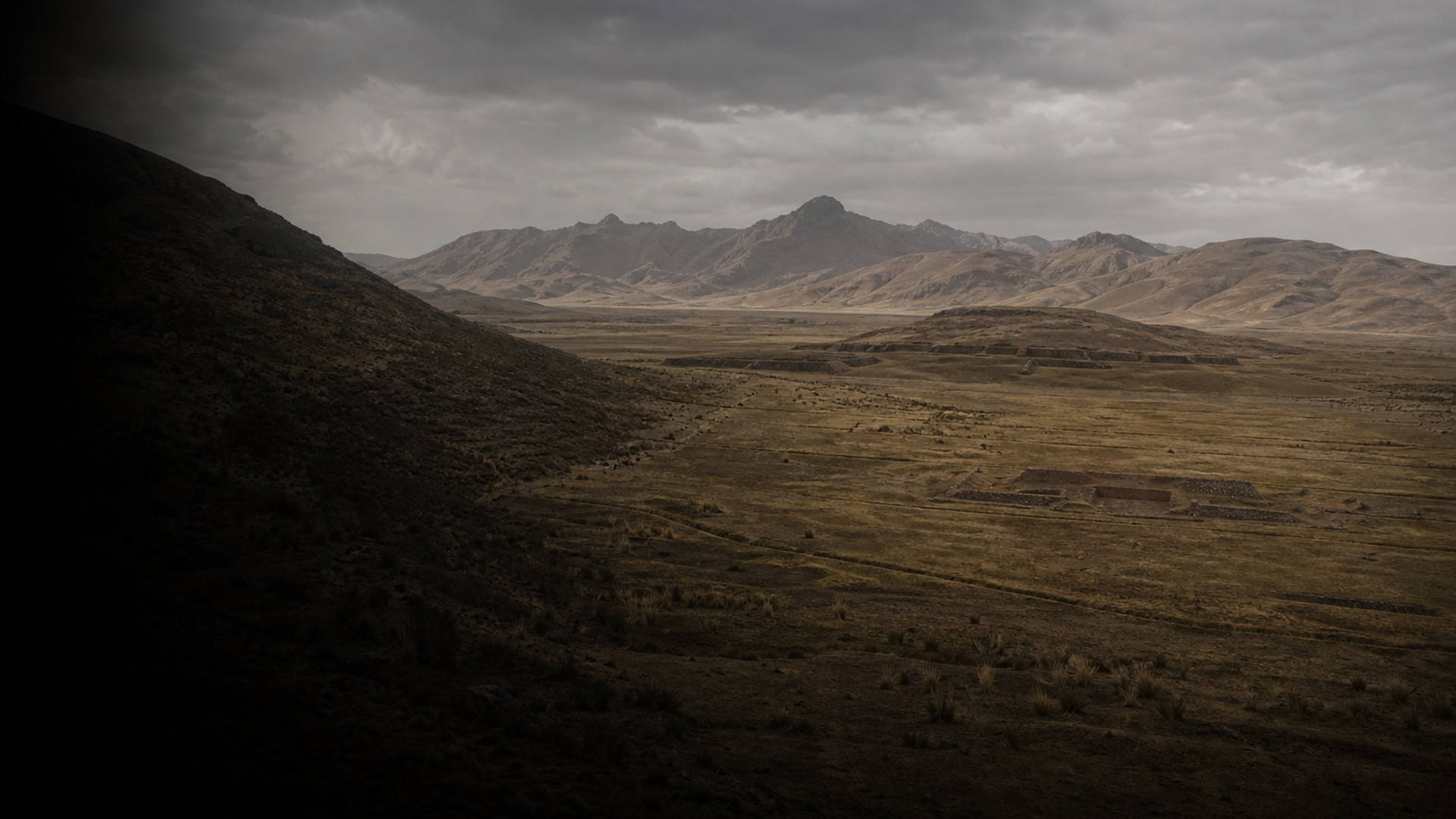
Rising from the winds that sweep the high plains around Lake Titicaca, Tiwanaku became a monumental ritual and urban center during the Middle Horizon. Archaeological layers at core sites — Kalasasaya, Akapana, Pumapunku, and the Semi‑Subterranean Temple at Tiwanaku (near modern La Paz, Bolivia) — record a crescendo of stone architecture, carved iconography, and expanded agricultural infrastructure between roughly 500 and 900 CE. Architectural styles and carved stelae indicate intense ritual life and a shared visual language across the basin.

Archaeological data indicates that Tiwanaku was both a pilgrimage center and a network hub: farmers working raised agricultural fields (often reconstructed as suka kollu or waru‑waru systems), craft specialists in stone and textiles, and long‑distance exchange connected the site to highland and intermontane valleys. Radiocarbon dates cluster within the Middle Horizon, but precise trajectories of political centralization remain debated.

Limited evidence suggests that Tiwanaku's urban growth was not solely the product of demographic expansion but also of ritual‑political consolidation — the city drew people into seasonal or permanent residence through ceremonies and redistribution. Material culture and settlement surveys show influence across the southern Lake Titicaca basin and into parts of the northern Altiplano, but the exact mechanisms of Tiwanaku expansion — colonization, religious persuasion, or economic ties — are still subjects of active research.

  • Core monuments: Kalasasaya, Akapana, Pumapunku
  • Agricultural innovation: raised fields around Lake Titicaca
  • Regional ritual and exchange hub during the Middle Horizon
Chapter IV

Daily Life & Society

Life in the Tiwanaku world blended striking monumental ritualism with pragmatic adaptation to high‑altitude environments. Farmers tended engineered wetlands and raised fields that mitigated frost and increased yields — these labor‑intensive systems underwrote urban populations. Households combined agriculture with textile production, stone carving, and small‑scale metallurgy; archaeological assemblages reveal finely woven textiles, polychrome ceramics, and standardized architectural modules.
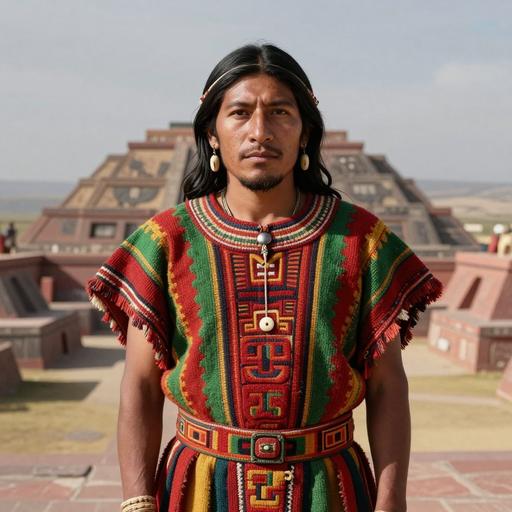
Socially, Tiwanaku likely featured a mosaic of residential types: clustered compounds near the ritual core for elites and specialized practitioners, and dispersed farmsteads across the basin for agrarian families. Burial practices vary across the site — from communal interments to individual burials — indicating social differentiation and complex kin networks. Iconography carved on stelae and portable objects suggests a cosmology attentive to mountain deities, water, and corn — motifs that shaped daily ritual acts and seasonal festivals.

Material evidence also points to long‑distance contacts: exotic materials and stylistic echoes show connections to neighboring highland polities and lowland corridors. Yet everyday life remained anchored in the challenges and rhythms of the Altiplano: frost, seasonal water levels of Lake Titicaca, and a reliance on collective labor to maintain agricultural terraces and ritual spaces.

  • Combination of agriculture (raised fields) and craft production
  • Burial variability indicates social differentiation and kin networks
Chapter V

Genetic Profile

Ancient DNA from the Tiwanaku core (La Paz, Bolivia) offers a compact but evocative genetic snapshot. Four published individuals dated between 650 and 1200 CE reveal a strong presence of Indigenous American lineages: three male individuals carry Y‑chromosome haplogroup Q, a haplogroup widely associated with Native populations across the Americas. On the maternal side, three mitochondrial genomes belong to haplogroup B2 and one to C1c — both established Native American mtDNA clades.

These genetic markers align with expectations from Andean archaeological contexts: Y‑Q and mtDNA B2/C1 variants are common among highland populations today and in ancient samples from the broader Andes. Such concordance suggests population continuity at large scales, where local communities retained autochthonous paternal and maternal lineages through the Middle Horizon.

However, caution is essential. With only four samples, inferences about population structure, migration, or social organization are preliminary. Small sample sizes can obscure substructure, recent gene flow, or nonlocal individuals in the funerary record. Archaeogeneticists therefore treat these Tiwanaku genomes as a starting point: they corroborate an Andean genetic signature at the site but cannot yet resolve questions about mobility, status‑related ancestry differences, or the demographic impact of Tiwanaku dispersal. Broader sampling across settlement contexts and time slices is needed to test models of regional continuity versus episodic movement.

  • Y‑DNA dominated by haplogroup Q; mtDNA by B2 and C1c
  • Small sample size (4) — conclusions are preliminary and require more data
Chapter VI

Legacy & Modern Connections

The stones of Tiwanaku still shape cultural memory across the southern Altiplano. Iconographic motifs, agricultural technologies, and ceremonial architectures influenced later Andean polities and are visible in the practices of contemporary highland communities. Genetically, the presence of haplogroup Q and mtDNA clades B2 and C1c in Tiwanaku individuals mirrors lineages found in modern Andean populations, suggesting threads of biological continuity across more than a millennium.

Archaeological influence and genetic affinity together form a nuanced legacy: cultural traditions may diffuse through ritual and exchange even when gene flow is limited, while shared ancestry can persist through local continuity. Given the limited aDNA sample from Tiwanaku, scholars emphasize tentative connections — archaeological signals of influence are robust, whereas genetic narratives await larger and more representative datasets. Still, the combined archaeological and genetic picture paints Tiwanaku as both a material and biological anchor in the highland past, one whose echoes remain in the communities of the Lake Titicaca basin today.

  • Cultural influence persisted across the southern Altiplano
  • Genetic continuity suggested but requires wider aDNA sampling
Chapter VII

Sample Catalog

4 ancient DNA samples associated with the Tiwanaku Heartland (650–1200 CE) culture

Ancient DNA samples from this era, providing genetic insights into the people who lived during this period.

4 / 4 samples
Portrait Sample Country Era Date Culture Sex Y-DNA mtDNA
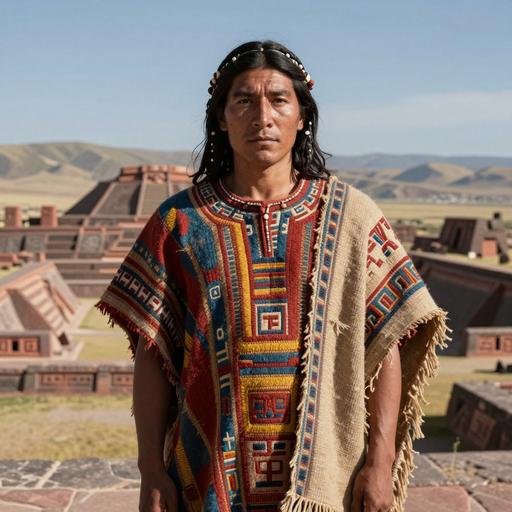
Portrait of ancient individual I0978 from Bolivia, dated 1015 CE
I0978
Bolivia Bolivia_MH_Tiwanaku 1015 CE Andean Civilizations M Q-M3 B2
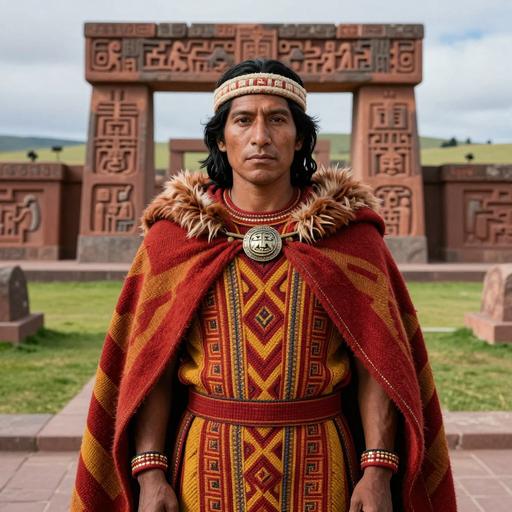
Portrait of ancient individual I0976 from Bolivia, dated 900 CE
I0976
Bolivia Bolivia_MH_Tiwanaku 900 CE Andean Civilizations M Q-M3 B2
Portrait of ancient individual I0977 from Bolivia, dated 900 CE
I0977
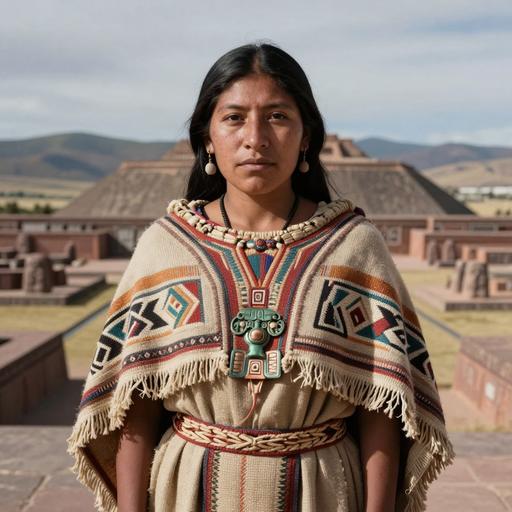
Bolivia Bolivia_MH_Tiwanaku 900 CE Andean Civilizations F - C1c
Portrait of ancient individual I0979 from Bolivia, dated 650 CE
I0979
Bolivia Bolivia_MH_Tiwanaku 650 CE Andean Civilizations M Q-M242 B2
AI Powered

AI Assistant

Ask questions about the Tiwanaku Heartland (650–1200 CE) culture

AI Assistant by DNAGENICS

Unlock this feature
Ask questions about the Tiwanaku Heartland (650–1200 CE) culture. Our AI assistant can explain genetic findings, historical context, archaeological evidence, and modern connections.
Sample AI Analysis

The Tiwanaku Heartland (650–1200 CE) culture represents a fascinating chapter in human history...

Genetic analysis reveals connections to earlier populations while showing evidence of unique adaptations and cultural innovations. The ancient DNA samples provide insights into migration patterns, social structures, and the biological relationships between ancient populations.

This is a preview of the AI analysis. Unlock the full AI Assistant to explore detailed insights about:

  • Genetic composition and ancestry
  • Migration patterns and origins
  • Daily life and cultural practices
  • Modern genetic legacy
Use code for 35% off Expires May 21