Menu
Store
Blog
Bolivia_Totocachi_Tiwanaku Totocachi, southern Lake Titicaca basin, Bolivia

Totocachi at the Edge of Tiwanaku

One late-Tiwanaku individual (1393–1439 CE) linking Totocachi archaeology to Andean maternal lineages

1393 CE - 1439 CE
1 Ancient Samples
Scroll to begin
Chapter I

The Story

Understanding the Totocachi at the Edge of Tiwanaku culture

Archaeological and genetic evidence from a single individual at Totocachi, Bolivia (1393–1439 CE) hints at local continuity of Tiwanaku-era lifeways. Limited ancient DNA (mtDNA B2) aligns with broad Andean maternal lineages, but conclusions remain preliminary.

Time Period

1393–1439 CE (sample); Tiwanaku cultural context

Region

Totocachi, southern Lake Titicaca basin, Bolivia

Common Y-DNA

Not reported / data unavailable

Common mtDNA

B2 (1 sample)

Chapter II

Timeline

Key moments in the history of this culture

500 CE

Rise of Tiwanaku influence

Tiwanaku becomes a major ritual and economic center in the Lake Titicaca basin, radiating cultural influence across the southern highlands.

1000 CE

Transformation of Tiwanaku sphere

Political and social transformations lead to shifting settlement patterns and local adaptations across the altiplano.

1393 CE

Dating of Totocachi individual

Radiocarbon or context-derived date places the sampled individual between 1393–1439 CE, a late pre-contact horizon.

Chapter III

Origins & Emergence

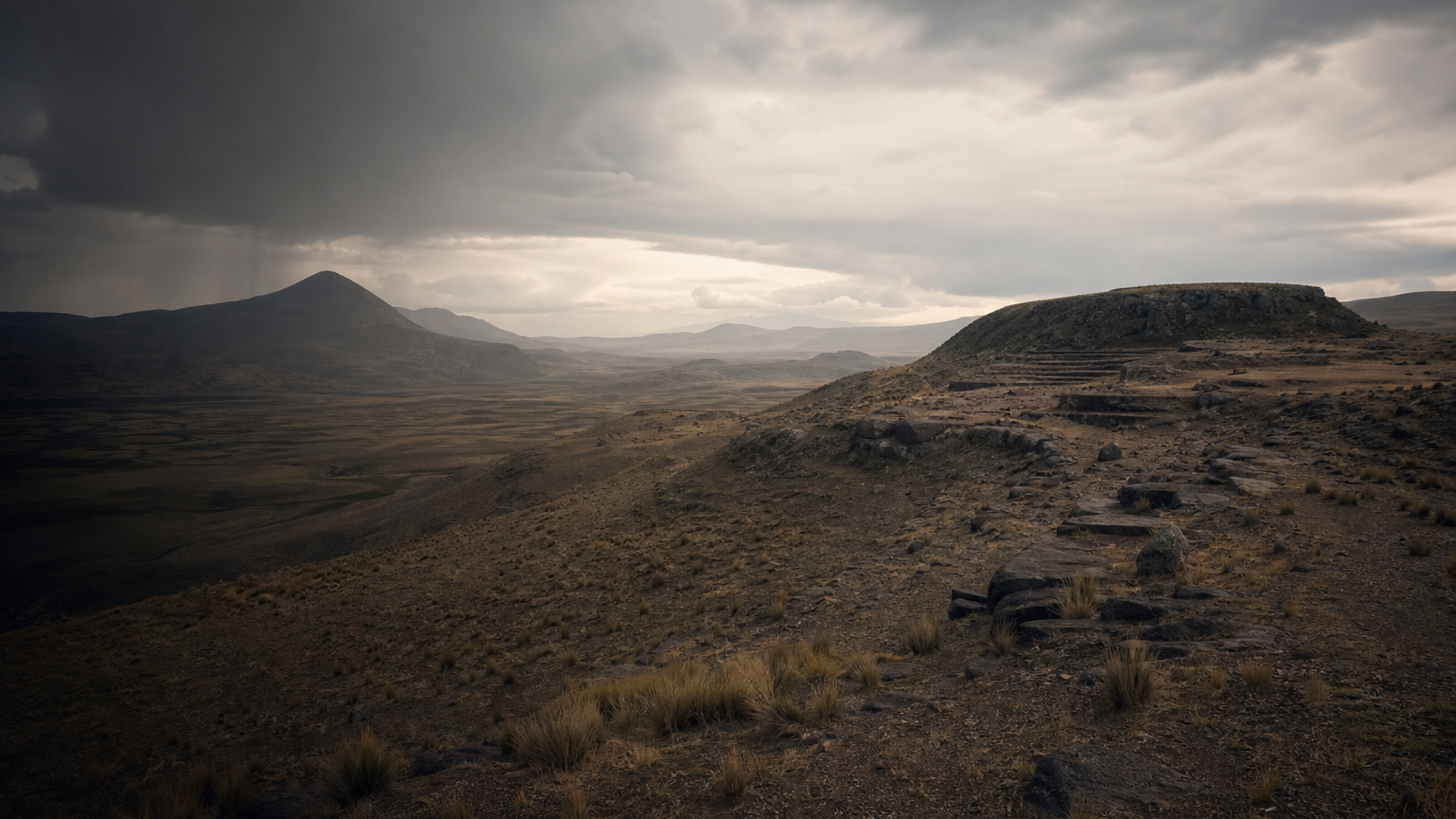
From the thin air above the Titicaca basin, Tiwanaku cast a long cultural shadow across the southern highlands of modern Bolivia. Totocachi sits on the margins of that shadow — a place where local communities participated in the visual language and ritual practices associated with Tiwanaku influence. Archaeological data from Totocachi indicate material affinities with Tiwanaku-style ceramics and architectural features, suggesting local adoption or adaptation of regional traditions rather than direct replication of the urban core at the Lake Titicaca site of Tiwanaku itself.

The sampled individual dates to 1393–1439 CE, centuries after Tiwanaku’s political florescence (commonly placed roughly between 500–1000 CE). This late date places the person in a period of cultural transformation across the Andes when local polities, highland populations, and emergent groups negotiated identities in post-Tiwanaku landscapes. Limited evidence suggests continuity of community presence and ritual practice at Totocachi, possibly reflecting durable social networks that persisted beyond the classic Tiwanaku horizon.

Because the dataset here is a single individual, broad claims about population movements or origins are provisional. Archaeological context nonetheless paints a cinematic picture of a highland community shaped by enduring Tiwanaku-derived forms: plazas, pottery shapes, and iconographic motifs that whisper of long-lived connections across the altiplano.

  • Totocachi shows material links to Tiwanaku-style ceramics and architecture
  • Sample dated to 1393–1439 CE, in a post-classic period of Andean transformation
  • Single-sample evidence requires cautious interpretation about origins
Chapter IV

Daily Life & Society

Life on the high puna was lived in extremes: thin air, bright sun, and a landscape shaped by stone terraces and domesticated camelids. At Totocachi, archaeological assemblages suggest households engaged in mixed farming — tubers such as potatoes and grains like quinoa — alongside camelid herding (llamas and possibly alpacas) that provided transport, wool, and social wealth. Suka kollus (raised field agriculture) and terracing are characteristic of the broader Lake Titicaca economy, and while specific field systems at Totocachi require fuller excavation, regional patterns imply sophisticated landscape engineering to manage frost and water.

Ceramics and small ritual paraphernalia recovered in the area point to domestic and communal life organized around kin groups and ritual specialists. Stone architecture and public spaces, where present, would have served as nodes for exchange, feasting, and procession — life stages recorded as pottery styles and carved motifs. Gendered craft production, textile weaving, and the management of herds likely structured daily rhythms, while long-distance exchange networks stitched highland communities to valleys and lowland frontiers.

Archaeological data indicate a society resourceful in high-altitude adaptation, but Totocachi-specific reconstructions remain provisional until more excavation and contextual analysis are completed.

  • Mixed agriculture (potatoes, quinoa) and camelid herding shaped subsistence
  • Material culture suggests domestic craft, ritual activity, and regional exchange
Chapter V

Genetic Profile

The ancient DNA signal from Totocachi is tantalizing but exceptionally limited: one individual yielded mitochondrial haplogroup B2. Haplogroup B2 is a well-established Native American maternal lineage found widely across the Andes and the Americas. Its presence at Totocachi is consistent with broader patterns of maternal continuity in highland populations, where local mtDNA lineages often persist through centuries of cultural change.

No Y-chromosome data are reported for this sample, so paternal lineages at Totocachi remain unknown. Likewise, autosomal data from a single individual cannot resolve fine-scale population structure or admixture events. Comparative ancient DNA studies across the Andes have revealed a mix of long-term local continuity in many highland communities and episodic gene flow from neighboring regions (for example, lowland Amazonian or coastal groups) in some contexts; whether Totocachi participated in such flows is unresolved here.

Because N = 1, any genetic inference must be framed as preliminary. Nevertheless, the mtDNA B2 result aligns with an interpretive framework in which maternal lineages demonstrate deep roots in the Andean highlands, offering an intimate genetic echo of the archaeological story: continuity of people on a dramatic landscape even as political and cultural configurations shifted over time.

  • mtDNA B2 detected — a common Andean/American maternal lineage
  • Single-sample autosomal/Y-chromosome data absent; conclusions are preliminary
Chapter VI

Legacy & Modern Connections

The human story at Totocachi resonates with living cultures of the southern highlands. Material traditions traceable to Tiwanaku are visible in the practices and memories of modern Aymara and Quechua-speaking communities, though direct lines of descent are complex and mediated by centuries of migration, empire, and colonial transformation. Genetic continuity of maternal lineages like B2 suggests that some elements of biological ancestry remained localized despite shifting political landscapes.

Archaeological landscapes such as Totocachi offer a cinematic continuity: pottery fragments, stone thresholds, and burial places that speak across the centuries. For contemporary communities, these traces are a part of identity-making — a reminder that the high plateau has been a stage for human resilience and cultural creativity for millennia. Still, with only one ancient DNA sample from Totocachi, the genetic portrait is a single frame; fuller genomic sampling and continued excavation are needed to reveal the complete film of regional ancestry and cultural inheritance.

  • Material and genetic traces hint at continuity with modern highland populations
  • Further sampling and community-engaged research needed to clarify links
Chapter VII

Sample Catalog

1 ancient DNA samples associated with the Totocachi at the Edge of Tiwanaku culture

Ancient DNA samples from this era, providing genetic insights into the people who lived during this period.

1 / 1 samples
Portrait Sample Country Era Date Culture Sex Y-DNA mtDNA
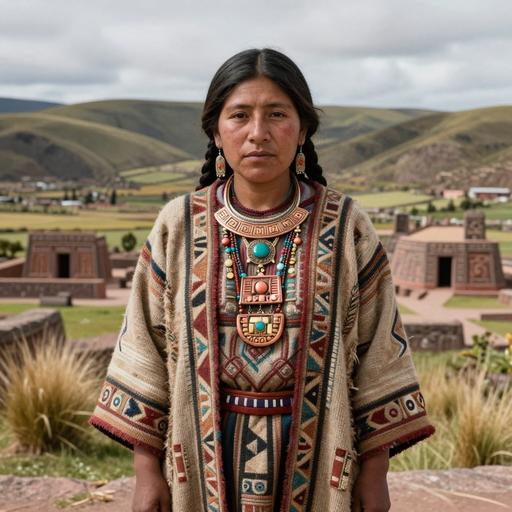
Portrait of ancient individual TW033 from Bolivia, dated 1393 CE
TW033
Bolivia Bolivia_Totocachi_Tiwanaku 1393 CE Andean Civilizations F - B2
AI Powered

AI Assistant

Ask questions about the Totocachi at the Edge of Tiwanaku culture

AI Assistant by DNAGENICS

Unlock this feature
Ask questions about the Totocachi at the Edge of Tiwanaku culture. Our AI assistant can explain genetic findings, historical context, archaeological evidence, and modern connections.
Sample AI Analysis

The Totocachi at the Edge of Tiwanaku culture represents a fascinating chapter in human history...

Genetic analysis reveals connections to earlier populations while showing evidence of unique adaptations and cultural innovations. The ancient DNA samples provide insights into migration patterns, social structures, and the biological relationships between ancient populations.

This is a preview of the AI analysis. Unlock the full AI Assistant to explore detailed insights about:

  • Genetic composition and ancestry
  • Migration patterns and origins
  • Daily life and cultural practices
  • Modern genetic legacy
Use code for 35% off Expires May 21