Menu
Store
Blog
Northeast Brazil — Vau, Sta. M. Vitória

Vau‑Una Sambaqui — ca. 600 BP

A single coastal burial linking shell‑mound archaeology with Indigenous DNA evidence

1318 CE - 1409600 CE
Scroll to begin
Chapter I

The Story

Understanding the Vau‑Una Sambaqui — ca. 600 BP culture

Archaeological and genetic data from a 14th‑century sambaqui burial at Vau (Sta. M. Vitória), Northeast Brazil, point to Indigenous American paternal lineage (Y‑Q) and maternal lineage (mtDNA B). Limited sample size makes conclusions preliminary.

Time Period

ca. 1318–1409 CE (600 BP)

Region

Northeast Brazil — Vau, Sta. M. Vitória

Common Y-DNA

Q (1 sample)

Common mtDNA

B (1 sample)

Chapter II

Timeline

Key moments in the history of this culture

2500 BCE

Emergence of sambaqui building

Shell‑mound construction along the Brazilian coast intensifies, forming enduring middens that become focal points for settlement and burial.

Chapter III

Origins & Emergence

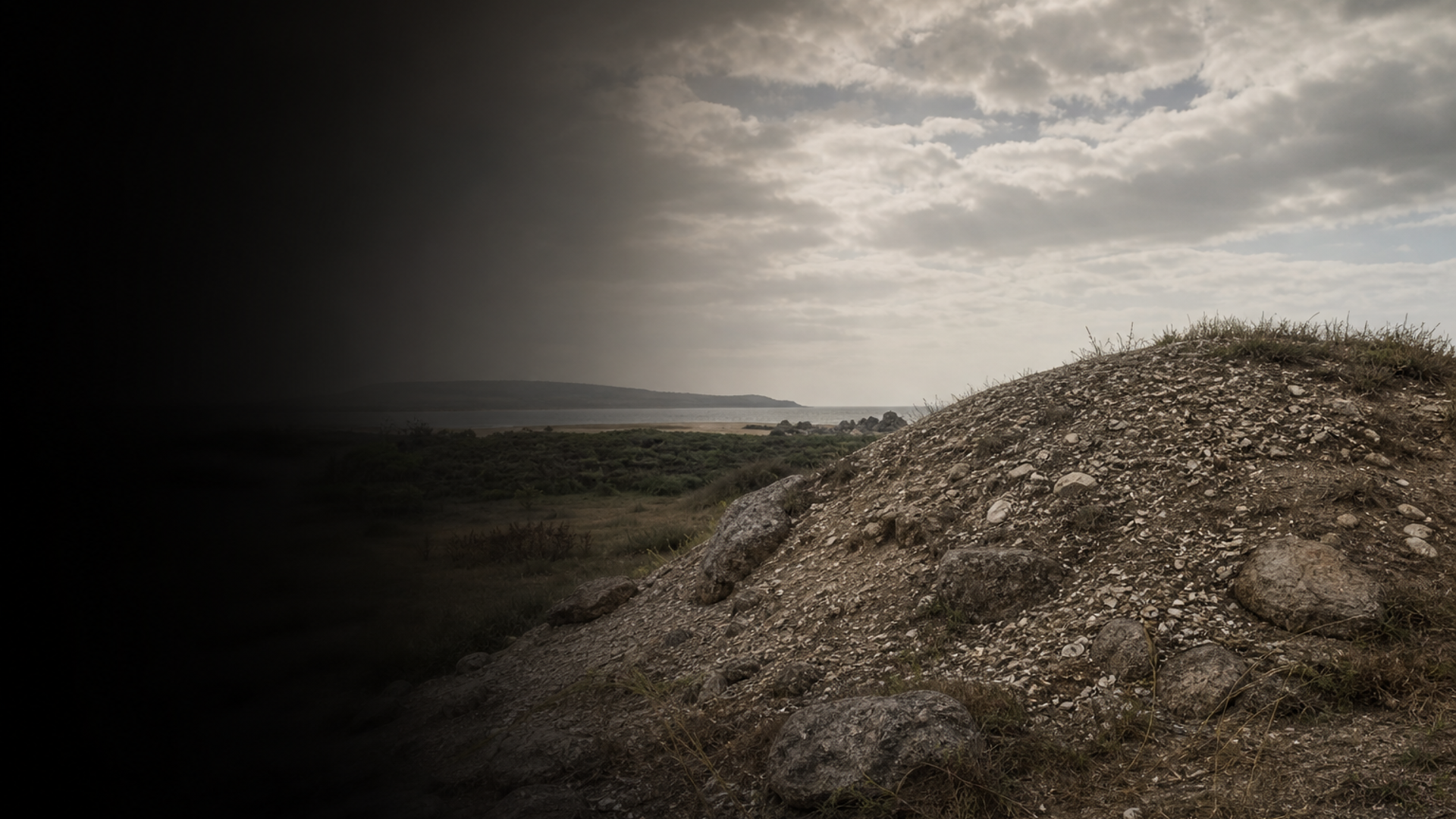
The Vau‑Una find sits within the long, undulating story of the sambaqui tradition — the coastal shell‑mound builders whose refuse and monuments still punctuate Brazil’s Atlantic shore. Archaeological data indicates that shell middens and associated burials along the Brazilian coast were produced by communities exploiting rich marine ecologies for millennia; some sambaqui complexes began forming thousands of years before European contact. The Vau site (Sta. M. Vitória) yielded a human sample dated to cal. 1318–1409 CE (about 600 years before present), placing it in the late pre‑contact period of northeastern Brazil.

Material traces — layered shell, fish bone, charcoal lenses and occasional human interments — suggest repeated seasonal or year‑round use of nearshore resources. Limited evidence from Vau points to a community embedded in coastal lifeways: shell accumulation both as refuse and as architecture, hearth concentrations for processing marine foods, and burial features within or adjacent to midden deposits. Archaeological interpretations of social complexity at sambaqui sites range from small kin‑based foragers to sizable, sedentary groups with ritualized mound construction. However, for Vau‑Una the data are sparse: a single securely dated genetic sample anchors the site temporally but cannot by itself resolve larger questions about population continuity, mobility, or social hierarchy. Where archaeological inference is thin, we flag uncertainty and emphasize the need for additional excavation and dating to build a fuller picture.

  • Vau sample dated to cal. 1318–1409 CE (≈600 BP)
  • Sambaqui tradition spans millennia of coastal shell‑mound building
  • Limited site data: inferences remain provisional
Chapter IV

Daily Life & Society

Archaeological traces from sambaqui contexts evoke a coastal world shaped by tide and harvest — a rhythm of shells, fish, and gatherings. At sites like Vau, midden stratigraphy preserves repeated meals: thick deposits of bivalves, fish vertebrae, crustacean remains, and tool‑making debris. Archaeological data indicates specialized exploitation of nearshore and estuarine environments, with evidence for fishing technologies (bone and stone points), shellfish processing hearths, and the curation of tools made from local raw materials.

The architecture of daily life is written in mound form. Shell accumulations could function as durable living platforms, burial terraces, or communal markers visible across the lagoonal landscape. Burials within sambaquis suggest ritual investment in place: individuals interred with varying treatments hint at social distinctions, though Vau’s single genetic sample prevents firm conclusions about status or kinship patterns at this site specifically. Artefactual variability at better‑studied sambaquis points to trade and contact: exotic stones and non‑local shells at some sites imply exchange networks along the coast.

Cinematic visions of daily life — children sorting shells in slanting light, fish smoke curling above hearths, communities tending shared middens — are supported by stratified deposits, but many nuances remain uncertain at Vau. The archaeological record indicates probable sedentism or repeated seasonal aggregation, yet sample limitations require cautious interpretation.

  • Diet dominated by shellfish, fish, and coastal resources
  • Middens served multiple roles: refuse, architecture, and ritual space
Chapter V

Genetic Profile

Ancient DNA from the Vau‑Una burial provides a direct, if solitary, genetic window into the people who shaped sambaqui landscapes. The single sampled individual carries Y‑chromosome haplogroup Q and mitochondrial haplogroup B. In broad terms, Y‑Q is a lineage commonly associated with Indigenous American paternal ancestry, and mtDNA B is one of the major maternal lineages documented across the Americas. These signals align with expectations for pre‑contact coastal populations of South America and support an Indigenous genetic signature at Vau.

Crucially, the dataset is very small (sample count = 1). Where sample count is low (<10), conclusions about population structure, sex‑biased migration, or continuity with modern groups are necessarily preliminary. One male‑line Q result cannot resolve fine‑scale demographic events, nor can a single mtDNA B haplotype capture maternal diversity across the sambaqui tradition. Archaeological context helps: the burial’s date (1318–1409 CE) places the genetic data before documented colonial demography, allowing tentative statements about pre‑contact ancestry.

Integrative interpretation — combining the shellmound archaeological record with more extensive ancient and modern DNA sampling — will be required to test models of coastal continuity, inland contact, and post‑contact population dynamics. For now, the Vau‑Una genetics provide evocative, consistent evidence for Indigenous American lineages in late‑precontact northeastern Brazil, while underscoring the need for many more samples to draw robust conclusions.

  • Y‑haplogroup Q and mtDNA B indicate Indigenous American lineages
  • Single sample: findings are provisional and require larger datasets
Chapter VI

Legacy & Modern Connections

The Vau‑Una burial is a fragment of a long coastal biography that continues to shape Brazil’s Atlantic shores. Sambaqui monuments are both ecological archives and cultural memory‑places: they preserve menus, technologies, and burial practices that speak to sustained human engagement with marine landscapes. Genetic signals from Vau suggest threads of continuity between late‑precontact inhabitants and the broader tapestry of Indigenous American ancestry.

At the same time, continuity should not be overstated from a single sample. Archaeological data indicates regional variation across sambaqui sites; modern coastal communities today may inherit complex mixtures of ancestry shaped by centuries of migration and interaction. The Vau find encourages ethical collaboration with descendant communities, targeted sampling to increase statistical power, and preservation of coastal heritage from erosion and development. In museum and lab alike, the story of Vau‑Una asks us to listen closely to both shell and genome — and to treat preliminary results as invitations to deeper investigation.

  • Sambaqui sites are cultural and ecological archives linking past and present
  • Genetic continuity plausible but unproven from a single sample; further study needed
AI Powered

AI Assistant

Ask questions about the Vau‑Una Sambaqui — ca. 600 BP culture

AI Assistant by DNAGENICS

Unlock this feature
Ask questions about the Vau‑Una Sambaqui — ca. 600 BP culture. Our AI assistant can explain genetic findings, historical context, archaeological evidence, and modern connections.
Sample AI Analysis

The Vau‑Una Sambaqui — ca. 600 BP culture represents a fascinating chapter in human history...

Genetic analysis reveals connections to earlier populations while showing evidence of unique adaptations and cultural innovations. The ancient DNA samples provide insights into migration patterns, social structures, and the biological relationships between ancient populations.

This is a preview of the AI analysis. Unlock the full AI Assistant to explore detailed insights about:

  • Genetic composition and ancestry
  • Migration patterns and origins
  • Daily life and cultural practices
  • Modern genetic legacy
Use code for 30% off Expires May 17