Menu
Store
Blog
North Queensland, Australia

Voices of North Queensland

Ancient coastal lifeways and genetic echoes before European contact

410 CE - 1788 CE
Scroll to begin
Chapter I

The Story

Understanding the Voices of North Queensland culture

Small ancient DNA sample set (3) from Cairns and Weipa illuminates pre‑European North Queensland life between 410–1788 CE. Archaeology and genetics hint at deep Aboriginal continuity, but limited samples make conclusions preliminary.

Time Period

410–1788 CE

Region

North Queensland, Australia

Common Y-DNA

F (1 sample)

Common mtDNA

P (2), M (1)

Chapter II

Timeline

Key moments in the history of this culture

65000 BCE

Initial peopling of Sahul

Archaeological and genetic evidence indicates anatomically modern humans reached Sahul (Australia–New Guinea) tens of thousands of years ago, setting the deep time backdrop for later regional cultures.

Chapter III

Origins & Emergence

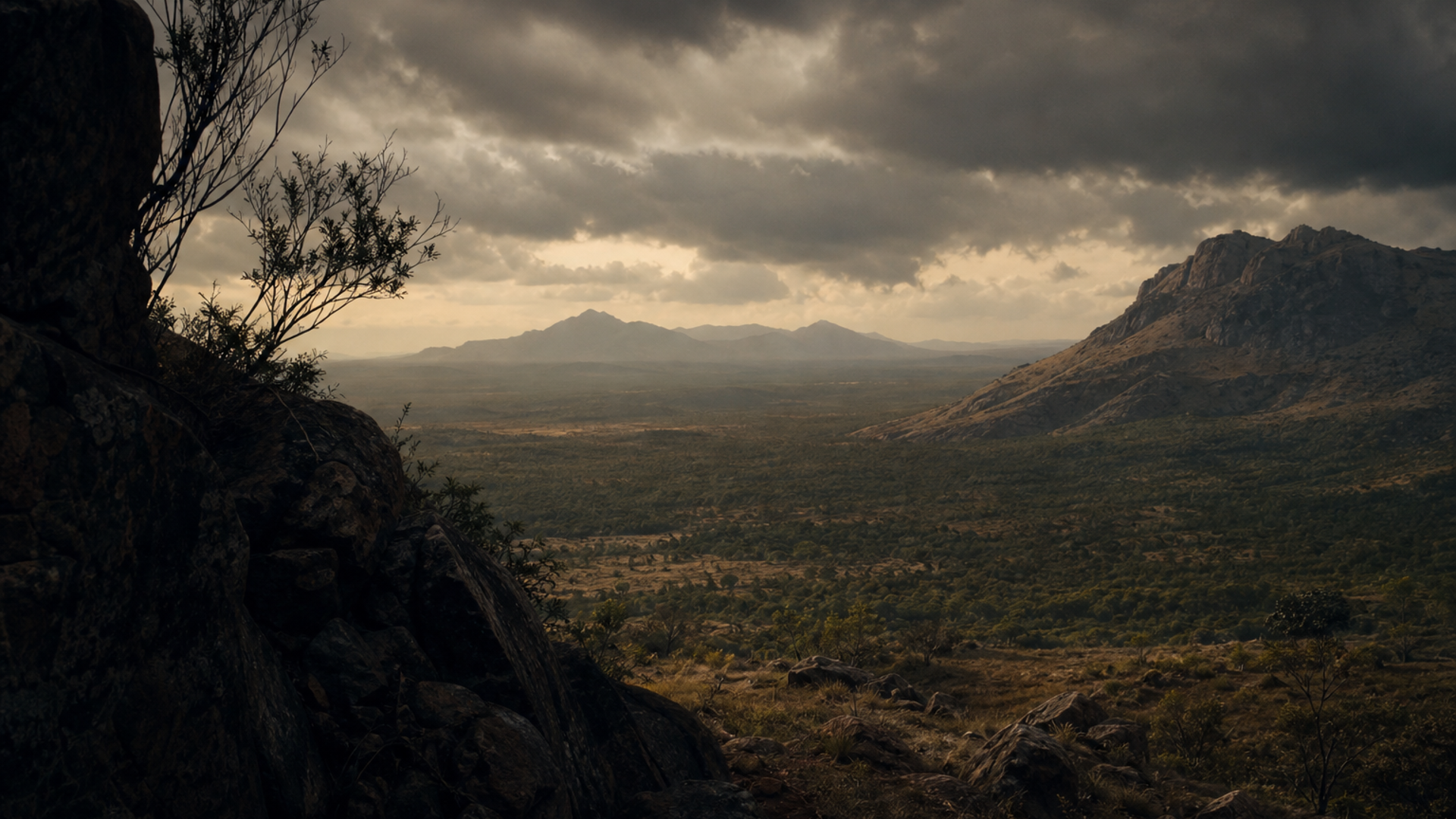
The coastal and hinterland landscapes of North Queensland—sweeping mangroves, rocky headlands, and monsoon forests—retained human stories across millennia. Archaeological surveys and limited excavations near the Mulgrave River (Cairns) and coastal deposits around Weipa attest to long‑term Aboriginal occupation in this region during the centuries before European contact (samples dated c. 410–1788 CE).

Archaeological data indicates continuity of coastal foraging economies: shell middens, lithic scatters and ephemeral occupation surfaces are widespread across northern Queensland. Nearby landscape features such as the Quinkan rock art region (Laura, Cape York) illustrate a deep visual tradition that likely resonates with the symbolic worlds of local communities, even if direct connections to the Cairns and Weipa samples are unresolved.

Genetic and archaeological perspectives converge on a broader picture: Indigenous peoples of northern Australia are descendants of the first colonizers of Sahul, with cultural adaptations shaped by coastal resources and seasonal climates. Limited evidence suggests regional variability in material culture and mobility patterns, but the paucity of securely dated, well‑contextualized sites in this immediate sample set requires caution. Further excavation and ancient DNA sampling are essential to refine models of regional emergence and continuity.

  • Occupation attested near Mulgrave River (Cairns) and Weipa
  • Material traces: shell middens, lithic scatters, rock‑art traditions regionally
  • Broader continuity with Sahul peopling; local variability likely
Chapter IV

Daily Life & Society

The daily world of coastal North Queenslanders was shaped by tides, seasonal rains and the riches of sea and river. Archaeological remains—shell middens, fishbone and faunal fragments, stone tool debris—point to a mixed economy of fishing, shellfish gathering, and hunting of marsupials and birds. Small campsites and repeated occupation of favoured estuaries suggest a rhythm of mobility tuned to resource availability.

Social life would have been organized through kin networks, songlines and place‑based knowledge passed orally across generations. Material culture was often lightweight and adaptive: grindstones, flaked stone tools, and organic implements suited to a coastal forager lifestyle. Rock art and engraved motifs across North Queensland testify to rich symbolic systems and ancestral narratives that anchored people to Country.

Archaeological data indicates trade and interaction across the Cape York and northeast Queensland coasts, exchanging stone tools, shell ornaments and knowledge. However, for the specific Cairns and Weipa samples the archaeological contexts are limited; inferences about social complexity and exchange remain provisional until broader excavations and multidisciplinary studies expand the dataset.

  • Coastal foraging: fishing, shellfish, and targeted hunting
  • Kinship, songlines and place‑based knowledge structured social life
Chapter V

Genetic Profile

Ancient DNA from three individuals dated between 410 CE and 1788 CE provides a tentative genetic glimpse into pre‑European North Queensland. The small sample set yields one Y‑chromosome assignment to haplogroup F and three mitochondrial haplogroups: two individuals with mtDNA P and one with mtDNA M.

Mitochondrial haplogroups P and M are part of lineages documented in Indigenous Australian and broader Sahul contexts; their presence here aligns with expectations of maternal continuity in the region. The single Y‑lineage attributed to haplogroup F should be interpreted cautiously: F is a broad, basal clade ancestral to many downstream lineages, and a lone sample cannot characterize paternal diversity across the area.

Because only three genomes are available, all genetic interpretations are preliminary. The dataset is consistent with long‑term regional continuity and genetic affinity to other ancient and modern Aboriginal communities of northern Australia, but small sample counts preclude strong claims about population structure, sex‑biased mobility, or micro‑regional differentiation. Future sampling — particularly well‑dated burials and high‑coverage genomes — will be critical to test hypotheses about continuity, contact, and demographic shifts prior to 1788 CE.

  • mtDNA: P (2 samples) and M (1 sample) — consistent with Australian maternal lineages
  • Y‑DNA: F (1 sample) — single paternal lineage; interpret with caution
Chapter VI

Legacy & Modern Connections

The ancient voices preserved in stone, shell and DNA speak to cultural endurance across North Queensland. Modern Aboriginal communities in the region maintain deep ties to Country, languages and practices that echo millennia of adaptation to coastal and savannah environments.

Genetic continuity suggested by mitochondrial lineages supports connections between past inhabitants and present‑day Indigenous Australians, but limited sampling means that such links must be described as provisional rather than definitive. Collaborative research with Indigenous communities, respectful repatriation where appropriate, and expanded ancient DNA and archaeological programs are essential to transform preliminary genetic glimpses into robust narratives of ancestry and continuity. In museum and scientific contexts, these remains should be presented as part of living cultural landscapes rather than isolated curiosities.

  • Genetic signals hint at continuity between ancient individuals and modern Aboriginal groups
  • Community collaboration and more samples are essential to strengthen ancestral links
AI Powered

AI Assistant

Ask questions about the Voices of North Queensland culture

AI Assistant by DNAGENICS

Unlock this feature
Ask questions about the Voices of North Queensland culture. Our AI assistant can explain genetic findings, historical context, archaeological evidence, and modern connections.
Sample AI Analysis

The Voices of North Queensland culture represents a fascinating chapter in human history...

Genetic analysis reveals connections to earlier populations while showing evidence of unique adaptations and cultural innovations. The ancient DNA samples provide insights into migration patterns, social structures, and the biological relationships between ancient populations.

This is a preview of the AI analysis. Unlock the full AI Assistant to explore detailed insights about:

  • Genetic composition and ancestry
  • Migration patterns and origins
  • Daily life and cultural practices
  • Modern genetic legacy
Use code for 35% off Expires May 20