Menu
Store
Blog
Argentina_MitrePeninsula_Haush_400BP Tierra del Fuego, Beagle Channel, Strait of Magellan (Argentina & Chile)

Voices of the Southern Sea

Archaeology and DNA from Tierra del Fuego to the Strait of Magellan

4040 BCE - 1960 CE
6 Ancient Samples
Scroll to begin
Chapter I

The Story

Understanding the Voices of the Southern Sea culture

Archaeological and genetic evidence from 46 samples (4040 BCE–1960 CE) reveals long-standing maritime adaptations in Tierra del Fuego and the Beagle Channel, where maternal D and C lineages and Y-haplogroup Q predominate. Interpretations are regionally rich but unevenly sampled.

Time Period

4040 BCE – 1960 CE

Region

Tierra del Fuego, Beagle Channel, Strait of Magellan (Argentina & Chile)

Common Y-DNA

Q (20 samples), P (2 samples)

Common mtDNA

D (27), C1b (11), C (4), D1g (2), D1 (1)

Chapter II

Timeline

Key moments in the history of this culture

4040 BCE

Earliest sampled coastal occupation

Directly dated materials in the dataset indicate human presence along northern Tierra del Fuego by 4040 BCE, showing early maritime resource use.

2400 BCE

Laguna Toro sequence

Laguna Toro site evidence (~2400 years ago in related records) records sustained shellfish exploitation and seasonal camps.

1200 BCE

Regional specialization

Archaeological horizons suggest increasing maritime specialization across the western archipelagos and Beagle Channel.

1900 CE

Historic era and contact

Historical records document major cultural disruptions to Yamana, Kaweskar, Selknam societies during the 19th–20th centuries.

Chapter III

Origins & Emergence

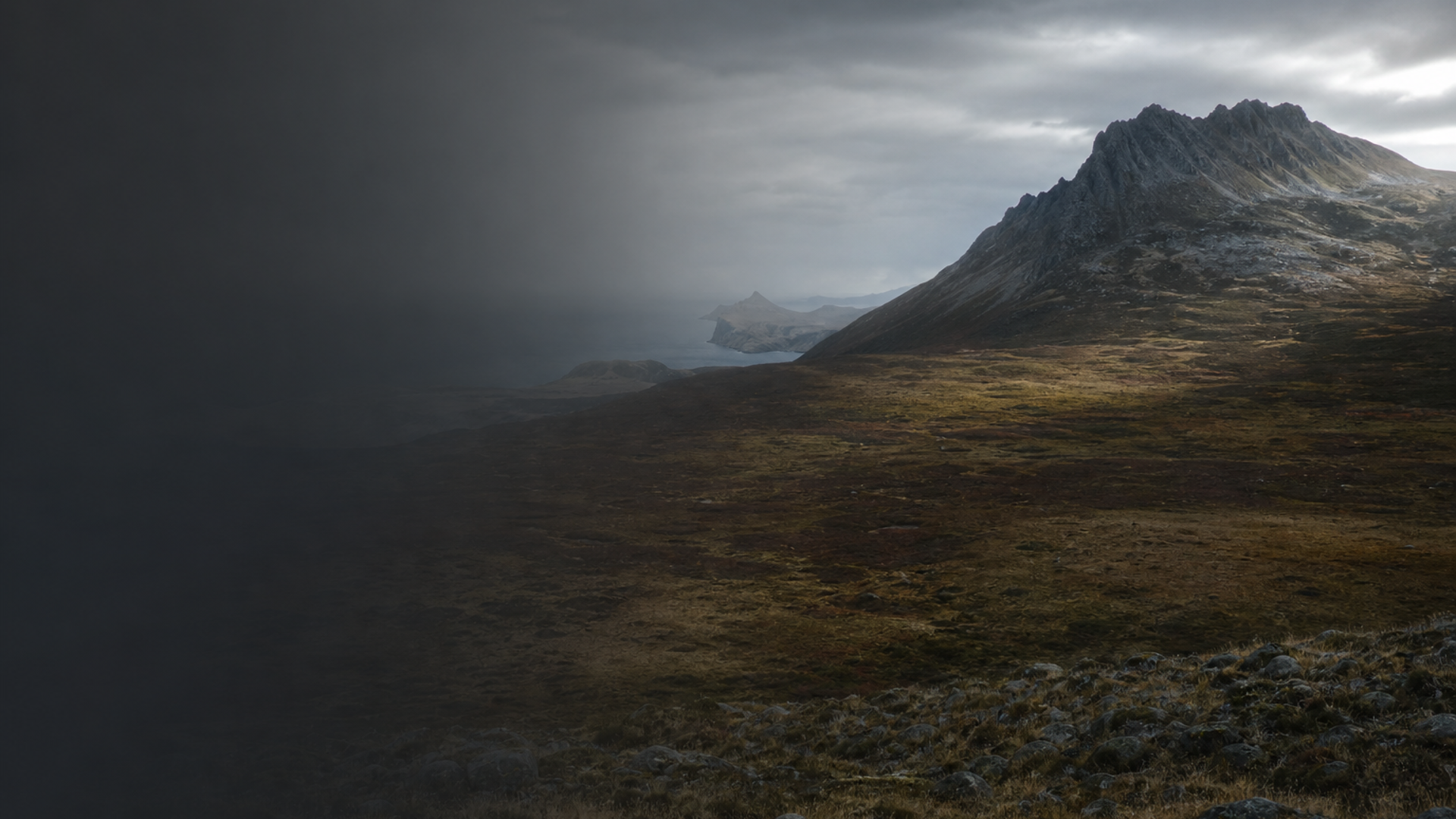
From the thin light of southern horizons comes a long human story written in shells, bone, and DNA. Archaeological data indicates coastal foraging economies were established by the mid-Holocene: the sequence of sites sampled here ranges from an early occupation dated to 4040 BCE through millennia of adaptation along the Strait of Magellan and around Tierra del Fuego. Key locales represented in the dataset include La Arcillosa 2 and Laguna Toro (Argentina), Mitre Peninsula sites, and several camps and shell middens along the Beagle Channel and the Strait of Magellan in Chile and Argentina.

These places preserve layered deposits of hearths, stone tools, and marine faunal remains that suggest sophisticated use of boats, tidal knowledge, and seasonal rounds. Limited evidence suggests technological conservatism alongside local innovation: small, portable toolkit elements recur, while organic craft—wooden paddles, skin coverings—leave only ephemeral traces. Across time, archaeological horizons align with named cultural assemblages in ethnography and history: the Yamana (Yámana/ Yaghan) of the Beagle Channel, the Kaweskar in the western archipelagos, and the Selknam (Ona) on the northern island margins.

Genetic data from multiple sites help anchor these archaeological chronologies, but preservation and sampling bias mean that our picture remains partial. Where direct dates exist, they allow correlation of changing tool types and settlement patterns with shifts in maternal and paternal lineage frequencies, offering a more multidimensional view of emergence than artefacts alone.

  • Earliest sampled occupation in dataset: 4040 BCE
  • Key sites: La Arcillosa 2, Laguna Toro, Mitre Peninsula, Beagle Channel sites
  • Archaeological indicators of long-term maritime adaptation
Chapter IV

Daily Life & Society

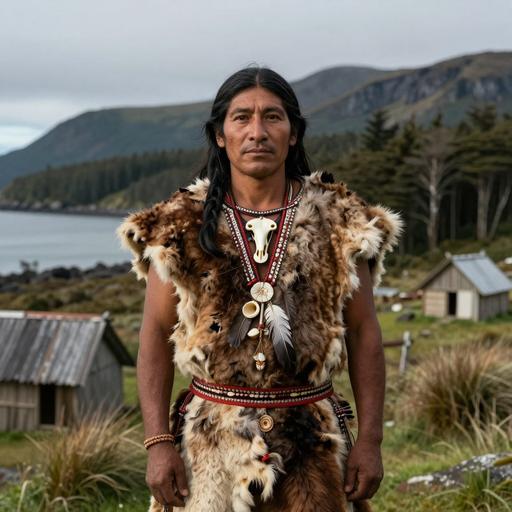
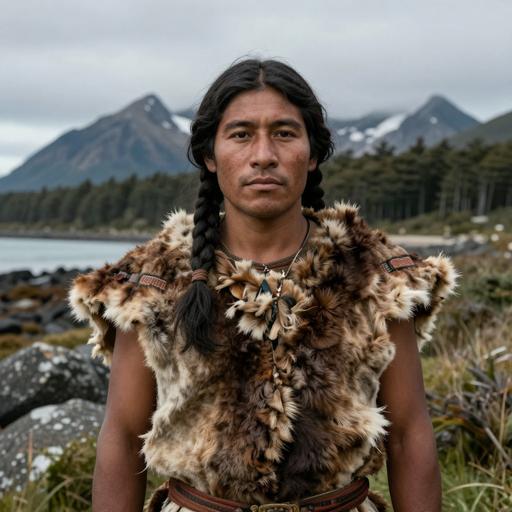
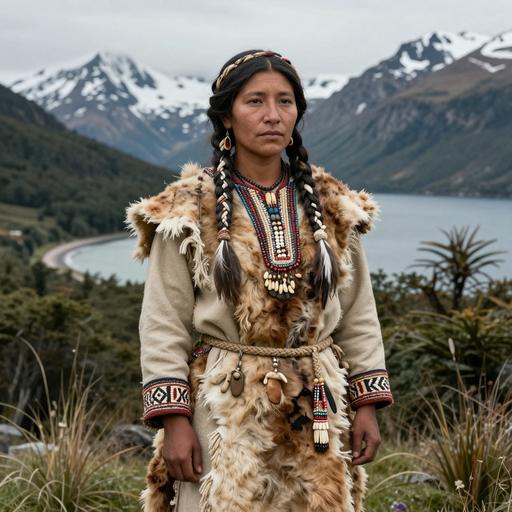
The lives behind the bones were shaped by saltwind and shell. Archaeological assemblages from the Beagle Channel and Tierra del Fuego record hearthstones, dense shell middens, fish and marine mammal bones, and small lithic tools consistent with rapid tool maintenance and a mobile maritime economy. Ethnographic analogues and archaeological context indicate dugout or skin boats, harpoons, and a deep knowledge of tidal cycles and seabird behavior—skills that would have structured daily labor and seasonal movement.

Settlement patterning appears flexible: small camps and task-specific locales cluster near rich intertidal zones, while larger aggregation sites—sometimes interpreted as seasonal gathering places—are recognizable in the archaeological record. Material culture suggests social networks for sharing raw materials and finished tools across channels and peninsulas; obsidian and exotic stone fragments hint at exchange. Burials, where preserved, show varied mortuary practices; however, differential preservation means such patterns are unevenly sampled.

Archaeological data indicates that by the late Holocene, cultural identities known from historical records (Yamana, Kaweskar, Selknam) were regionally specialized into maritime, canoe-centered lifeways or inland adaptations, but these ethnographic labels should be applied carefully to archaeological horizons. Colonial contact and recent history have altered the material and demographic record, making reconstruction of pre-contact social life a careful balance of evidence and restraint.

  • Maritime foraging dominated: shell middens and marine mammal remains
  • Flexible mobility with seasonal aggregation sites and exchange networks
Chapter V

Genetic Profile

The genetic portrait from these 46 samples ties biological ancestry to archaeology in evocative ways. Maternal lineages are dominated by haplogroup D (27 of 46 samples, ~59%) and C1b (11 samples, ~24%), with smaller counts of other C and D sublineages. These mtDNA clades are among the well-established founding Native American mitochondrial lineages and their prevalence here is consistent with deep matrilineal continuity in southern South America.

Y-chromosome data from the cohort show a strong presence of haplogroup Q (20 samples) and a small number of P (2 samples). Haplogroup Q is widely reported across the Americas and aligns with paternal ancestry patterns expected for Indigenous populations of Patagonia and Tierra del Fuego. Together, the dominance of D/C maternal lineages and Q paternal lineages reinforces the interpretation of longstanding local descent, though the sample set includes spatial clustering that may skew frequencies for particular sites.

Several important caveats apply: some sites in the dataset contribute few individuals (often fewer than 10), so site-by-site inferences are preliminary. Temporal spread across 6,000+ years complicates simple continuity models—population turnover, drift, and localized admixture events are possible. Nevertheless, when combined with stratified archaeological contexts (La Arcillosa 2, Laguna Toro, Mitre Peninsula, Beagle Channel sites), the genetic data provide powerful evidence for demographic stability in maternal lineages and a broadly shared paternal heritage across the southern archipelagos.

  • mtDNA dominated by D (≈59%) and C1b (≈24%) lineages
  • Y-DNA dominated by haplogroup Q; P is rare in the dataset
  • Several sites have <10 samples—site-level conclusions are preliminary
Chapter VI

Legacy & Modern Connections

The archaeological and genetic traces from these islands extend into living memory and contemporary identities. Ethnonyms recorded historically—Yamana (Yagán), Kaweskar (Alacaluf), Selknam (Ona), and Aonikenk (Tehuelche)—reflect cultural adaptations to maritime and inland ecologies. Genetic continuity in maternal D and C lineages and the prevalence of Y-haplogroup Q underscore biological links between archaeological populations and present-day Indigenous communities in southern Chile and Argentina, though centuries of contact, displacement, and admixture complicate direct one-to-one mappings.

Modern genetic ancestry testing can detect signals consistent with these ancient lineages, but interpretation must be cautious: cultural continuity is not proved solely by shared haplogroups, and many social histories—languages, rituals, territorial claims—are not captured by DNA. Collaboration with descendant communities, respectful curation of remains, and transparent communication about uncertainty are essential. In museums and genetic reports, these remains are best presented as part of a living story—one of resilience, deep maritime knowledge, and ongoing cultural significance for the peoples of the southern sea.

  • Genetic patterns suggest links to historic Yamana, Kaweskar, and Selknam communities
  • Modern ancestry signals exist but require contextual, community-led interpretation
Chapter VII

Sample Catalog

6 ancient DNA samples associated with the Voices of the Southern Sea culture

Ancient DNA samples from this era, providing genetic insights into the people who lived during this period.

6 / 6 samples
Portrait Sample Country Era Date Culture Sex Y-DNA mtDNA
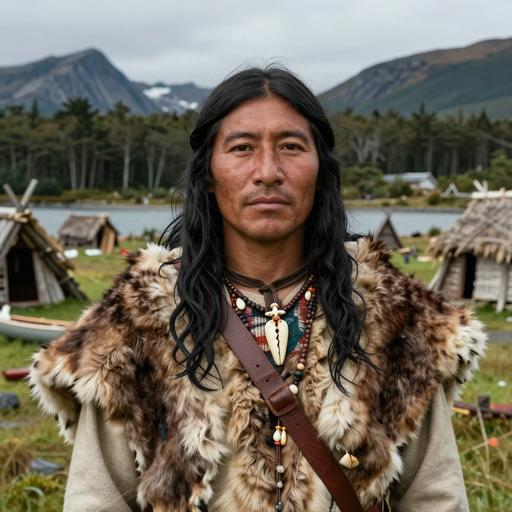
Portrait of ancient individual I12358 from Argentina, dated 1330 CE
I12358
Argentina Argentina_MitrePeninsula_Haush_400BP 1330 CE Indigenous Cultures of South America M Q-L54 C
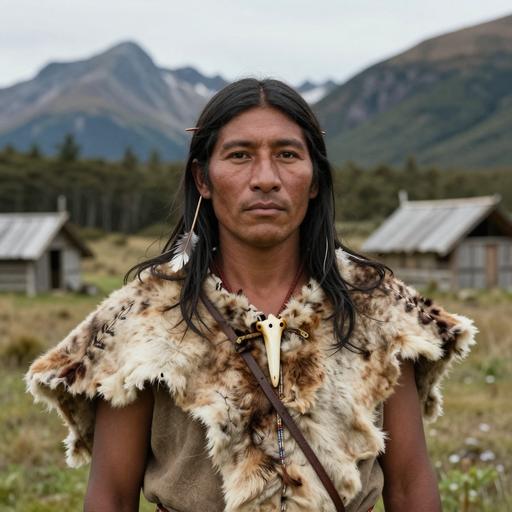
Portrait of ancient individual I12356 from Argentina, dated 1450 CE
I12356
Argentina Argentina_MitrePeninsula_Haush_400BP 1450 CE Indigenous Cultures of South America M Q-Z780 D1
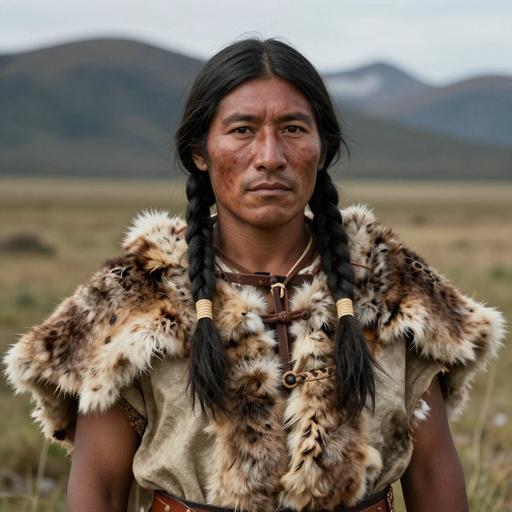
Portrait of ancient individual I12357 from Argentina, dated 1470 CE
I12357
Argentina Argentina_MitrePeninsula_Haush_400BP 1470 CE Indigenous Cultures of South America F - D1g-a
Portrait of ancient individual I12359 from Argentina, dated 1280 CE
I12359
Argentina Argentina_MitrePeninsula_Haush_400BP 1280 CE Indigenous Cultures of South America M Q-M3 C1b
Portrait of ancient individual I12361 from Argentina, dated 1450 CE
I12361
Argentina Argentina_MitrePeninsula_Haush_400BP 1450 CE Indigenous Cultures of South America M Q-L54 D1g-a
Portrait of ancient individual I12360 from Argentina, dated 1460 CE
I12360
Argentina Argentina_MitrePeninsula_Haush_400BP 1460 CE Indigenous Cultures of South America M Q-L53 D1g-a
AI Powered

AI Assistant

Ask questions about the Voices of the Southern Sea culture

AI Assistant by DNAGENICS

Unlock this feature
Ask questions about the Voices of the Southern Sea culture. Our AI assistant can explain genetic findings, historical context, archaeological evidence, and modern connections.
Sample AI Analysis

The Voices of the Southern Sea culture represents a fascinating chapter in human history...

Genetic analysis reveals connections to earlier populations while showing evidence of unique adaptations and cultural innovations. The ancient DNA samples provide insights into migration patterns, social structures, and the biological relationships between ancient populations.

This is a preview of the AI analysis. Unlock the full AI Assistant to explore detailed insights about:

  • Genetic composition and ancestry
  • Migration patterns and origins
  • Daily life and cultural practices
  • Modern genetic legacy
Use code for 35% off Expires May 21