Menu
Store
Blog
Europe_Medieval Italy, Hungary, Baltic–Finnic region

Western Christendom: Medieval Genomes

Archaeology and DNA tracing lives across Italy, Hungary, and the Baltic–Finnic fringe (700–1500 CE)

700 CE - 1500 CE
4 Ancient Samples
Scroll to begin
Chapter I

The Story

Understanding the Western Christendom: Medieval Genomes culture

A synthesis of archaeological contexts and 24 medieval genomes (700–1500 CE) from sites in Italy, Hungary, and the northern Baltic–Finnic region. Genetic signals (Y: R, L; mtDNA: H, T, T2b, HV, J) illuminate mobility, maternal diversity, and unexpected southern links within medieval Christian Europe.

Time Period

700–1500 CE

Region

Italy, Hungary, Baltic–Finnic region

Common Y-DNA

R (4), L (2)

Common mtDNA

H (7), T (3), T2b (2), HV (2), J (2)

Chapter II

Timeline

Key moments in the history of this culture

800 CE

Carolingian consolidation reshapes Western Europe

Expansion of ecclesiastical organization and feudal structures across much of Western Europe, setting frameworks for medieval parish and monastic life.

1000 CE

Kingdom of Hungary consolidates

Hungary emerges as a Christian kingdom with Székesfehérvár rising as a royal and ecclesiastical center, impacting regional burial and settlement patterns.

1250 CE

Urban growth in Tuscany and Adriatic trade

Cities like Siena expand; Adriatic trading networks intensify, connecting Foggia-area ports with broader Mediterranean exchange.

1348 CE

Black Death arrives in Europe

The pandemic causes demographic collapse and social upheaval, leaving clear signatures in burial assemblages across medieval cemeteries.

Chapter III

Origins & Emergence

The period 700–1500 CE saw the consolidation of Christian institutions and shifting patterns of settlement across Western Christendom, from Tuscan hilltop towns to Hungarian royal centers and the coastal and inland communities of the Baltic–Finnic fringe. Archaeological strata at sites such as Chiusi (Tuscany), early-medieval cemeteries around Siena, and urban ecclesiastical complexes in Foggia provide material anchors: stone church foundations, stratified burials, and grave assemblages that record continuity and change after the Roman collapse.

In the Carpathian Basin, Székesfehérvár and the associated Basilica of the Assumption functioned as royal and ecclesiastical nodes by the 11th century; funerary contexts there show the interplay of indigenous traditions and imported ritual forms. In the north, burial grounds near Tartu Püha Maarja (St. Mary) and sites recorded as Tudulinna (Ida-Viru region) capture coastal and inland maritime contacts that intensified in the High Middle Ages.

Archaeological data indicates both long-term local continuity in rural Tuscany and episodic influxes of people tied to trade, pilgrimage, and political change. The genomic dataset of 24 sampled individuals (700–1500 CE) offers a direct but regionally uneven window into these processes: it corroborates archaeological signals of stability in some places and mobility in others, while also revealing lineage-level diversity invisible to material culture alone. Limited evidence cautions against broad generalizations; regional sampling remains incomplete.

  • Material culture links Tuscany, Foggia, Székesfehérvár, Tartu/Tudulinna
  • Churches and urban cemeteries mark social and political centers
  • 24 genomes provide direct lineage evidence but sampling is uneven
Chapter IV

Daily Life & Society

Archaeological contexts give texture to medieval lifeways. In Tuscany (Siena, Chiusi) excavations reveal layered occupations: farmhouse remains, artisan debris, and parish burials that speak of agrarian households tied to local manors and episcopal frameworks. Foggia’s San Lorenzo and Cancarro cemeteries contain urban and semi-urban interments with diverse grave goods—textile fragments, metalwork, and indicators of trade—suggesting economic links across the Adriatic.

At Székesfehérvár, the royal basilica and surrounding burial grounds indicate high-status funerary practice alongside more modest community graves. Osteological analysis from these sites often indicates mixed diets, with isotopic data (where available) reflecting a Mediterranean base augmented by inland cereals and occasional marine or freshwater protein.

In the northern sites (Tartu region, Tudulinna), the archaeological record is marked by a blend of local mortuary forms and imported objects tied to Hanseatic and Baltic trade networks. Everyday life here could be intensely local yet connected through seasonal mobility, trade, and religious pilgrimage.

Archaeology indicates stratified societies—local elites tied to churches and wider networks of craftsmen and merchants—while also revealing the ordinary texture of medieval life: childhood, artisanal production, and parish ritual. When paired with DNA, these material traces help differentiate rooted lineages from migrants and transient residents.

  • Parish and urban burials reveal social stratification and trade ties
  • Isotopes and osteology show varied diets and mobility patterns
Chapter V

Genetic Profile

The assembled dataset comprises 24 medieval genomes dated between 700 and 1500 CE drawn from Italian (Tuscany, Foggia), Hungarian (Székesfehérvár and ecclesiastical contexts), and northern Baltic–Finnic sites (Tartu area; Tudulinna). This sample size gives a moderate-resolution glimpse into lineage diversity but remains geographically uneven: some regions are better represented than others.

Y-chromosome lineages in the collection are dominated numerically by haplogroup R (4 individuals), with two occurrences of haplogroup L. Haplogroup R (a broad, pan-European lineage in its various subclades) is expected in medieval European men and concords with archaeological expectations of continuity. By contrast, the presence of L—more commonly associated with South Asian and southwestern Asian populations in modern reference panels—is unexpected in a medieval European context. Archaeological and historical explanations include rare long-distance migration, mercantile links, or later relocation; however, because L occurs at low counts (n=2), this signal should be treated cautiously pending broader sampling and phylogenetic resolution.

Mitochondrial diversity is relatively high: H (7), T (3), T2b (2), HV (2), and J (2) indicate predominantly western and southern European maternal lineages. The higher diversity in maternal markers versus the more clustered Y-lineages may reflect sex-biased mobility (women moving between communities via marriage or service) or differential preservation and sampling bias. Overall, genetic data complement archaeological narratives: they confirm regional continuity in many places, reveal pockets of unexpected ancestry, and highlight migration and connectivity across medieval Christian Europe. Given 24 genomes, conclusions are robust for observed patterns but remain preliminary at finer geographic or chronological scales.

  • Moderate dataset (24 genomes) reveals predominant European maternal lineages
  • Unexpected occurrence of Y-haplogroup L (n=2) suggests rare long-distance links; treat cautiously
Chapter VI

Legacy & Modern Connections

The medieval genomic signatures from Western Christendom reverberate in modern populations of Italy, Hungary, and the Baltic–Finnic area. Maternal haplogroups such as H and T persist at high frequencies in contemporary European populations, linking ordinary medieval households to present-day maternal lines. Y-lineage R similarly continues to be a dominant paternal lineage across Europe.

The sporadic presence of atypical lineages (e.g., Y-L) in medieval contexts invites reflection on medieval mobility: merchants, mercenaries, pilgrims, and diplomatic entourages could carry rare ancestries into new regions. Archaeogenetic synthesis helps museums and ancestry platforms narrate these possibilities without overstating them—archaeological context grounds the genome, while DNA reveals the invisible pathways of individuals.

For descendants and researchers alike, these genomes enrich understanding of continuity, migration, and the human texture of medieval Christian institutions. Ethical curation and clear communication about sample limits and uncertainty remain essential: genetic signals illuminate but do not deterministically define cultural identity.

  • Maternal and paternal signals link many medieval individuals to modern European populations
  • Rare lineages illuminate episodic long-distance mobility; interpretations remain provisional
Chapter VII

Sample Catalog

4 ancient DNA samples associated with the Western Christendom: Medieval Genomes culture

Ancient DNA samples from this era, providing genetic insights into the people who lived during this period.

4 / 4 samples
Portrait Sample Country Era Date Culture Sex Y-DNA mtDNA
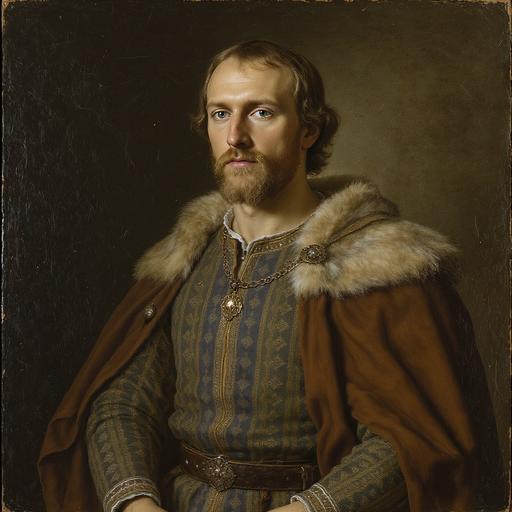
Portrait of ancient individual TPM003 from Finland, dated 700 CE
TPM003
Finland Europe_Medieval 700 CE Western Christendom M - T2b
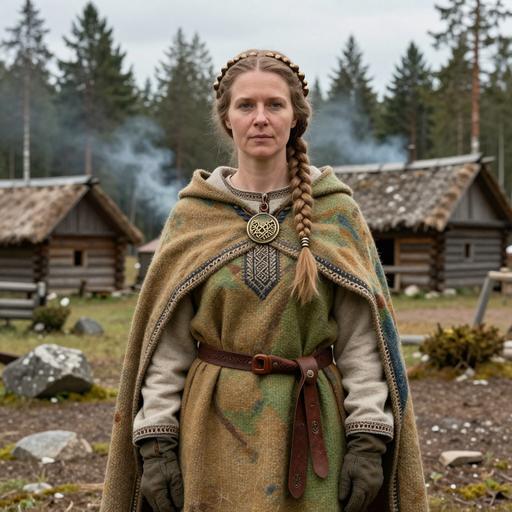
Portrait of ancient individual TUD001 from Finland, dated 700 CE
TUD001
Finland Europe_Medieval 700 CE Western Christendom F - U5a2e
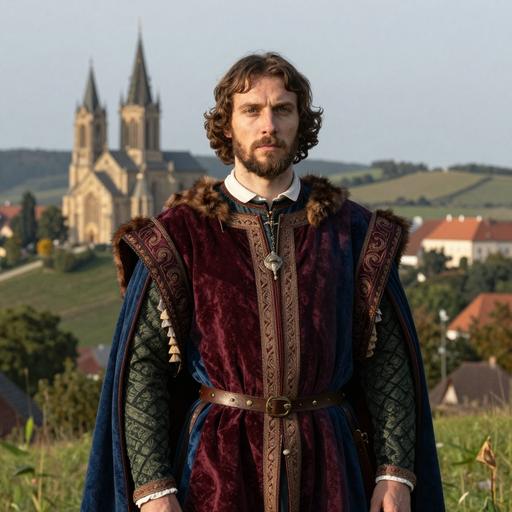
Portrait of ancient individual CJM001 from Hungary, dated 1500 CE
CJM001
Hungary Europe_Medieval 1500 CE Western Christendom M - T2b
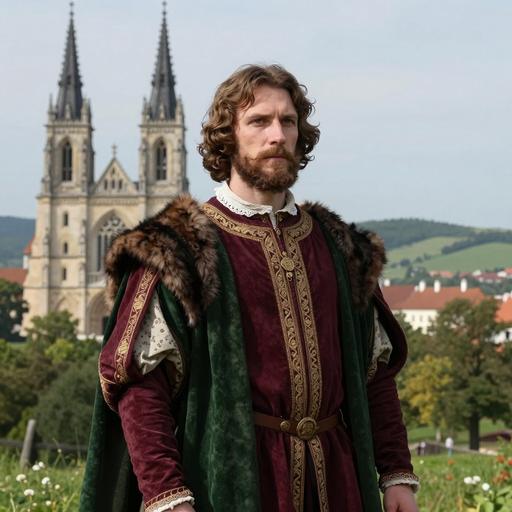
Portrait of ancient individual CKM001 from Hungary, dated 1500 CE
CKM001
Hungary Europe_Medieval 1500 CE Western Christendom M - T2c1+146
AI Powered

AI Assistant

Ask questions about the Western Christendom: Medieval Genomes culture

AI Assistant by DNAGENICS

Unlock this feature
Ask questions about the Western Christendom: Medieval Genomes culture. Our AI assistant can explain genetic findings, historical context, archaeological evidence, and modern connections.
Sample AI Analysis

The Western Christendom: Medieval Genomes culture represents a fascinating chapter in human history...

Genetic analysis reveals connections to earlier populations while showing evidence of unique adaptations and cultural innovations. The ancient DNA samples provide insights into migration patterns, social structures, and the biological relationships between ancient populations.

This is a preview of the AI analysis. Unlock the full AI Assistant to explore detailed insights about:

  • Genetic composition and ancestry
  • Migration patterns and origins
  • Daily life and cultural practices
  • Modern genetic legacy
Use code for 35% off Expires May 20