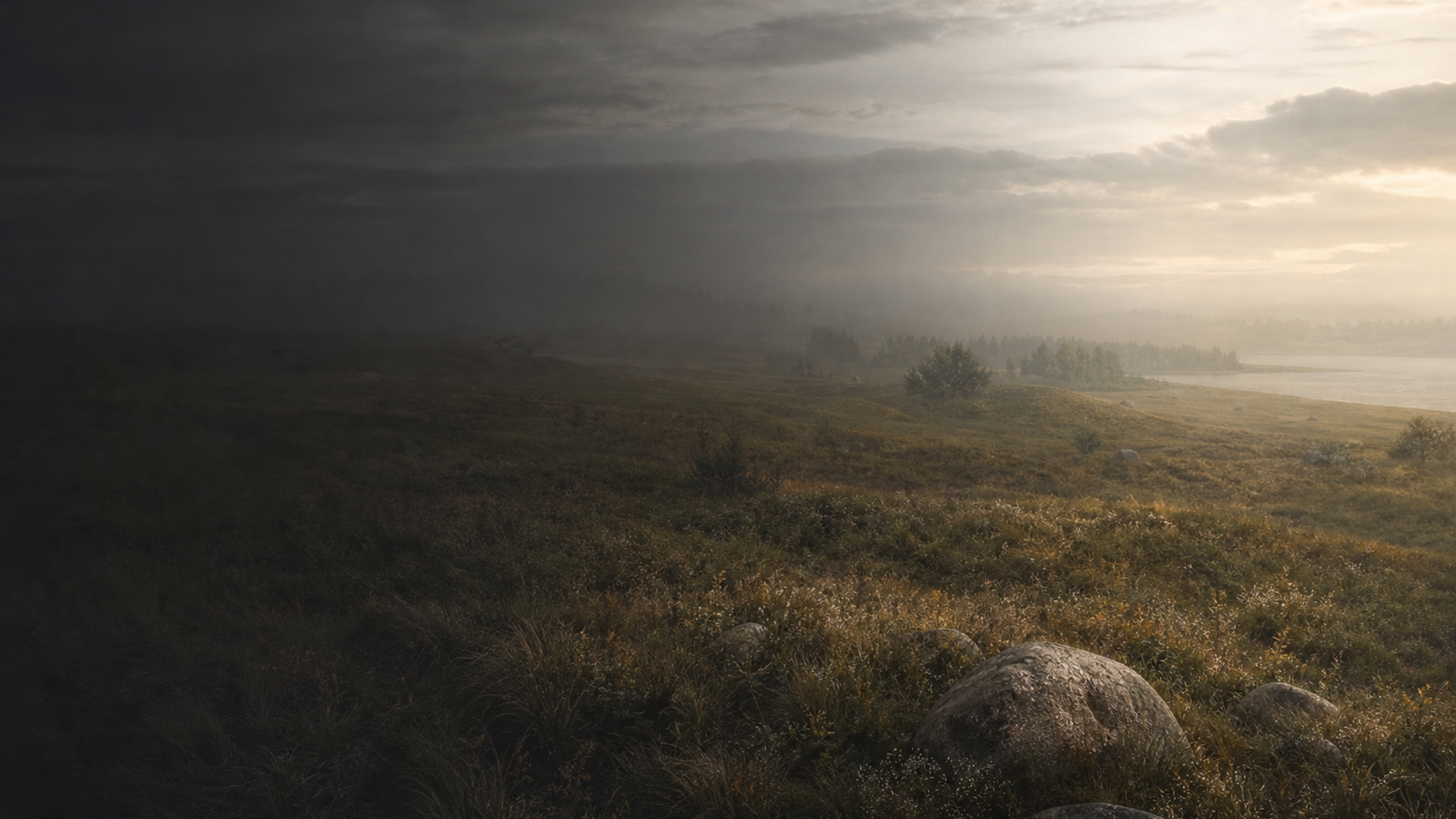
At the watery margins of northern Latvia, communities occupying Zvejnieki between roughly 4330 and 3951 BCE inhabited a landscape of lakes, wetlands and mixed forests. Archaeological excavations at Zvejnieki (Zemgale, Neretas District) reveal a long-lived cemetery and settlement sequence that preserves burial practices, lithic and organic toolkits, and traces of daily life sealed in peat and silts. These layers record a Middle Neolithic horizon that, in many respects, continues earlier Mesolithic lifeways while incorporating new material expressions such as regional pottery styles and locally adapted technologies.
The six genomes currently attributed to Latvia_MN come from this secure Zvejnieki context and are radiocarbon‑anchored to the 4330–3951 BCE window. Archaeological data indicates continuity in resource use—seasonal fishing, fowling and forest gathering—combined with evolving social behaviors visible in grave placement and offerings. Limited evidence suggests the community was deeply rooted in the lake margins rather than the product of a rapid population replacement.
Caveat: with only six genomic samples, demographic reconstructions remain tentative. The genetic picture must be read alongside the rich material record: burial variability, tool traditions and environmental data together offer the best route to understanding how these Middle Neolithic people emerged from earlier forager backgrounds and adapted to changing ecological and cultural landscapes.