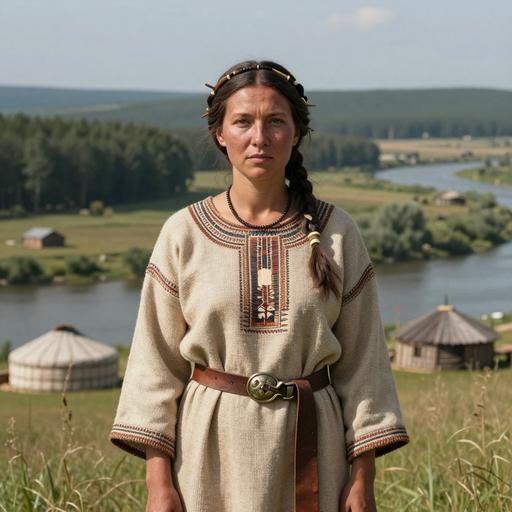
A woman buried in Russia in the Early Bronze Age era

Download PDF creates a visual, rasterized copy. Use Print for selectable text and better assistive-technology support.

Loading Report

Preparing your ancestry journey

Preparing the available report content...

Your report will open automatically.

Skip to main content
Reference library / Sample profile

A woman buried in Russia in the Early Bronze Age era

Explore the recorded context, genetic comparisons and research behind this reference sample.

RussiaEarly Bronze Age Ust-Belaya, Russia

A reference profile describes this sample. It does not establish a personal or family relationship.

AI portrait reconstruction for A woman buried in Russia in the Early Bronze Age era
AI-generated artistic reconstruction, not a photograph of the individual.
Record

Sample details

Recorded details and available lineage markers.

Individual

Siberian individual, Russia

Sample ID: NEO230

Date Range

3022 BCE - 2789 BCE

Cultural Period

Early Bronze Age Ust-Belaya, Russia

Biological Sex

Female

mtDNA Haplogroup

C4

Y-DNA Haplogroup

Not available

Social Role

Hunter (AI estimate, era-typical)

Geography

Location

Where this individual was discovered

Country Russia
Locality Baikal Region. Angara river basin. Mouth of the Belaya River
Chronology

Date range

When this individual lived in the broader context of human history

Siberian individual, Russia 3022 BCE - 2789 BCE
Context

Historical context

Background information associated with the reference record.

The Early Bronze Age Ust-Belaya culture, located in the Siberian region of Russia, represents a fascinating era marked by the transition from the Neolithic lifestyle to more complex societal structures characterized by the usage of bronze. This cultural epoch is named after the village of Ust-Belaya, where significant archaeological findings have contributed to our understanding of the area's early human inhabitants.

Geographic and Environmental Context

Ust-Belaya is situated in the far eastern part of Siberia, a region known for its harsh climatic conditions, including long, severe winters and short, cool summers. The area's geography, dominated by vast taigas and numerous rivers, shaped the lifestyle and survival strategies of its ancient inhabitants. The presence of the Belaya River would have provided not only a source of water but also a means of transport and communication, fostering connections with neighboring communities and facilitating the exchange of goods and cultural practices.

Cultural and Societal Structure

The Ust-Belaya culture of the Early Bronze Age is characterized by the gradual development of more complex social structures compared to the preceding Neolithic period. Society was likely organized into small, kin-based groups or clans, which cooperated in activities such as hunting, fishing, and later agricultural practices. The beginnings of social stratification might be observed in the burial practices, where some individuals were interred with more elaborate grave goods than others, indicating their higher status or role within the community.

Economic Activities

The economy of the Ust-Belaya culture was primarily based on a subsistence lifestyle. Hunting and fishing would have been significant, utilizing the abundant wildlife of the Siberian taigas and rivers. Evidence of early agriculture has been found in the form of basic cultivation tools and plant remains, suggesting a mixed economy where farming began to play a more prominent role.

The advent of bronze metallurgy marks this culture as part of the Early Bronze Age. The people of Ust-Belaya began to utilize this new technology in tools and weapons, which were crucial for both daily survival and potential conflicts or status demonstration. Access to metal resources, however, was likely limited and highly valued, resulting in trade with distant areas that had more abundant metallurgical supplies.

Material Culture and Technological Developments

Archaeological findings from Ust-Belaya reveal a variety of artifacts that shed light on the technological and artistic capabilities of this culture. Pottery, often undecorated or only minimally adorned, served both practical and ceremonial purposes. Tools and weapons crafted from bronze suggest a growing proficiency in metallurgy, while stone and bone tools continued to be used for a variety of functions.

Artifacts such as adornments and jewelry, possibly made from local semi-precious stones and metals, indicate a developing sense of personal identity and aesthetics, reflecting a culture that valued not only utility but also artistic expression.

Religious Beliefs and Practices

While direct evidence of religious practices from the Ust-Belaya culture is limited, it is likely that the people held animistic beliefs, as was common among many early Siberian and Eurasian cultures. Natural elements and animals might have been revered or associated with spiritual significance. Burial practices offer some insight into their belief system, suggesting a concern with the afterlife and the role of the deceased within the community.

Interaction and Trade

The strategic location of Ust-Belaya along river routes facilitated communication and trade with other cultures and neighboring regions. This exchange would have allowed for the transfer of goods such as furs, stones, and metals, as well as the sharing of technological innovations and cultural ideas. The interactions with other groups might have contributed to the development of more advanced societal structures and technological progress.

Conclusion

The Early Bronze Age Ust-Belaya culture in Siberia represents a crucial phase in human history, where the foundations of more complex social, economic, and technological systems were laid. Through adaptation to their challenging environment and interactions with neighboring cultures, the people of Ust-Belaya played a vital role in the broader narrative of human development in the vast and diverse landscape of Siberia. The archaeological record, though incomplete, continues to offer valuable insights into their way of life, innovations, and cultural legacy.

Analysis

Genetic comparisons

These comparisons show genetic similarity, not identity or origin. The populations listed are those whose genomes show statistical alignment to this ancient individual.

Similarity reflects shared history, not shared identity. These are analytical comparisons, not claims about who this person was.

Modern Genetic Admixture

This analysis compares the DNA profile with present-day reference populations, showing statistical similarity to modern reference populations from different regions. The excavation site records where this individual was found, not a fixed modern genetic identity.

Asia 91.6%
Northern Asian 80.6%
Siberian 62.3%
Mongolian 18.3%
Chinese & Southeast Asian 9.7%
Chinese 9.7%
Central Asian, Northern Indian & Pakistani 1.3%
Central Asian 1.3%
America 7.4%
America 7.4%
Native American 7.4%
Oceania 0.6%
Melanesian 0.6%
Papuan 0.6%

Closest Modern Populations

These are the modern populations showing the closest statistical alignment to A woman buried in Russia in the Early Bronze Age era, ranked by genetic distance. Lower distance values indicate closer statistical similarity. Cross-region similarity can reflect shared ancestry, population movement, continuity, or later admixture.

1
Evenk O
6.8677
2
Todzin
8.1255
3
Tuvinian
8.2361
4
Khamnegan
8.4044
5
Itelmen
8.4434
6
Mogush
8.4905
7
Koryak
8.6143
8
Yukagir Tundra
8.6407
9
Dolgan
9.2529
10
Yukagir
9.7860
Context

Related Samples

This individual exists within a broader network of ancient samples. No ancient genome stands alone.

Individual Culture/Period Date Location Action
Paleolithic individual, Russia Upper Paleolithic Yana, Russia 30250 BCE Yana RHS, Russia View
Paleo-Siberian individual, Russia Medieval Kolyma, Russia 7952 BCE Duvanni Yar, Russia View
Paleolithic individual, Russia Upper Paleolithic Yana, Russia 30250 BCE Yana RHS, Russia View
Proto-Indo-European individual, Russia Neolithic Devil's Cave, Russia 5625 BCE Devil's Gate Cave, Russia View
Proto-Indo-European individual, Russia Neolithic Devil's Cave, Russia 5830 BCE Devil's Gate Cave, Russia View
East Slavic individual, Russia Medieval Yana, Russia 1053 CE Yana River, Russia View
Paleo-Siberian individual, Russia Magadan Bronze Age 1265 BCE Ol'skaia. shore of Okhotsk Sea, Russia View
Proto-Indo-European individual, Russia Neolithic Devil's Cave, Russia 5802 BCE Devil's Gate Cave, Russia View
Siberian Hunter-Gatherers individual, Russia Ust-Belaya Angara Culture, Russia 3007 BCE Baikal Region. Angara river basin. Mouth of the Belaya River, Russia View
Paleo-Siberian individual, Russia Magadan Bronze Age 1300 BCE Ol'skaia. shore of Okhotsk Sea, Russia View
Siberian Hunter-Gatherers individual, Russia Ust-Belaya Angara Culture, Russia 4785 BCE Baikal Region. Angara river basin. Mouth of the Belaya River, Russia View
Proto-Indo-European individual, Russia Neolithic Devil's Cave, Russia 5712 BCE Devil's Gate Cave, Russia View
Siberian individual, Russia Early Bronze Age Ust-Belaya, Russia 3022 BCE Baikal Region. Angara river basin. Mouth of the Belaya River, Russia View
Eurasian Nomadic individual, Russia Iron Age Ekven, Russia 354 BCE Ekven, Russia View
Eurasian Nomadic individual, Russia Iron Age Ekven, Russia 101 BCE Ekven, Russia View
Eurasian Nomadic individual, Russia Iron Age Ekven, Russia 122 CE Ekven, Russia View
Proto-Indo-European individual, Russia Neolithic Devil's Cave, Russia 5721 BCE Devil's Gate Cave, Russia View
Proto-Indo-European individual, Russia Neolithic Devil's Cave, Russia 5707 BCE Devil's Gate Cave, Russia View
East Slavic individual, Russia Medieval Ust-Belaya, Russia 1292 CE Baikal Region. Angara river basin. Mouth of the Belaya River, Russia View
Eurasian Nomadic individual, Russia Iron Age Ekven, Russia 125 CE Ekven, Russia View
Eurasian Nomadic individual, Russia Iron Age Ekven, Russia 376 BCE Ekven, Russia View
Arctic Cultures individual, Russia Iron Age Uelen, Russia 975 BCE Uelen, Russia View
Arctic Cultures individual, Russia Iron Age Uelen, Russia 121 CE Uelen, Russia View
Arctic Cultures individual, Russia Old Bering Sea Culture Ekven, Russia 710 CE Chukotka. Bering Strait. Ekven, Russia View
Arctic Cultures individual, Russia Old Bering Sea Culture Ekven, Russia 348 BCE Chukotka. Bering Strait. Ekven, Russia View
Siberian Hunter-Gatherers individual, Russia Ust-Belaya Angara Culture, Russia 2860 BCE Baikal Region. Angara river basin. Mouth of the Belaya River, Russia View
Finno-Ugric individual, Finland Iron Age Saami, Finland 436 CE Levanluhta, Finland View
shoreof Okhotsk Sea BA individual, Russia Bronze Age Okhotsk Culture of Magadan 1300 BCE Ol'skaia (Magadan Oblast, Magadan municipality), Russia View
shoreof Okhotsk Sea BA individual, Russia Magadan Bronze Age 1265 BCE Ol'skaia (Magadan Oblast, Magadan municipality), Russia View
Yakut Hg individual, Russia 7952 BCE Duvanni Yar, Russia View
Yakutia Ba individual, Russia 1300 BCE Ol'skaia. shore of Okhotsk Sea, Russia View
Yakutia Ba individual, Russia 1265 BCE Ol'skaia. shore of Okhotsk Sea, Russia View
Ustbelaya N individual, Russia 2860 BCE Baikal Region. Angara river basin. Mouth of the Belaya River, Russia View
Beringia Ma individual, Russia 970 CE Chukotka. Bering Strait. Ekven, Russia View
Beringia Ma individual, Russia 690 CE Chukotka. Bering Strait. Ekven, Russia View
Beringia Ia individual, Russia 348 BCE Chukotka. Bering Strait. Ekven, Russia View
Beringia Ma individual, Russia 710 CE Chukotka. Bering Strait. Ekven, Russia View
Beringia Ma individual, Russia 640 CE Chukotka. Bering Strait. Ekven, Russia View
Ustbelaya N individual, Russia 2860 BCE Baikal Region. Angara river basin. Mouth of the Belaya River, Russia View
Palaeolithic individual, Russia 30250 BCE Yana RHS, Russia View
Beringia Ma individual, Russia 640 CE Chukotka. Bering Strait. Ekven, Russia View
Beringia Ma individual, Russia 690 CE Chukotka. Bering Strait. Ekven, Russia View
Ustbelaya N individual, Russia 2860 BCE Baikal Region. Angara river basin. Mouth of the Belaya River, Russia View
Beringia Ma individual, Russia 970 CE Chukotka. Bering Strait. Ekven, Russia View
Finland Mia individual, Finland 436 CE Levanluhta, Finland View
Ustbelaya N individual, Russia 4785 BCE Baikal Region. Angara river basin. Mouth of the Belaya River, Russia View
Ustbelaya Eba individual, Russia 3022 BCE Baikal Region. Angara river basin. Mouth of the Belaya River, Russia View
Siberia Cis Baikal Eba individual, Russia 3007 BCE Baikal Region. Angara river basin. Mouth of the Belaya River, Russia View
Beringia Ia individual, Russia 121 CE Uelen, Russia View
Beringia Ia individual, Russia 975 BCE Uelen, Russia View
Asia East N individual, Russia 5802 BCE Devil's Gate Cave, Russia View
Asia East N individual, Russia 5830 BCE Devil's Gate Cave, Russia View
Asia East N individual, Russia 5721 BCE Devil's Gate Cave, Russia View
Asia East N individual, Russia 5712 BCE Devil's Gate Cave, Russia View
Asia East N individual, Russia 5707 BCE Devil's Gate Cave, Russia View
Asia East N individual, Russia 5625 BCE Devil's Gate Cave, Russia View
Beringia Ia individual, Russia 101 BCE Ekven, Russia View
Beringia Ia individual, Russia 122 CE Ekven, Russia View
Beringia Ia individual, Russia 376 BCE Ekven, Russia View
Beringia Ia individual, Russia 354 BCE Ekven, Russia View
Beringia Ia individual, Russia 125 CE Ekven, Russia View
Ustbelaya Med individual, Russia 1292 CE Baikal Region. Angara river basin. Mouth of the Belaya River, Russia View
Yakutia Med individual, Russia 1053 CE Yana River, Russia View
Page 1
Individual Culture/Period Date Location Action
Siberian individual, Russia Early Bronze Age Ust-Belaya, Russia 3022 BCE Baikal Region. Angara river basin. Mouth of the Belaya River, Russia View
Page 1
Sources

References

Scientific publications and genetic data that inform this profile.

G25 Coordinates

These coordinates represent a position in genetic space, a tool for comparison, not a conclusion. You can use these to perform custom admixture analysis in G25 Studio.

NEO230,0.04455254,-0.35911394,0.09250328,0.00368756,-0.09411002,-0.04331374,0.00167614,0.00498686,0.01385768,0.00922264,0.0232255,0.0020085,-0.00243976,-0.01145834,-0.01769796,-0.01934634,-0.00780496,0.01095356,0.02198432,0.012278,0.02370078,-0.03123172,0.00553726,0.01025396,0.015688
Continue in G25 Studio
Use code for 30% off • Expires Nov 16