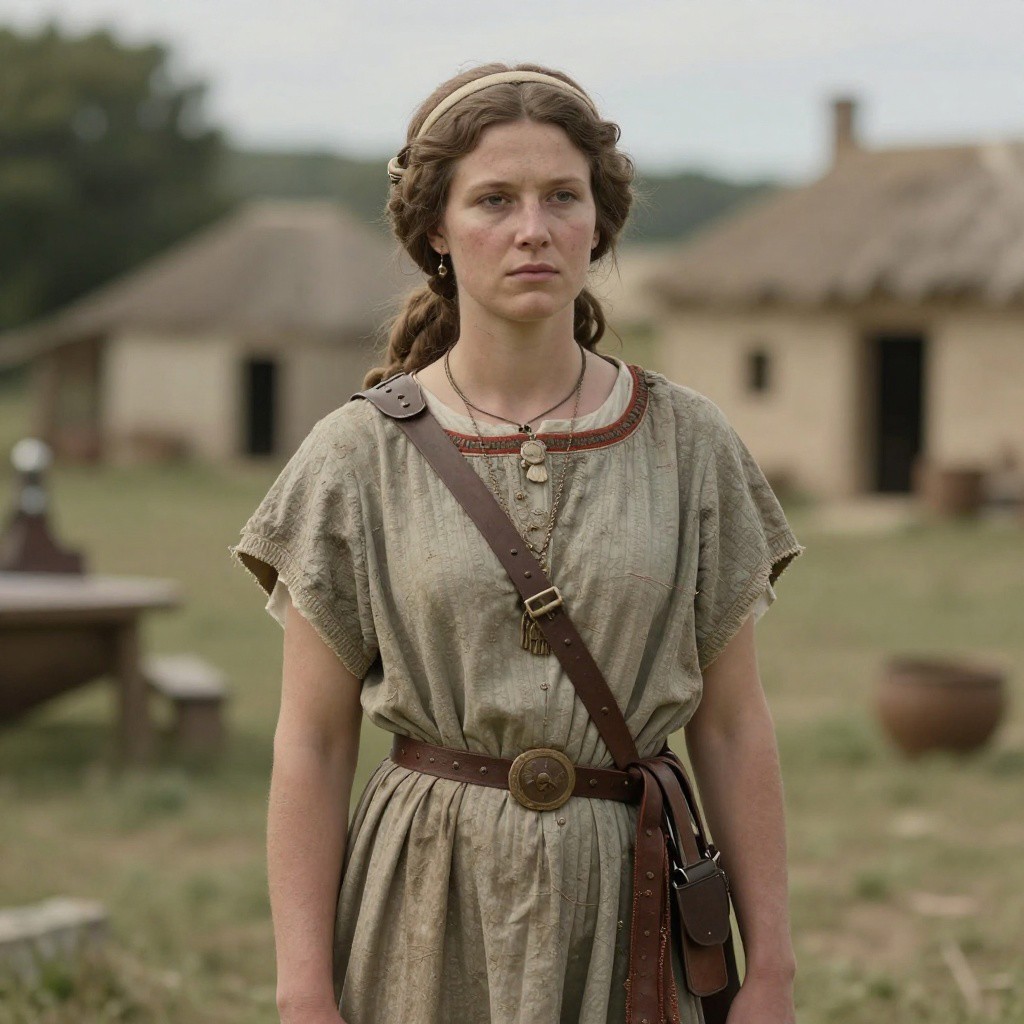
Roman-period Belgium occupied a strategic position within the northwestern European landscape, connecting coastal zones, river routes, and inland settlements. Environments included cultivated plains, river valleys, and areas of forest and pasture that supported agriculture and stock-raising, enabling both local consumption and supply to garrisons and towns.
Historical Context
From the early imperial period into Late Antiquity, Roman authority expanded and then consolidated across parts of the region. “Belgium Roman” aligns with the broader Roman presence in the Low Countries, when imperial governance and military logistics shaped settlement patterns and regional connectivity.
Populations & Lifeways
Local populations persisted, living in villages and smaller settlements while increasingly interacting with Roman towns, roads, and marketplaces. Many households would have continued agricultural work—grain production, animal husbandry, and related crafts—supplemented by wage labor or specialized services tied to Roman economic life.
Archaeology & Material Culture
Archaeological evidence typically reflects Roman infrastructure and consumption: ceramic and glass vessels, coin circulation, and building debris associated with domestic and civic activity. Finds related to travel and communication—such as imported goods and items indicating craft specialization—support interpretations of integration into imperial trade networks. Field systems, settlement layouts, and cemetery patterns can also show changes in practice under Roman influence.
Culture & Society
Romanization was not uniform; instead, it is visible in a spectrum of local choices. Some communities adopted Roman-style building, artifacts, and public behavior, while others retained regional traditions. Social life would have included participation in market exchange, craft production, and the cultural practices associated with towns, alongside continued local identities.
Legacy & Transition
Roman administration and infrastructure influenced later developments even as imperial control weakened in the late 4th–5th centuries CE. After the end of the Western Empire, settlement and economic patterns changed, but the archaeological record preserves the long-term impact of Roman roads, urban forms, and material lifeways.