


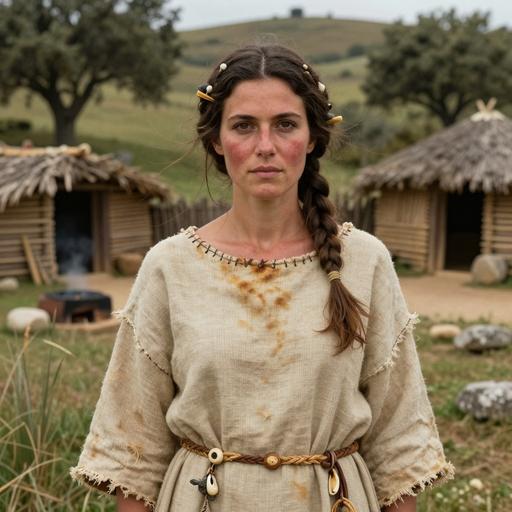
| Individual | Culture/Period | Date | Location | Action |
|---|---|---|---|---|
| Western European Neolithic individual, Portugal | Middle Neolithic Portugal | 4500 BCE | Lugar do Canto, Portugal | View |
| Western European Megalithic Culture individual, Portugal | Late Neolithic to Chalcolithic Portugal | 2500 BCE | Cova da Moura, Portugal | View |
| Western European Neolithic individual, Portugal | Middle Neolithic Portugal | 4500 BCE | Lugar do Canto, Portugal | View |
| Western European Megalithic Culture individual, Portugal | Late Neolithic to Chalcolithic Portugal | 3700 BCE | Dolmen de Ansião, Portugal | View |
| Iberian Chalcolithic individual, Portugal | Chalcolithic Portugal | 3350 BCE | Lisbon. Torres Vedras. Cabeço da Arruda I, Portugal | View |
| Western European Neolithic individual, Portugal | Middle Neolithic Portugal | 4500 BCE | Lugar do Canto, Portugal | View |
| Atlantic Bronze Age individual, Portugal | Middle Bronze Age Portugal | 1728 BCE | Monte do Gato de Cima 3, Portugal | View |
| Atlantic Bronze Age individual, Portugal | Middle Bronze Age Portugal | 1800 BCE | Torre Velha 3, Portugal | View |
| Western European Megalithic Culture individual, Portugal | Late Neolithic to Chalcolithic Portugal | 2500 BCE | Cova da Moura, Portugal | View |
| Atlantic Bronze Age individual, Portugal | Middle Bronze Age Portugal | 1800 BCE | Torre Velha 3, Portugal | View |
| Iberian Chalcolithic individual, Portugal | Chalcolithic Portugal | 3350 BCE | Lisbon. Torres Vedras. Cabeço da Arruda I, Portugal | View |
| Atlantic Bronze Age individual, Portugal | Middle Bronze Age Portugal | 1800 BCE | Monte do Vale do Ouro 2, Portugal | View |
| Western European Neolithic individual, Portugal | Middle Neolithic Portugal | 4500 BCE | Lugar do Canto, Portugal | View |
| Western European Megalithic Culture individual, Portugal | Late Neolithic to Chalcolithic Portugal | 3011 BCE | Monte Canelas 1, Portugal | View |
| Iberia Ca individual, Portugal | 3350 BCE | Lisbon. Torres Vedras. Cabeço da Arruda I, Portugal | View | |
| Iberia Ca individual, Portugal | 3350 BCE | Lisbon. Torres Vedras. Cabeço da Arruda I, Portugal | View | |
| Iberia Ca individual, Portugal | 2500 BCE | Cova da Moura, Portugal | View | |
| Iberia Ca individual, Portugal | 2500 BCE | Cova da Moura, Portugal | View | |
| Iberia Mln individual, Portugal | 3700 BCE | Dolmen de Ansião, Portugal | View | |
| Iberia Mln individual, Portugal | 4500 BCE | Lugar do Canto, Portugal | View | |
| Iberia Mln individual, Portugal | 4500 BCE | Lugar do Canto, Portugal | View | |
| Iberia Mln individual, Portugal | 4500 BCE | Lugar do Canto, Portugal | View | |
| Iberia Mln individual, Portugal | 4500 BCE | Lugar do Canto, Portugal | View | |
| Iberia Ca individual, Portugal | 3011 BCE | Monte Canelas 1, Portugal | View | |
| Iberia Ba individual, Portugal | 1728 BCE | Monte do Gato de Cima 3, Portugal | View | |
| Iberia Ba individual, Portugal | 1800 BCE | Torre Velha 3, Portugal | View | |
| Iberia Ba individual, Portugal | 1800 BCE | Torre Velha 3, Portugal | View | |
| Iberia Ba individual, Portugal | 1800 BCE | Monte do Vale do Ouro 2, Portugal | View |
Page 1
| Individual | Culture/Period | Date | Location | Action |
|---|---|---|---|---|
| Western European Neolithic individual, Portugal | Middle Neolithic Portugal | 3008 BCE | Lorga de Din, Portugal | View |
| Western European Neolithic individual, Portugal | Middle Neolithic Portugal | 4500 BCE | Lugar do Canto, Portugal | View |
| Western European Neolithic individual, Portugal | Middle Neolithic Portugal | 4500 BCE | Lugar do Canto, Portugal | View |
| Western European Neolithic individual, Portugal | Middle Neolithic Portugal | 2566 BCE | Lorga de Din, Portugal | View |
| Western European Neolithic individual, Portugal | Middle Neolithic Portugal | 4500 BCE | Lugar do Canto, Portugal | View |
| Western European Neolithic individual, Portugal | Middle Neolithic Portugal | 4500 BCE | Lugar do Canto, Portugal | View |
Page 1